- Water Management
- Knowledge
Next Generation: Cities competing to become the World’s Most Sustainable
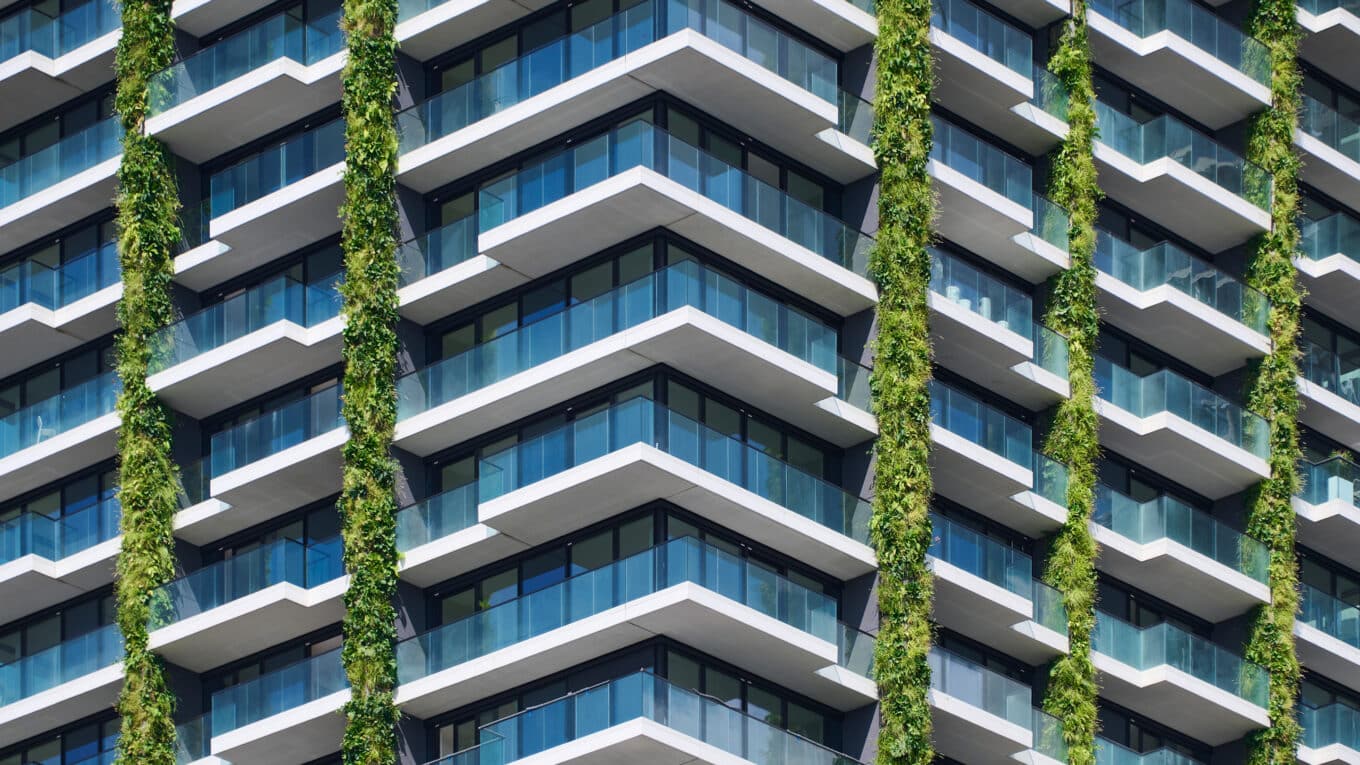
Transport emissions in the EU have increased by 33% since 1990, while emissions in other sectors have decreased by 32%. In 2018, the combined emissions from domestic and international transport accounted for 29% of the total greenhouse gas emissions across the entire economy in the EU. Half of them was due to passenger cars and vans. On the other hand, the EU has the ambition to become climate neutral from 2050 onwards. Alas, until then, tons of exhaust fumes and harmful substances will still be released into the air every year. Fortunately, living walls can help counteract this. When placed in car parks or noise barriers, these plant walls have several other benefits besides reducing CO2 and exhaust fumes.
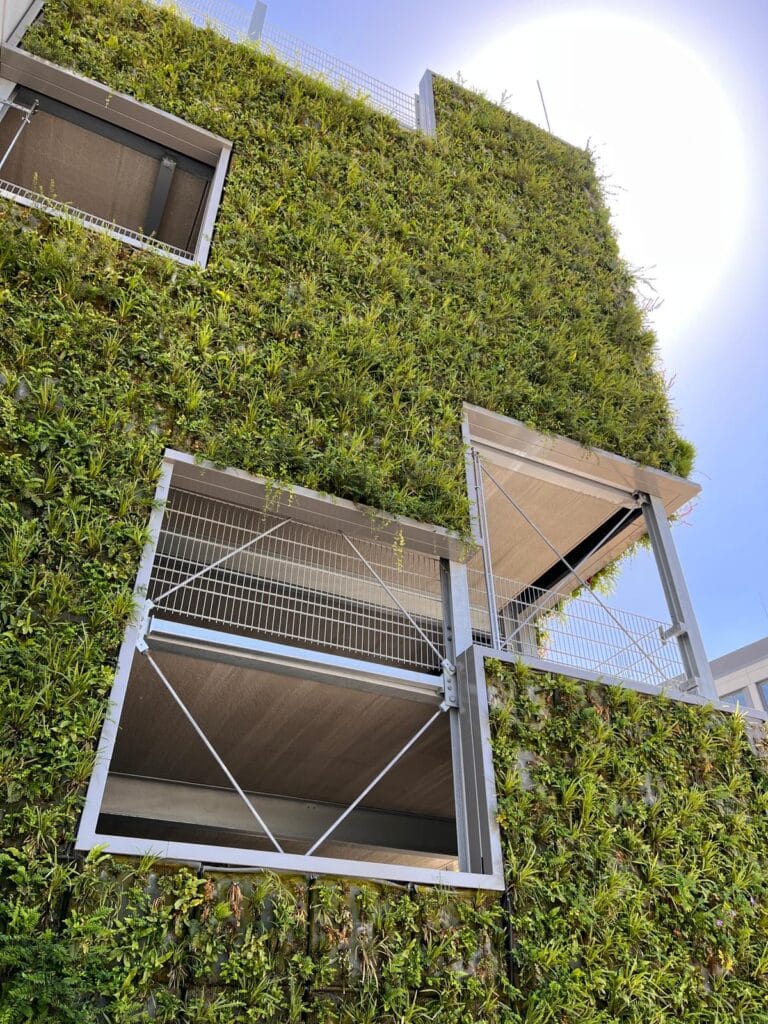
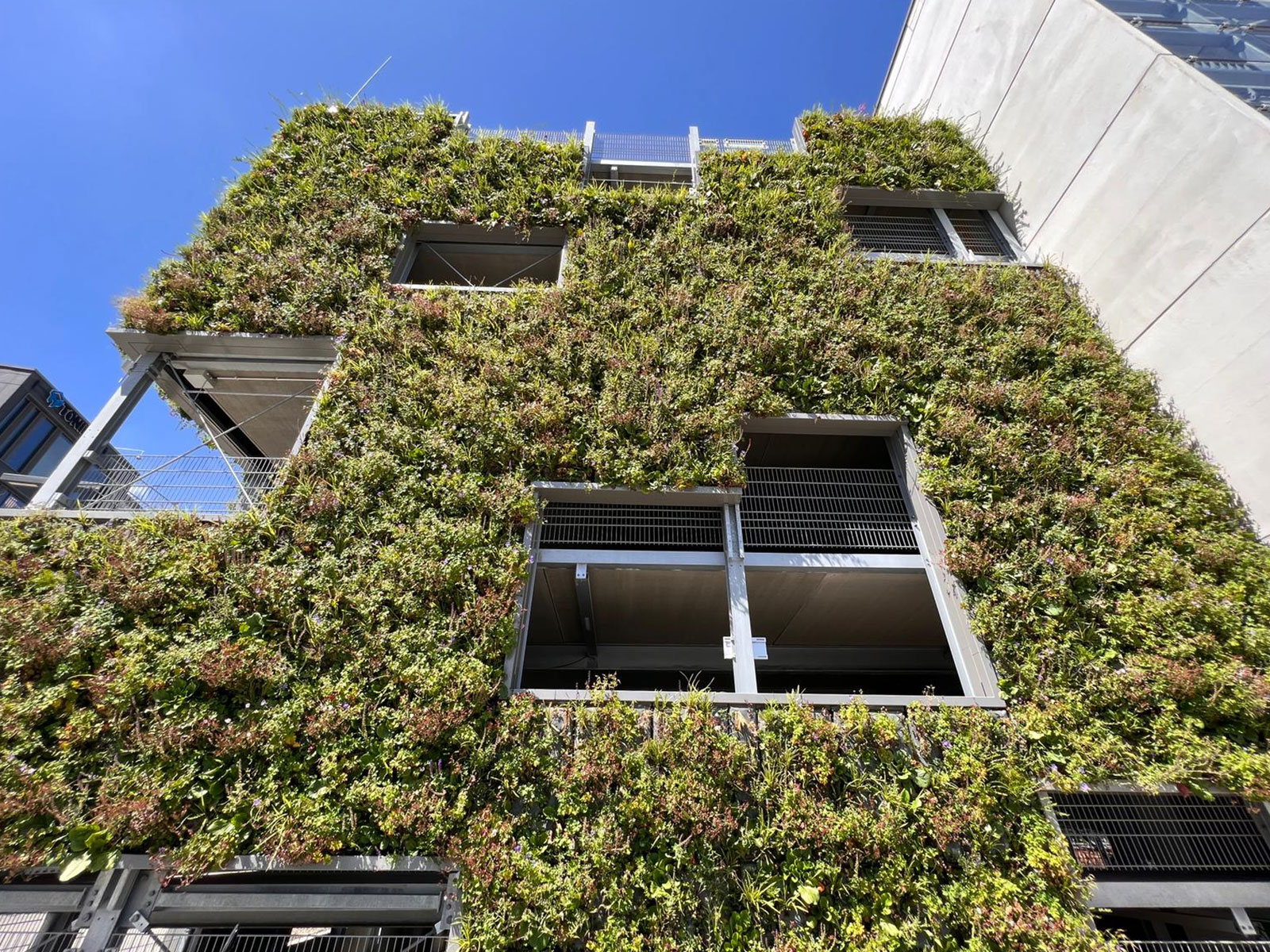
The main benefit of living walls in and on car parks is that they can help reduce the effects of exhaust fumes. In and around car parks, there’s a stream of cars all day long, emitting a range of pollutants into the air. These pollutants can be harmful to human health and the environment, contributing to problems such as smog and climate change. However, plants have the ability to absorb some of these pollutants and help purify the air. Studies have shown that certain plant species are particularly effective at removing pollutants such as carbon monoxide, nitrogen dioxide and volatile organic compounds (VOCs) from the air. By installing living walls in or on car parks, we can create a natural barrier between exhaust gases and the environment, which helps improve air quality. This kind of green intervention is a great way of pollution mitigation.
So plants like some of the substances we want to get rid of. By applying green facades in places where there’s a lot of traffic, we capture these substances directly where they are emitted.
All plants need carbon dioxide (CO2) to grow and stay alive. Plants convert CO2 into glucose, a very important building material and energy carrier. They then excrete oxygen as waste, which in turn is essential for humans and animals to breathe.
According to a new United Nations report, two in three people are likely to live in cities by 2050, highlighting the need for more sustainable urban planning and public services. In many cities, driving is made increasingly unattractive. It therefore makes sense that more parking should be created outside city centres. Compared to public parking spaces, car parks are a space-saving solution. Only, for both users and local residents it is important that a parking garage looks attractive. The parking garage of the future should be designed with functionality, comfort and aesthetics in mind. Applying elements such as green roofs, living walls and visually attractive architectural delights that complement the surrounding residential area.
Many car parks are unattractive spots in urban zones. Below, we show how this can be changed.
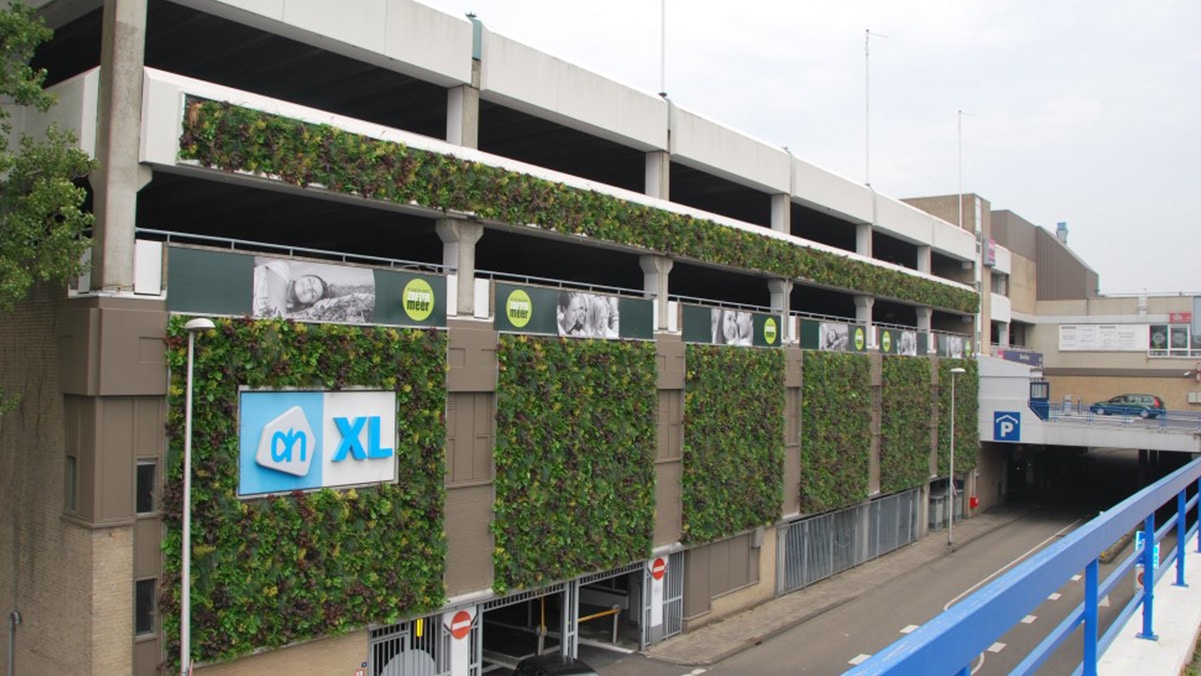
In collaboration with Unibail Rodamco and the municipality of Zoetermeer, Sempergreen took a major step towards making shopping centre Stadshart in Zoetermeer more sustainable in 2012. A green facade covering an area of 274m2 was installed on the centre’s parking garage, which was previously grey and drab. Composed of 686 pre-cultivated Flexipanels, the green facade offers a sustainable solution in all its facets.
An important criterion for the client was that the facade should be water-saving. The SemperGreenwall was therefore chosen, as an internet-controlled irrigation system optimises its water use. By using plants with different leaf types, the facade gets a beautiful colour variation throughout the seasons and the vertical greenery provides a pleasant view for the living environment around the car park.
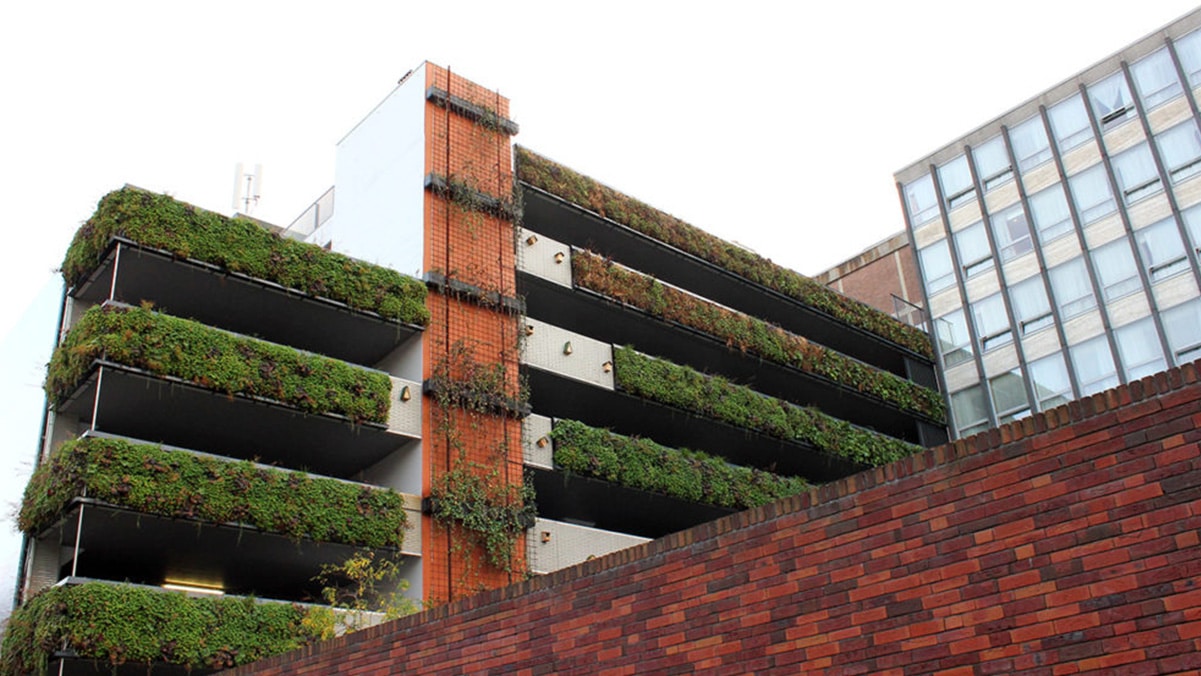
To give the car park in The Hague a natural look, a green façade has been installed. The SemperGreenwall Outdoor covers an area of 190m² and is located next to an indoor garden. The façade is supplied with sufficient water and nutrients by means of an automatic irrigation system, keeping the plants in optimal condition throughout the year. In addition to beautifying the car park, this green façade also contributes to the greening of The Hague, increases biodiversity and improves local air quality.
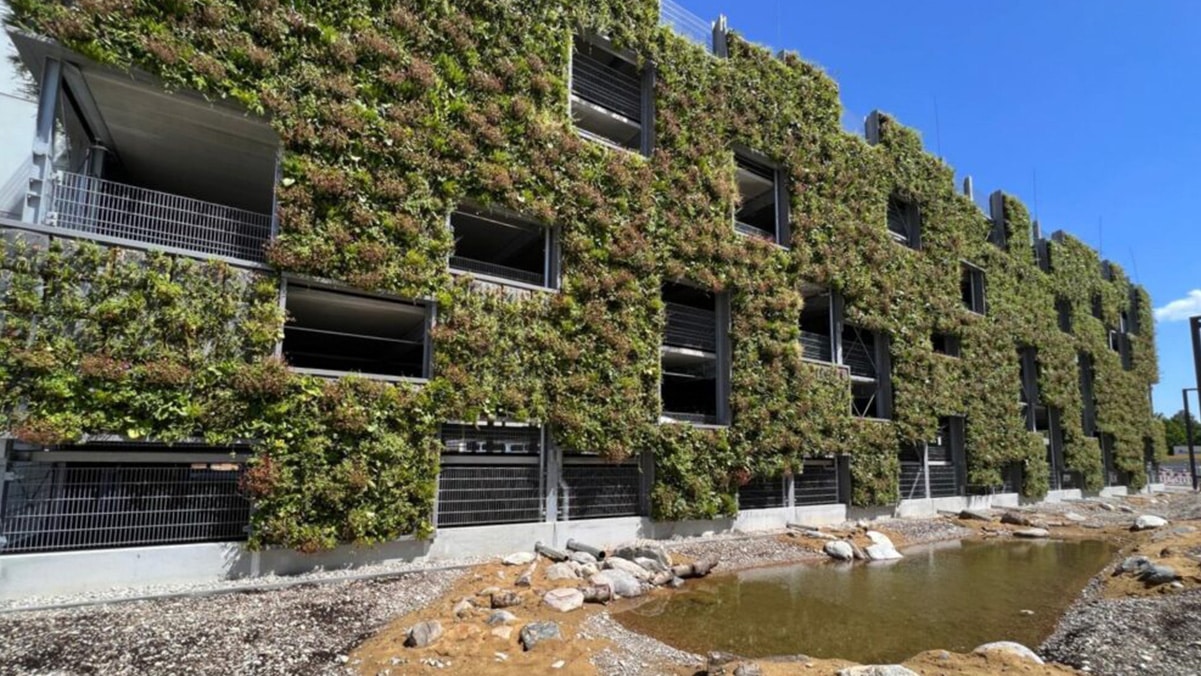
The TONI Park office campus has been built on the site of the former Messerschmitt airfield. This park-like campus, comprising six office buildings and an associated car park, has been constructed with sustainability in mind. As a result, the complex has been awarded “Gold” certification by the DGNB (German Sustainable Building Council).
Employees of the companies located on this campus can enjoy a pleasant working environment. The SemperGreenwall, which will be added to the car park in autumn 2021, contributes to cleaner air by absorbing approximately 1,600 kg of CO2 annually – comparable to 65 trees.
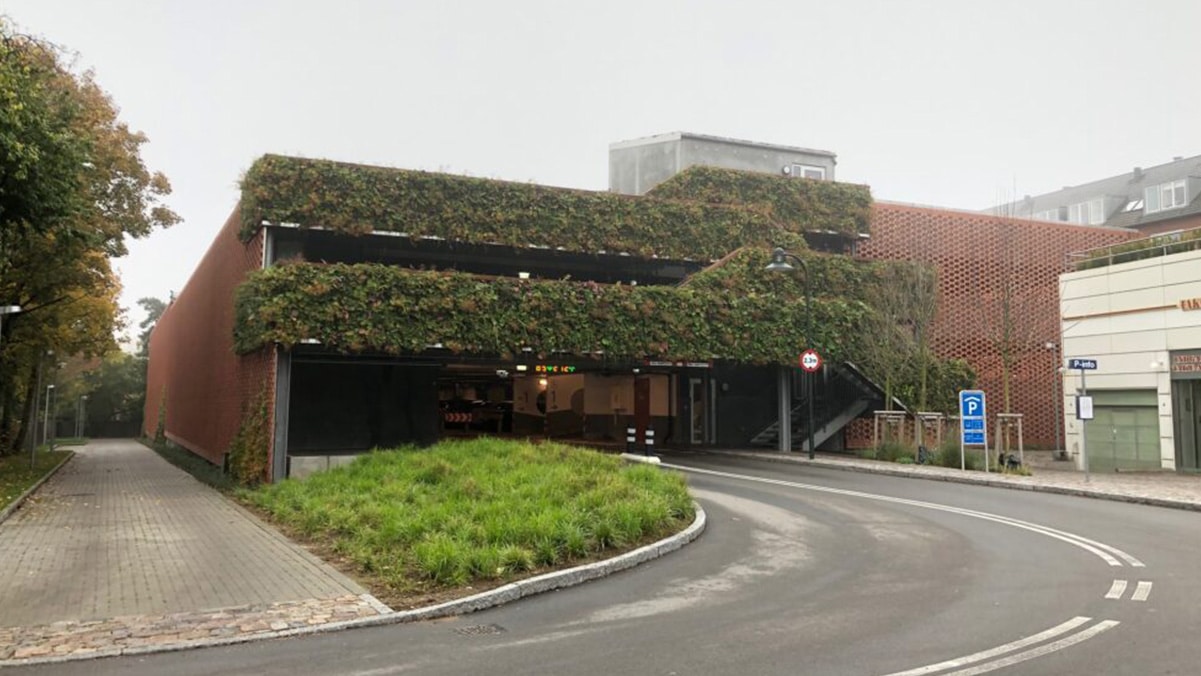
In the historic centre of Roskilde stands a 10-storey car park with 500 parking spaces, designed by Årstiderne Arkitekter. The red brick façade of the car park blends in with its surroundings and features a SemperGreenwall Outdoor on the west side. This green façade contributes to the city’s air quality, sound absorption and biodiversity.
Sempergreen selected a special series of plants for this project, inspired by the hanging gardens of Babylon. An outdoor staircase behind the façade encourages visitors to use the stairs more often. The green façade gives visitors a feeling of safety and creates an attractive environment.
In addition to installing a green façade on your car park, you can also install a green roof on the car park. Installing a green roof on a car park offers many advantages. Firstly, it contributes to biodiversity in the city, as the green roof provides a habitat for various plants and animals. In addition, a green roof reduces heat in the city by absorbing and retaining the sun’s rays instead of reflecting them.
This not only reduces the heat island effect, but also saves on energy costs for cooling the car park. Furthermore, a green roof improves air quality in the city by filtering particulate matter from the air and absorbing CO2. Finally, it contributes to a reduction in rainwater flooding in the city, as the green roof acts as a buffer for rainwater, thereby reducing the load on the sewerage system.

Ready to make a difference? At Sempergreen, we believe in building a greener future, one step at a time. Our innovative solutions are designed to help you decrease your footprint and contribute to a more sustainable world. Join us in replanting the planet!