- Water Management
- Knowledge
Next Generation: Cities competing to become the World’s Most Sustainable
The average European emits 8 tonnes of CO2 per person per year, the average American, Canadian of Australian citizen emits as much as 16 tonnes of CO2 per person per year. That is two to four times more than the average world citizen. Nowadays, there is 40% more CO2 in the air than there was 250 years ago. These CO2 emissions are harmful to the environment. It leads to global warming, resulting in climate change. It is therefore essential to reduce CO2 emissions. In addition, it is also important to think about how we can take CO2 out of the air and convert it to oxygen.
Nowadays, there is 40% more CO2 in the air than there was 250 years ago
Trees and plants play an ultimate role here. The more trees and plants there are, the more CO2 can be converted to oxygen. The SemperGreenwall can make an important contribution to this. This living wall system accommodates a very high percentage of plants on a small area. An ideal solution for locations where space is limited, for example in the city. And also in offices or government buildings, a SemperGreenwall makes a significant contribution to cleaner air. In this blog you will find out how.
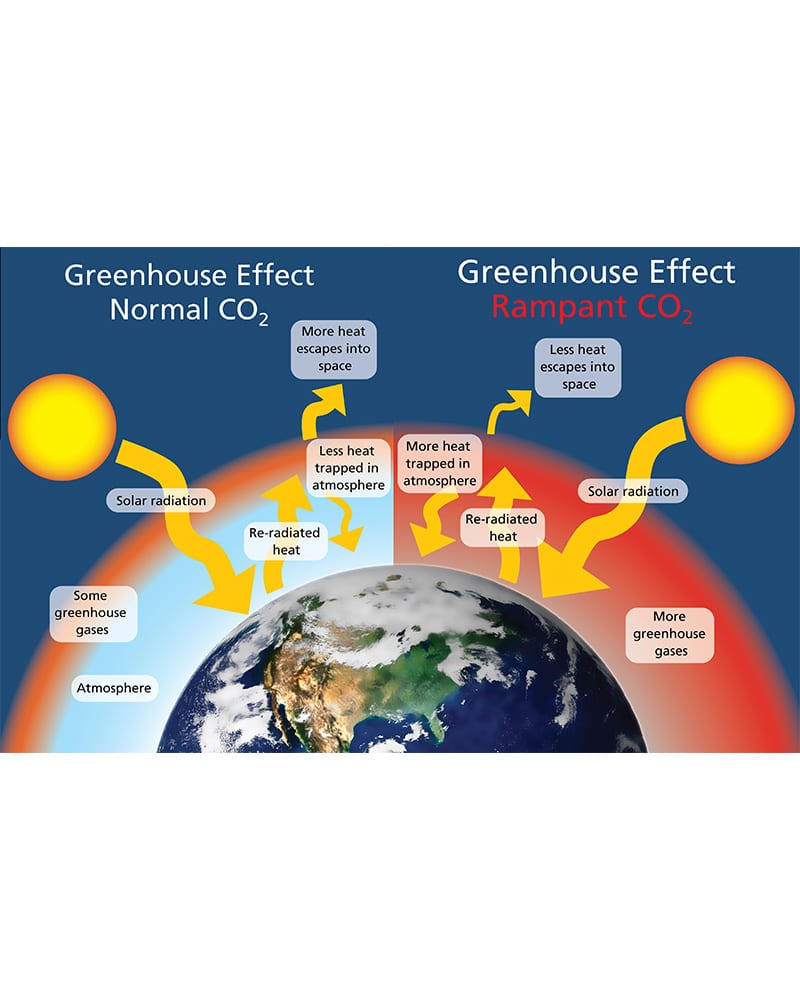
CO2 – an abbreviation for carbon dioxide – is one of the most common greenhouse gases. Greenhouse gases occur naturally on our planet and trap heat from sunlight on Earth. Without greenhouse gases, the average temperature on Earth would be -18 degrees Celsius. Through the burning of fossil fuels and deforestation, humans have unknowingly influenced the amount of greenhouse gases in recent centuries, herewith changing the composition of the air. This is called the ‘extra greenhouse effect’. But most of us simply call it the ‘greenhouse effect’.
The increase in the atmosphere of CO2 intensifies the greenhouse effect and this leads to a warmer climate, or climate change. The effects of climate change are already visible. The warmer climate is causing rising sea levels, more extreme weather in the form of heavy rainfall and more heat waves. Some parts of the earth are becoming drier. Climate change also has an adverse effect on air quality. Heat waves often coincide with periods of ozone smog. The combination of heat and smog leads to increased mortality among the elderly and people with poor health. It is therefore very important to take measures to reduce CO2 emissions and, in addition, to absorb as much as possible of the CO2 from the air and convert it into oxygen.
To turn the tide, the European Parliament adopted the European Climate Law. The EU aims to achieve at least a 55% reduction in net emissions by 2030 (previously the goal was set at 40%). By 2050, Europe must be climate neutral and the EU is making this legally binding in the Climate Act. In the UK, the government is targeting at least 68% CO2 reduction by 2030, 77% by 2035 and net zero by 2050 compared to 1990 levels.
According to the World Health Organisation (WHO), poor indoor air quality is responsible for 6.7 million premature deaths worldwide. Since most people spend more than 90 per cent of their time indoors (e.g. at home, school or work), developing new strategies to improve air quality is crucial. For both CO2 uptake and improving air quality, plants are an effective solution.
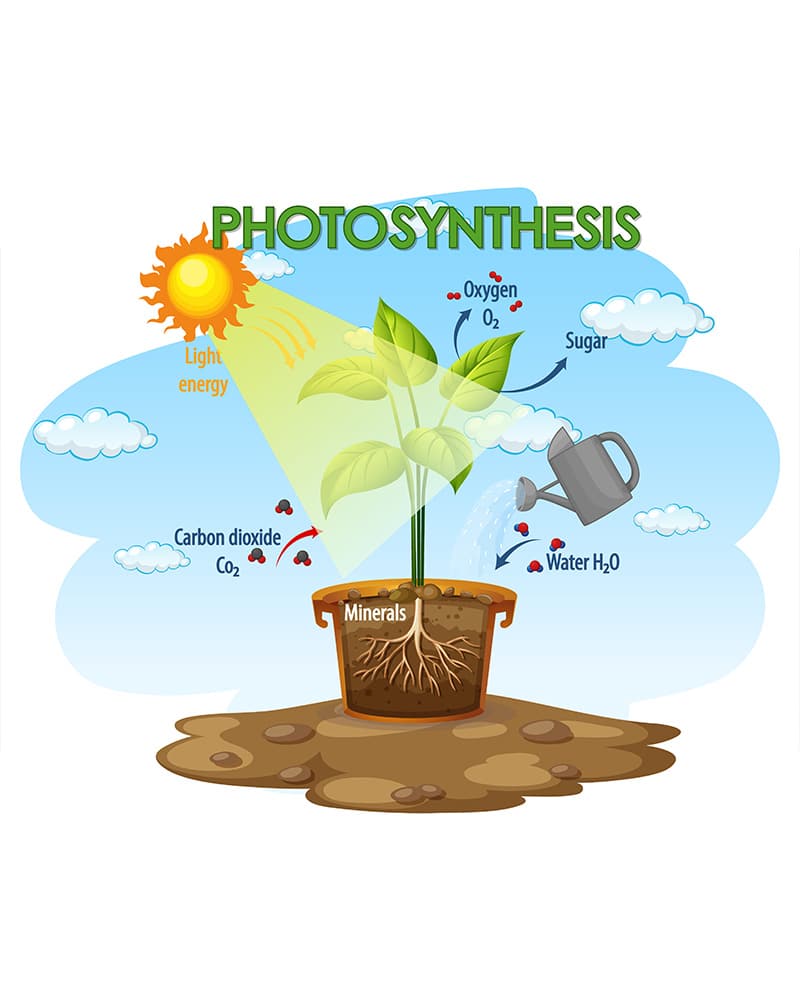
Plants get their energy from sunlight. With that energy, they convert water and CO₂ into oxygen and glucose in the chloroplasts. Oxygen is released into the air. Glucose nourishes the plant and makes it grow. This process is called photosynthesis. Oxygen, which is superfluous to the plant, is very important for humans and animals on Earth. Without photosynthesis, the oxygen in the air would slowly run out. Photosynthesis can take place in all green parts of a plant, not only in the leaves, but also in the green stems. Plants are therefore extremely valuable to the earth. The more plants there are, the more CO2 will be converted into oxygen. So it has a dual effect; by absorbing CO2 and by photosynthesis, the greenhouse effect will be reduced and at the same time the air quality for people will improve.
Besides CO2 uptake, plants have other powerful benefits. Recent research by the University of Technology Sydney (UTS) has shown that plants can also efficiently remove toxic petrol vapours – including carcinogens such as benzene – from the air. Offices and residential buildings are often directly connected to car parks through doors or lift shafts, making it a challenge to prevent harmful petrol vapours from entering indoor spaces. Moreover, many buildings are also exposed to petrol fumes from nearby roads and highways. Inhaling such fumes can cause lung irritation, headaches and nausea and, over time, lead to an increased risk of cancer, asthma and other chronic diseases, contributing to a lower life expectancy.
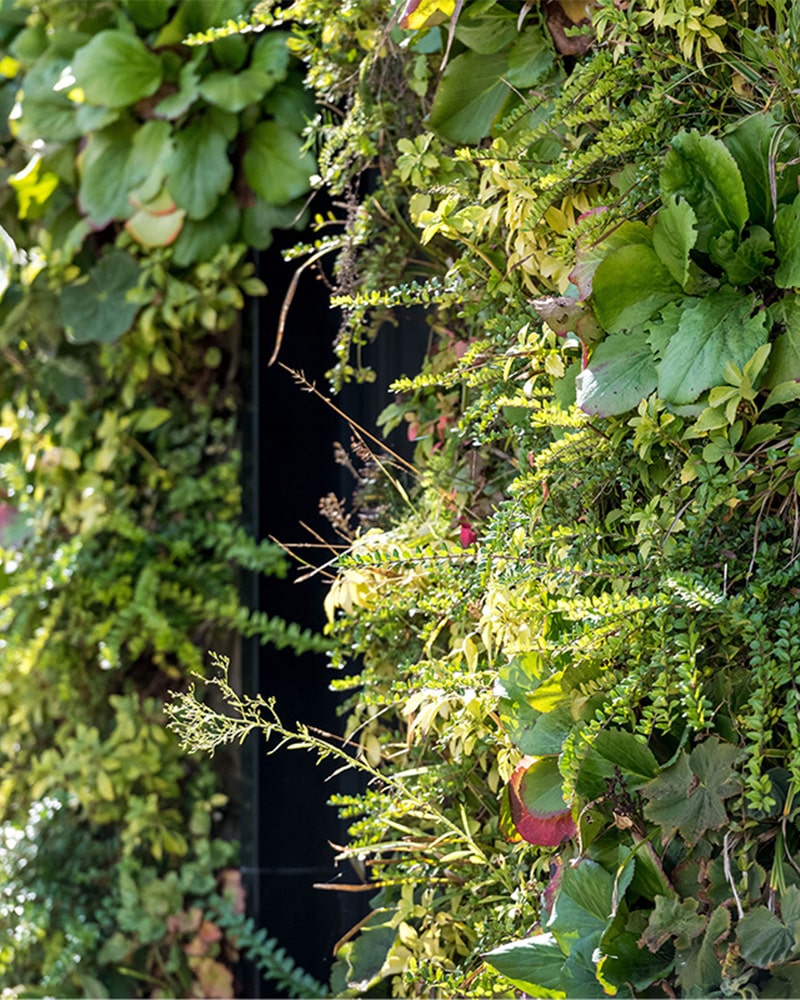
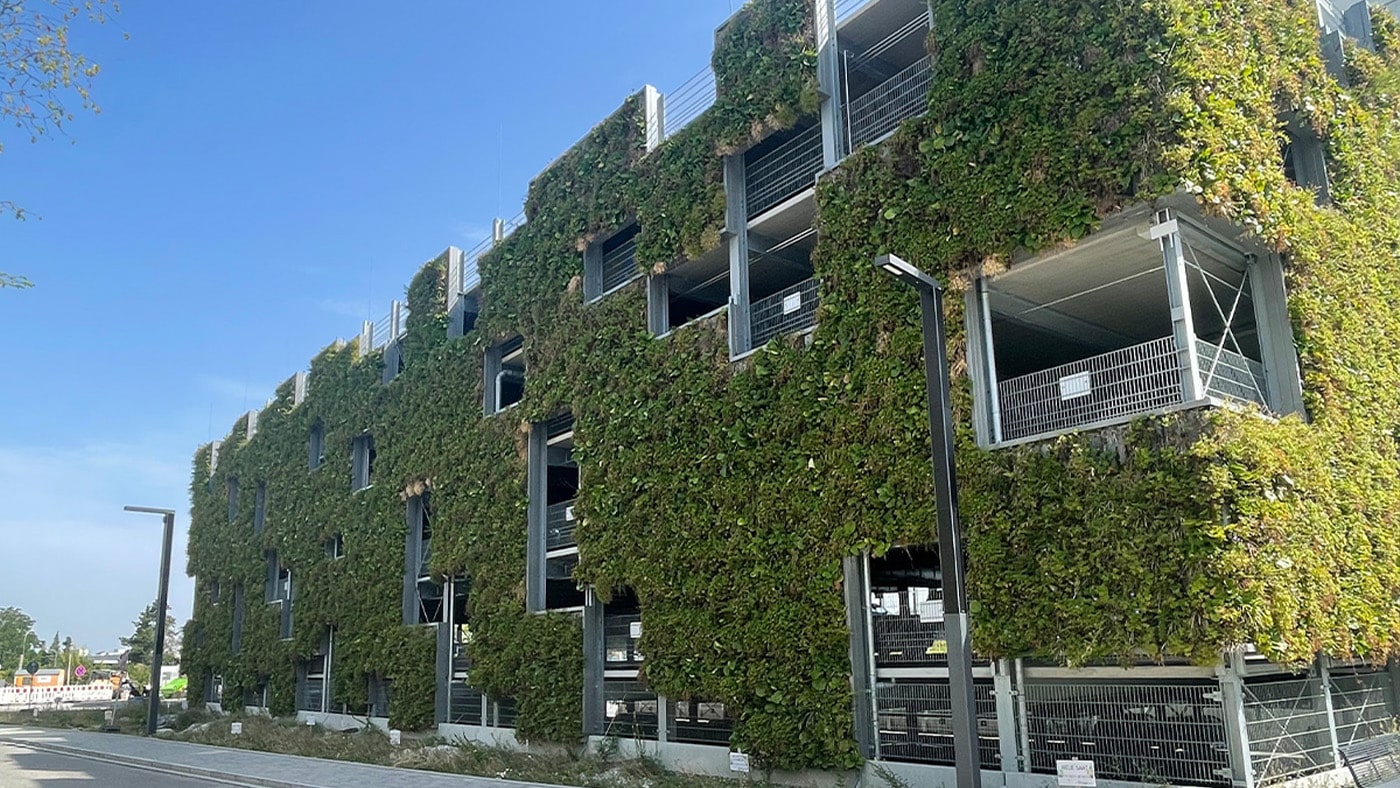
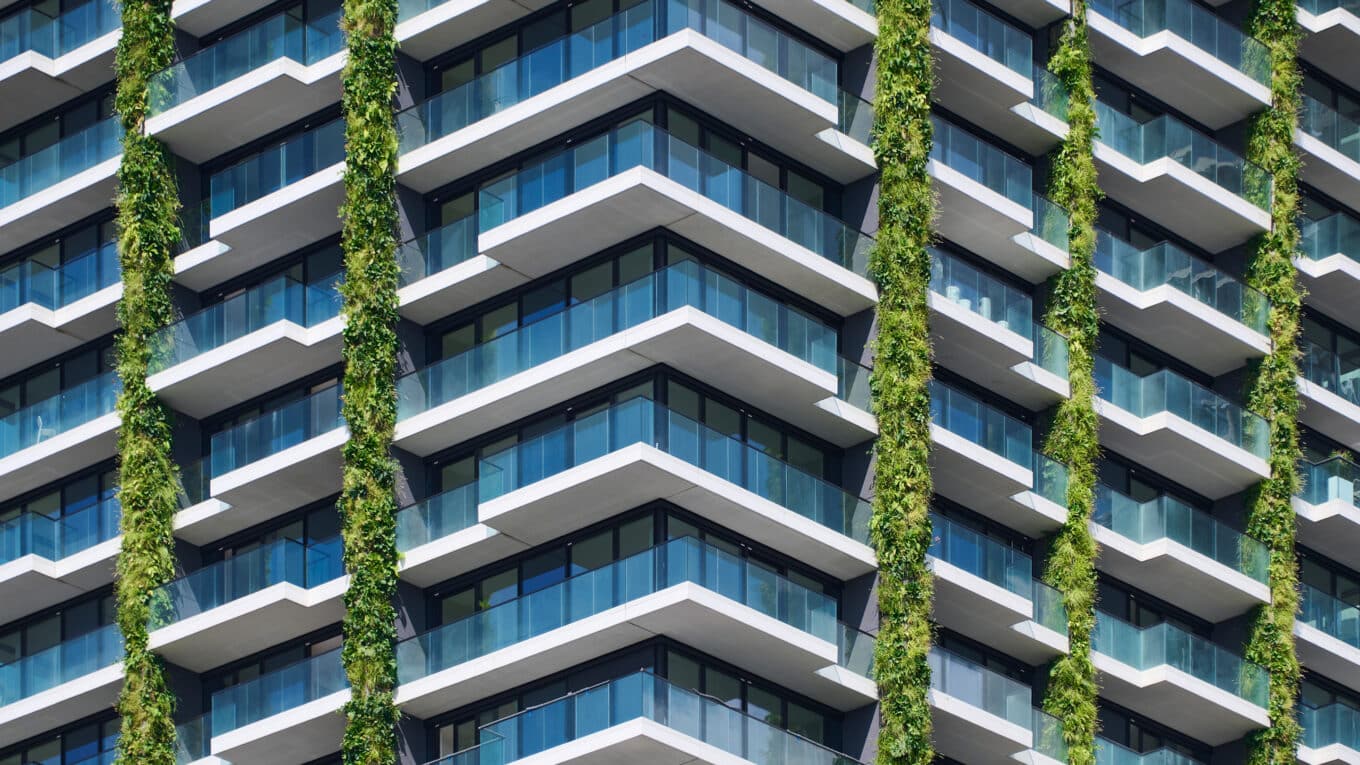
An innovative way to apply many plants in a small area, both indoors and outdoors, is to install a SemperGreenwall. Especially in outdoor areas where planting trees is not a realistic solution, installing living walls is an effective alternative. But also in indoor areas such as offices, reception areas and conference rooms, a living wall is the ideal solution for installing many plants in one go.
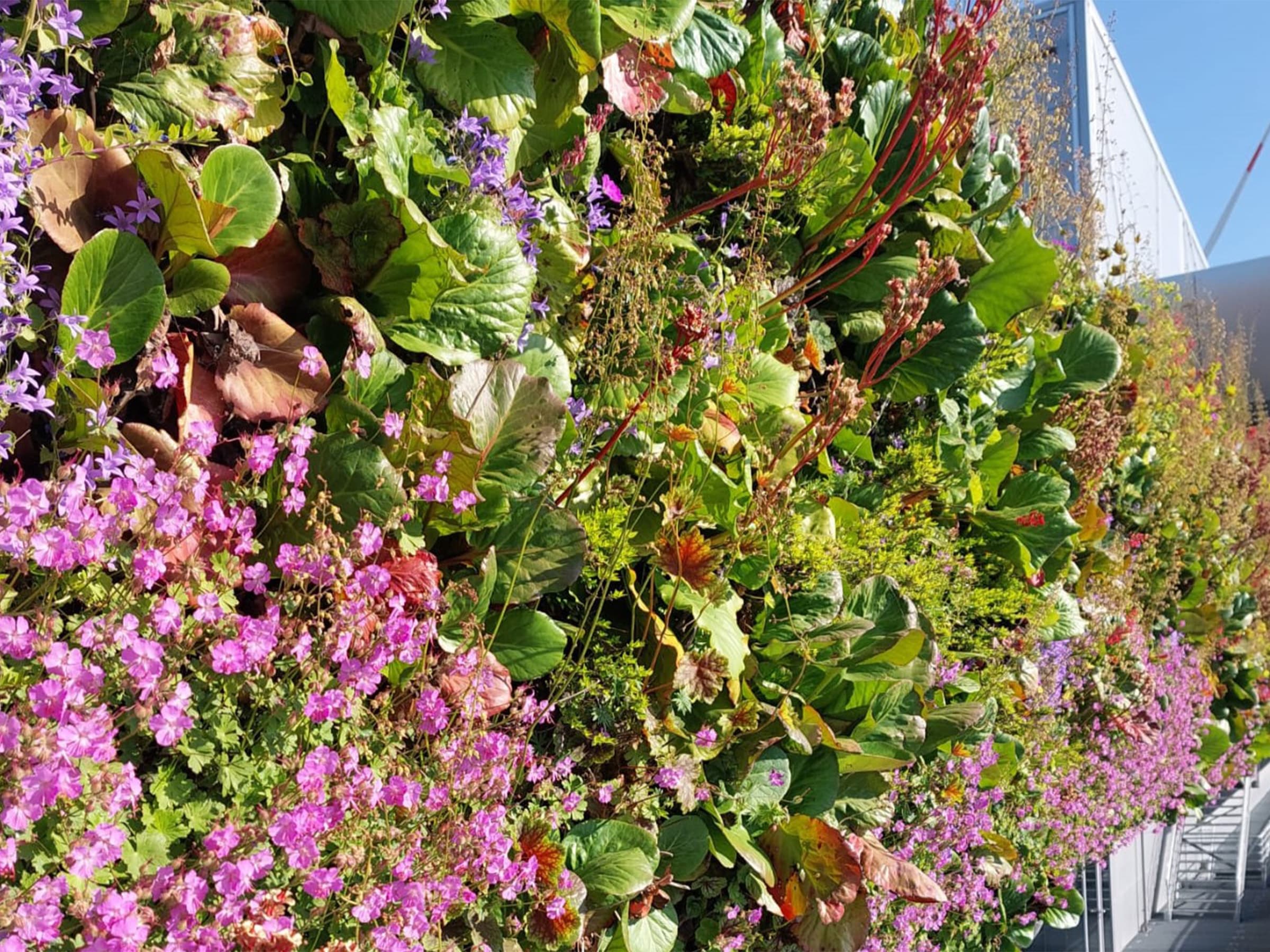
A SemperGreenwall contains as many as 78 plants per square metre. The plants in the SemperGreenwall are largely selected for their air-purifying effect. Outdoor green walls feature other air-purifying plants than indoor green walls.
For exterior green facades, plants with hairy and rough or waxy leaves absorb harmful particles more easily, reducing them by up to 60%. Plants in the SemperGreenwall Outdoor, that have a great air-purifying effect, are e.g. the yarrow (Achillea millefolium) and lady’s mantle (Alchemilla mollis). A study by the WUR draws up a list of air-purifying trees and plants, including Euonymus, Lonicera, Pachysandra terminalis and Spirea. All of these species are incorporated in the SemperGreenwall Outdoor.
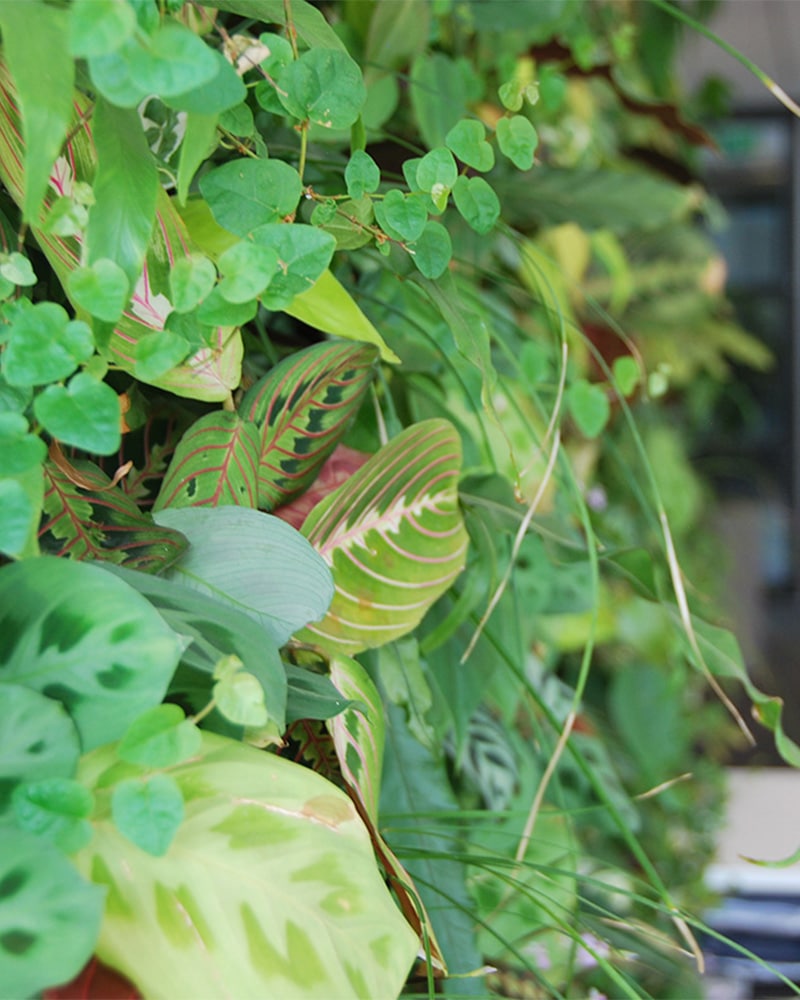
Indoors, there is a different air composition than outdoors. Part of the air quality corresponds to outdoors, but it is supplemented by harmful substances from e.g., building materials, paint, glue and printers, such as benzene, xylene and ammonia. It is therefore very important to install enough plants to purify the air and create a better indoor climate. This prevents health complaints, such as headaches, coughs and loss of concentration.
Well-known air-purifying indoor plants have been selected for the standard plant mix of the SemperGreenwall Indoor, such as the bird’s-nest fern (Asplenium), spider plant (Chlorophytum), blue-star fern (Phlebodium), the Swiss cheese plant (Philodendron monstera) and the peace lilly (Spathiphyllum). Besides air purification, plants have another important benefit for the indoor climate. Through transpiration, plants release moisture into the air. This improves the humidity in a room and, for instance, reduces the incidence of dry eyes.
Researchers at Wageningen University (WUR) have made a future vision for the city in 100 years. They see a very important role for greenery in the city. “Green is not the end, but the means to make and keep cities more liveable and sustainable.” Sempergreen’s green facades fit perfectly within this vision, as they can make a big difference in the limited space in the city, due to the large amount of plants on a small area. Read more about this vision from WUR here.
When you choose a green wall from Sempergreen, one square metre of green facade produces 1.7 kg of oxygen per year and extracts 2.3 kg of CO2 from the air. So in places where there is little space for trees, installing a green facade provides excellent compensation! Would you like to know how much CO2 you need to offset? Calculate this with the footprint calculator: https://www.footprintcalculator.org/home/en