Sustainable school campus
Designed with people, nature and the future in mind.
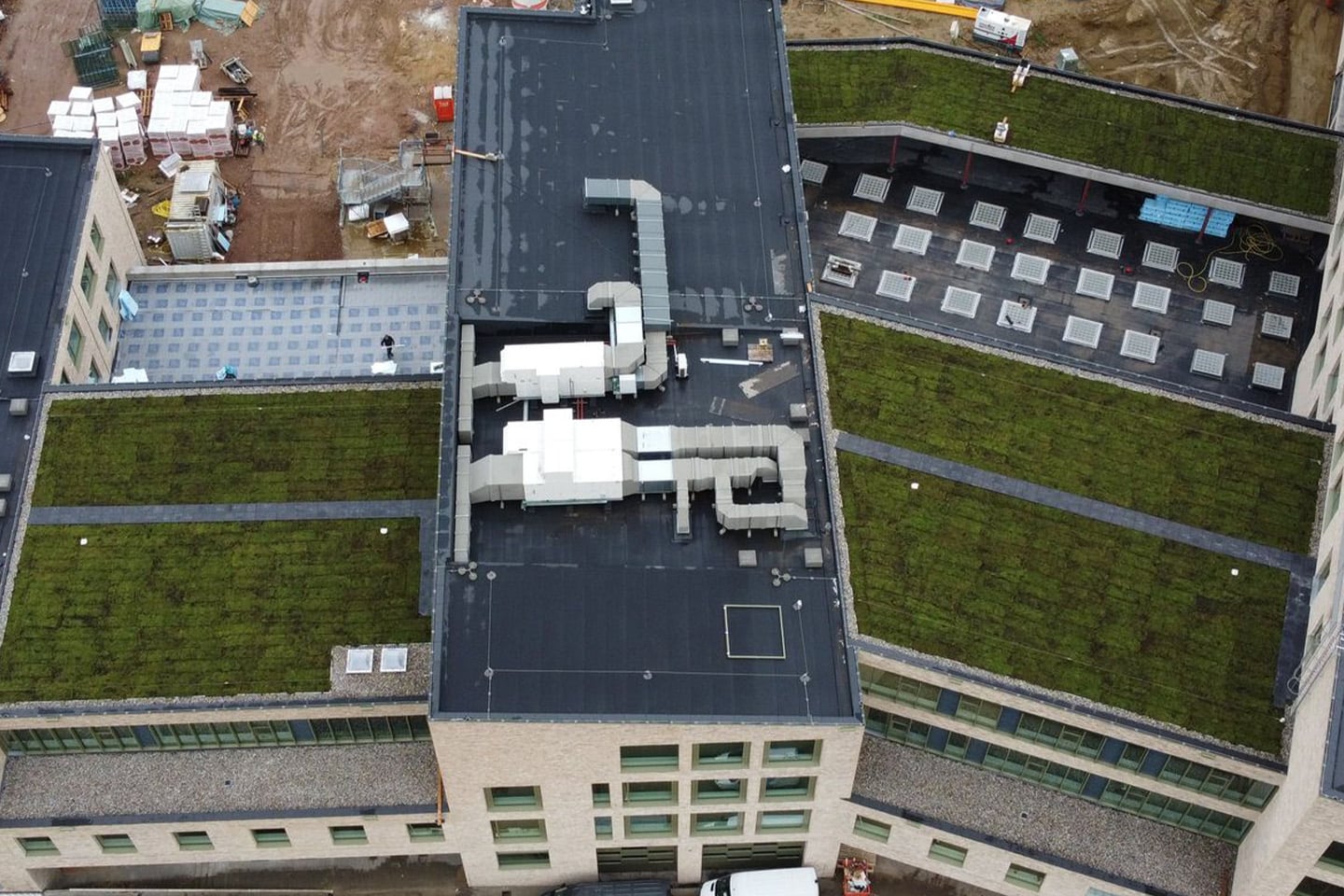
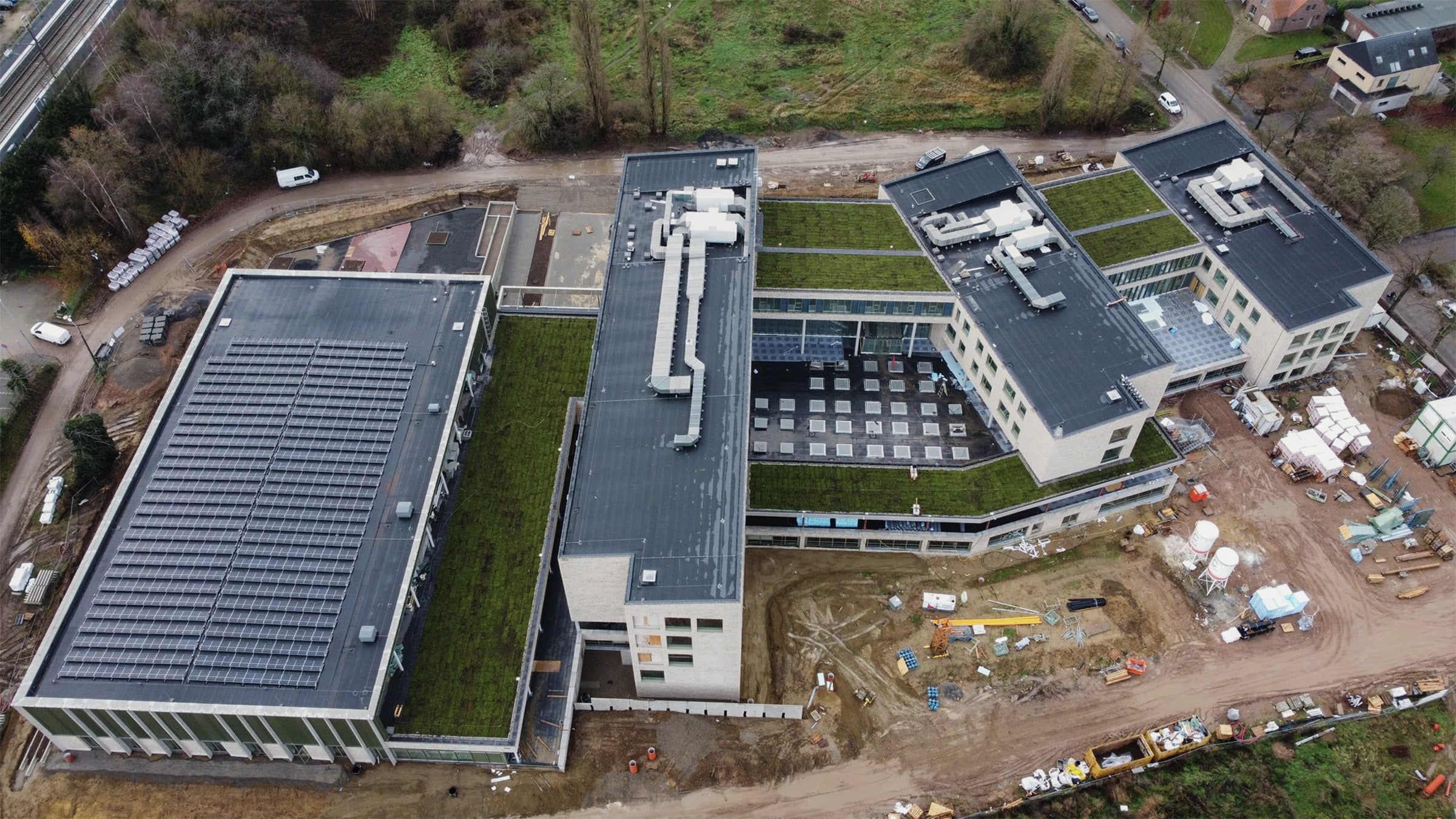
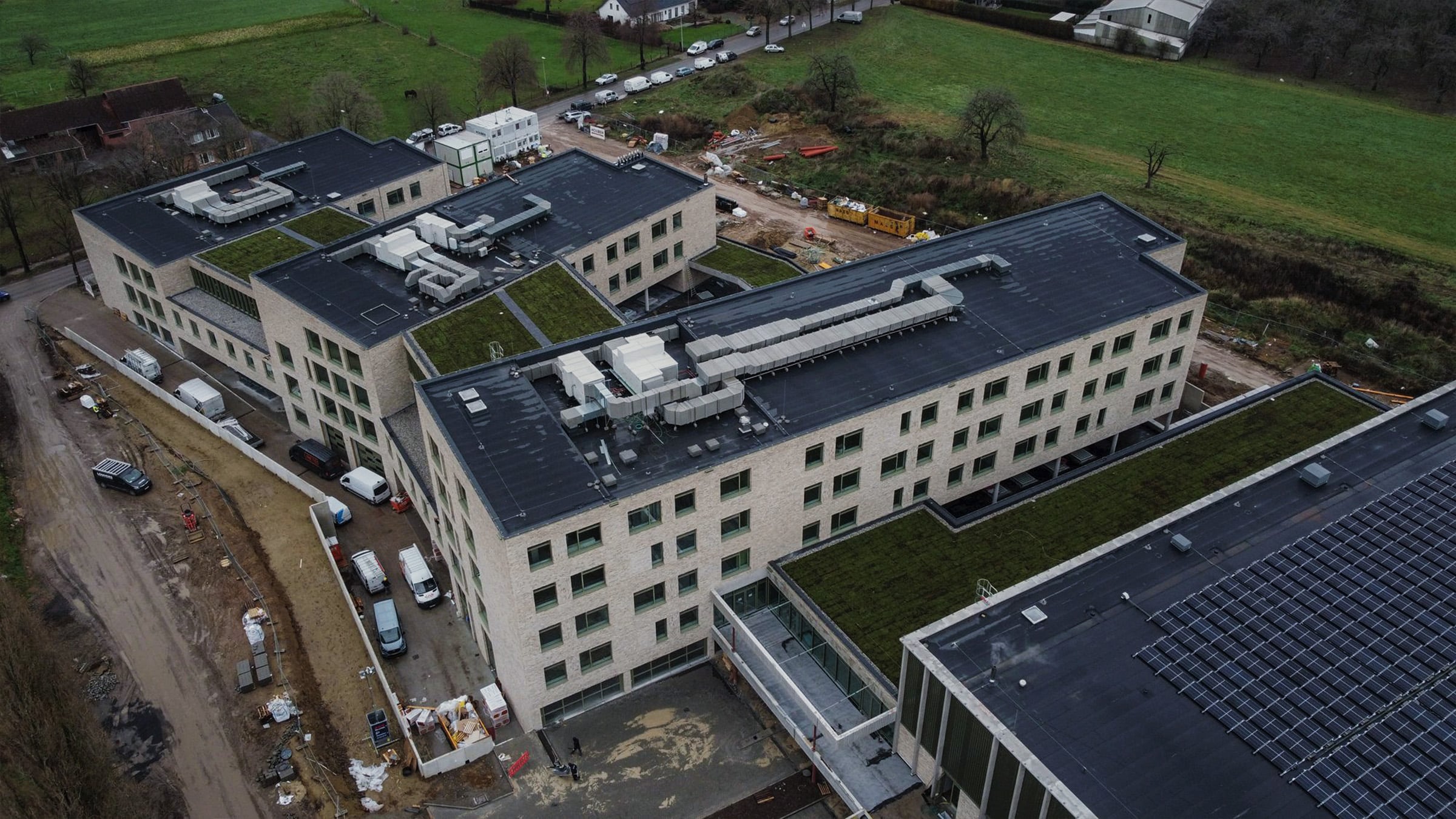
In Sint-Truiden, Belgium, a modern educational environment was created for more than 1,000 students at HASP-O Campus. As part of the sustainable design, Sedum roofs were installed on various roof surfaces, contributing to climate adaptation, biodiversity and a healthier learning environment.
Designed with people, nature and the future in mind.
Supporting stormwater management and energy performance.
An inspiring learning environment for more than 1,000 students.
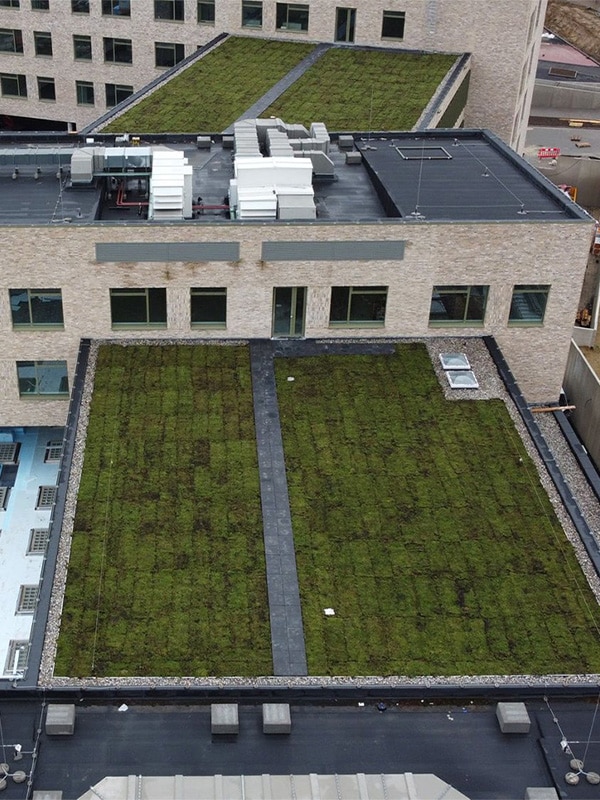
Located in the heart of Belgian Limburg, the new HASP-O Campus in Sint-Truiden was developed as a modern educational facility for more than 1,000 students. The campus combines contemporary architecture with innovative learning environments. Modern classrooms, practical training facilities and laboratories give students the opportunity to gain hands-on experience in a setting that reflects the demands of tomorrow’s labour market. Sustainability also played a prominent role in the design, leading to the installation of traditional green roofs across several roof surfaces of the school buildings.


Accept marketing cookies to view this video.
The new HASP-O Campus was developed as part of the Belgian Schools of Tomorrow programme and reflects the ambition to provide young people with a modern and future-proof learning environment. HASP-O is known for its practical approach to education and its broad range of study programmes. The building supports this vision through flexible learning spaces, modern technologies and areas designed to encourage collaboration and personal development. During the construction of the campus, Tectum Group was responsible for both the waterproofing of the building and the installation of the green roofs, ensuring that sustainability was integrated directly into the building envelope.
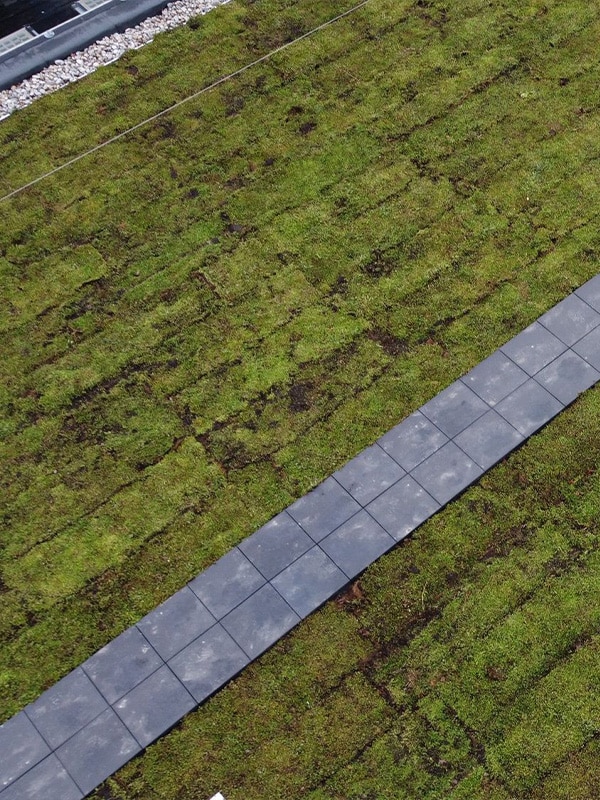
Traditional green roofs were deliberately incorporated into the campus design. These roofs contribute to multiple sustainability objectives while simultaneously enhancing the quality of the learning environment. The vegetation layer protects the roof from extreme weather conditions and temperature fluctuations. As a result, the roof structure remains in good condition for longer and the overall lifespan of the roof is extended.
One of the key benefits of the green roofs is their insulating effect. The vegetation helps reduce heat loss during colder periods while preventing excessive heat build-up during warm summer days. This creates a more stable indoor climate for students and teachers. At the same time, the need for air conditioning is reduced, resulting in lower energy consumption and reduced operational costs for the school.
The green roofs also make an important contribution to stormwater management. The Sedum vegetation and substrate layer can temporarily store rainwater and release it gradually over time. This helps reduce pressure on the drainage system during periods of heavy rainfall. As extreme weather events become increasingly common, green roofs provide an effective solution for making buildings and cities more resilient to climate change.
The green roofs do more than improve building performance, they also create valuable habitat for insects and birds. The Sedum vegetation provides food for bees, butterflies and other pollinating insects that are increasingly losing habitat in urban environments. By giving nature a place on the roof, biodiversity is enhanced and a greener campus environment is created, supporting the sustainability ambitions of the school.
Greenery has a proven positive effect on people’s wellbeing. Views of vegetation can promote relaxation, improve concentration and create a more pleasant environment for learning and working. For a campus where more than a thousand students and staff come together every day, this represents significant added value. The combination of modern educational facilities and sustainable green solutions makes HASP-O an inspiring example of how educational buildings can contribute to both academic performance and sustainability.


Ready to make a difference? At Sempergreen, we believe in building a greener future, one step at a time. Our innovative solutions are designed to help you decrease your footprint and contribute to a more sustainable world. Join us in replanting the planet!