- Water Management
- Knowledge
Next Generation: Cities competing to become the World’s Most Sustainable
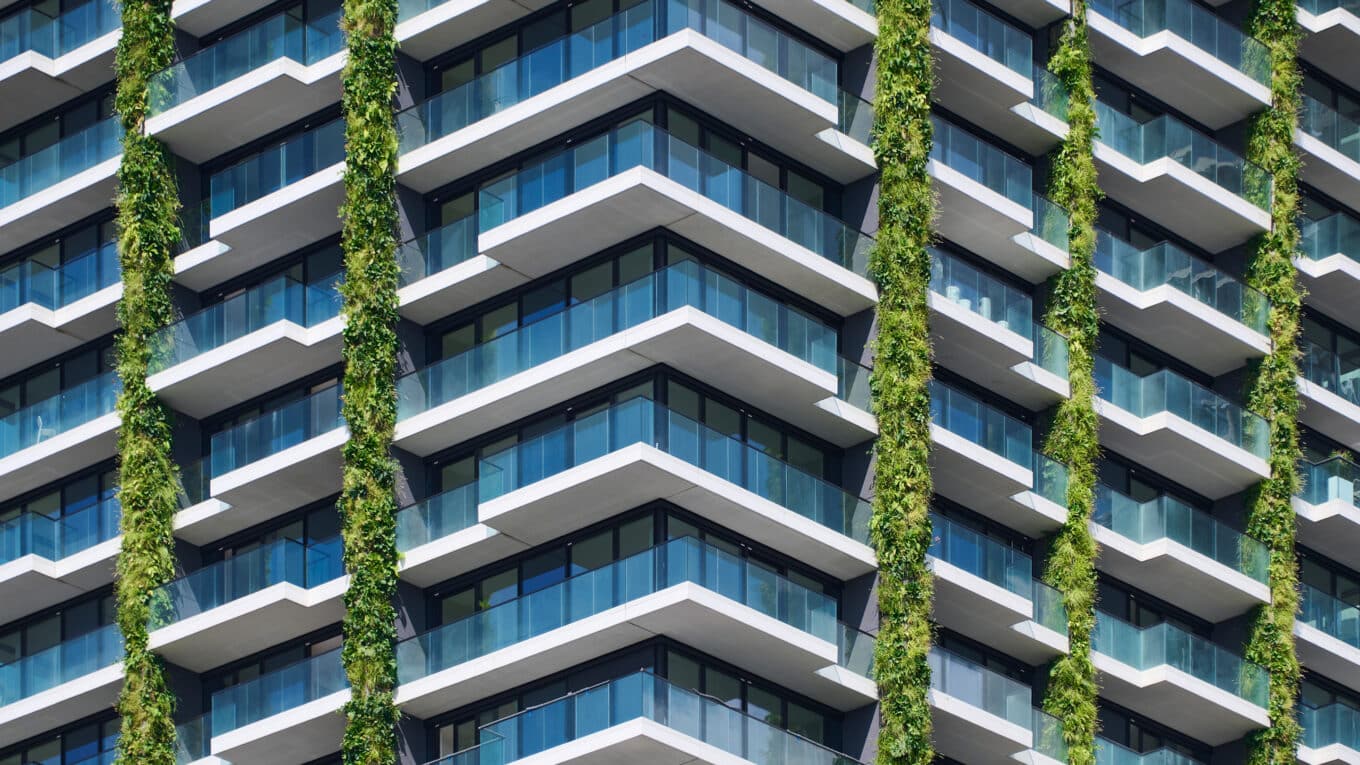
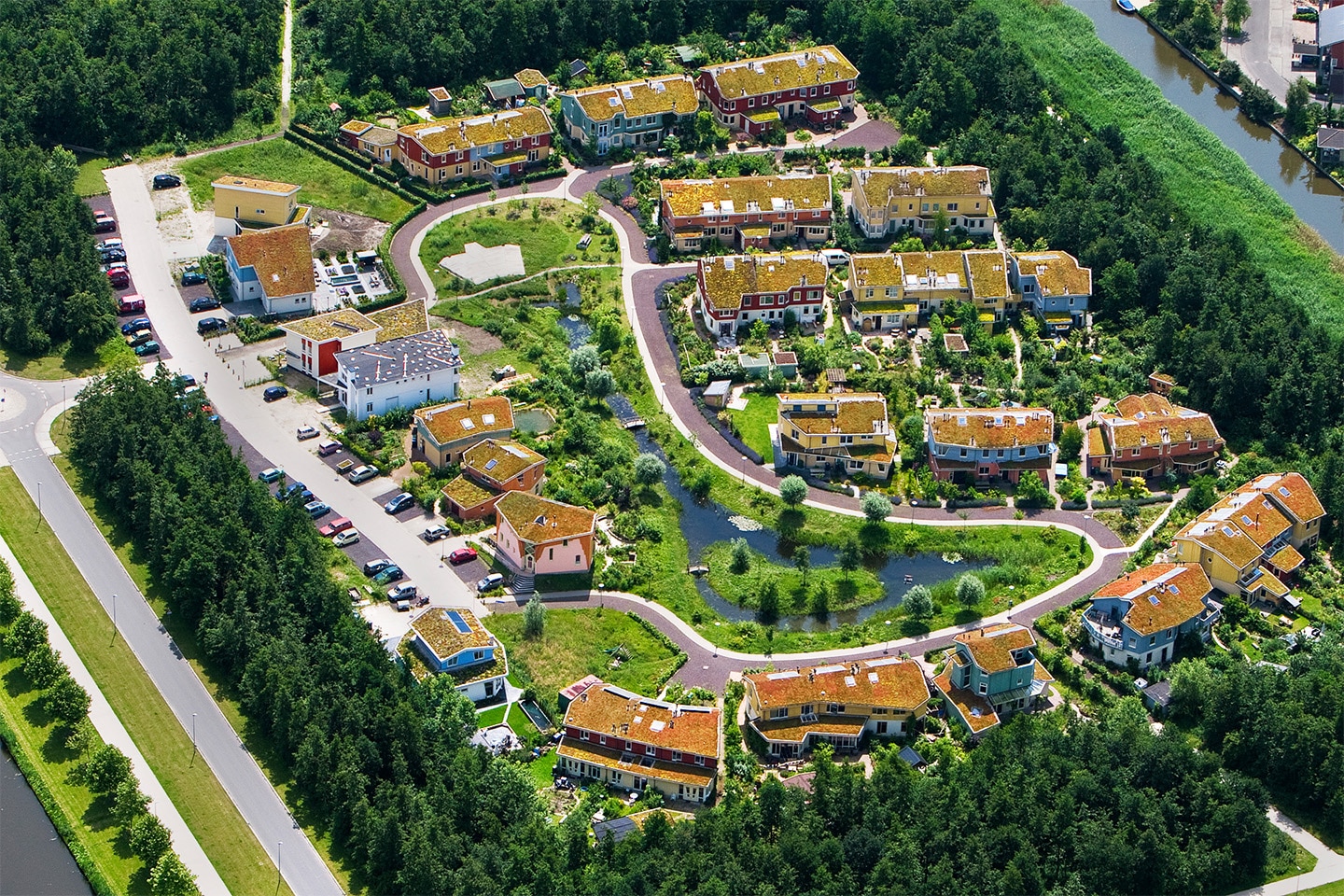
Climate change, heat stress, flooding and water shortages are ever more present in our daily lives, and aren’t about to let up in the future. Of course, we want to minimise their impact! The places where we live and work should be adapted to be healthier and withstand these issues better than they do today. Creating existing and new (residential) neighbourhoods full of flora and fauna would be a major step in the right direction. A growing number of local governments and cities are taking this approach in the development of new districts and renovating real estate. One appealing solution is the installation of green roofs with solar panels. This combination helps to tackle problems like heat stress, flooding, noise pollution, high energy prices and improve urban biodiversity.
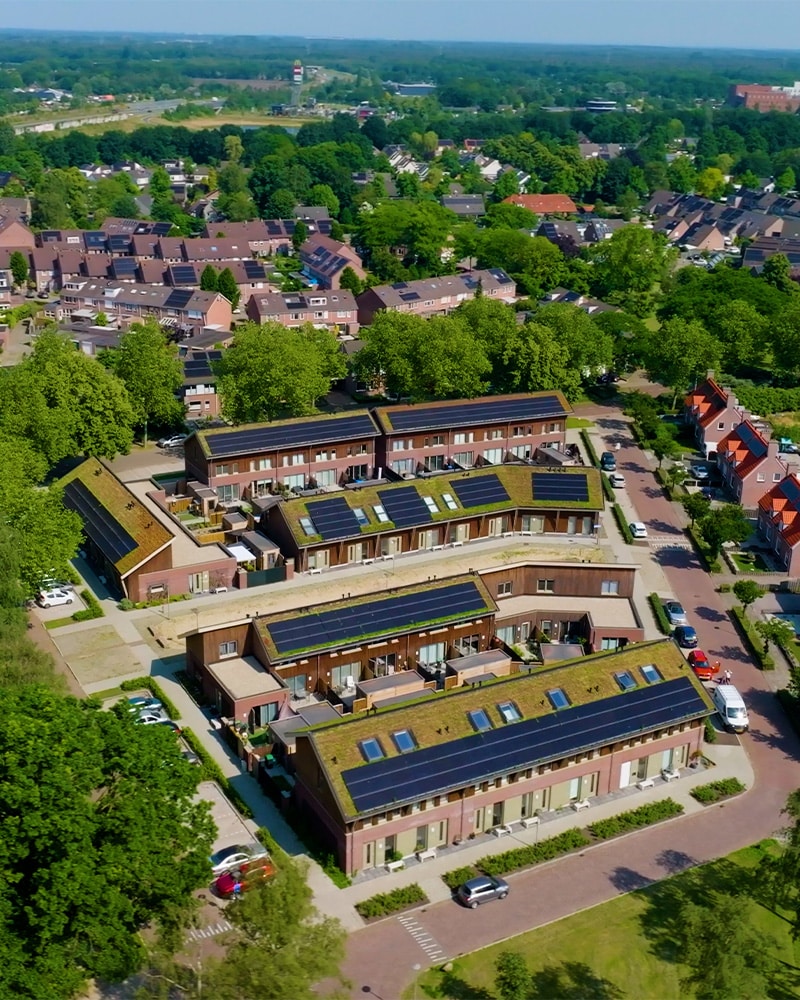
Making residential areas more sustainable is a high priority in many places. More natural spaces and nature-inclusive properties play an important role herein, especially in the battle against climate change, but also to improve people’s wellbeing in other ways.
Native flora and fauna are essential to our ecosystems. Having changed so much wilderness into cities and industrial areas, the number of species in our world has dwindled with 20% in the last century and even with over 30% in Europe.1 Rewilding our cities can help prevent further insurmountable losses.
In green neighbourhoods, insects, birds and other animals can thrive, provide pollination of plants, and control pests that harm humans and animals, like the oak processionary moths. Possible habitats include uncut grass, bird houses, shrubberies and hedgerows, as well as green roofs and walls. If at least 10% of the city is covered in a variety of flora spread throughout, it can already be a suitable habitat for bees and butterflies.2
Due to climate change, extreme rainfall events are becoming more intense all over the world
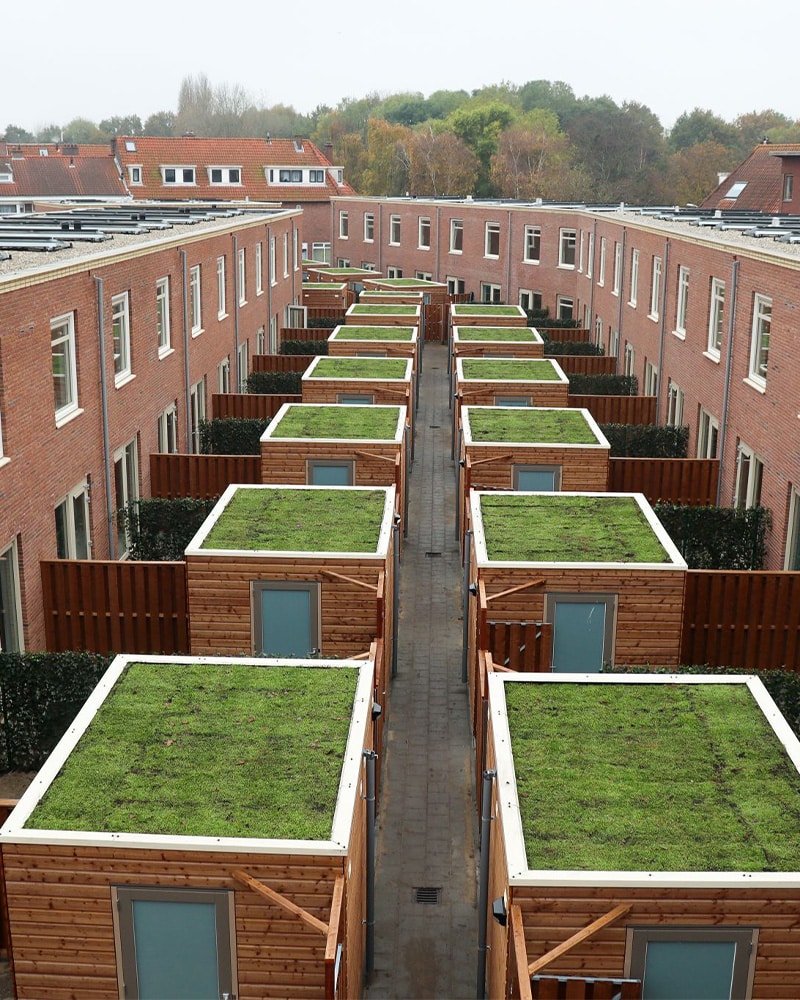
Due to climate change, extreme rainfall events are becoming more intense all over the world. In some climate zones, ‘when it rains, it pours’ will be an all too literal description.3 These downpours can cause significant damage. In districts with mainly paved ground and little greenery, water can barely infiltrate into the ground. When it runs directly into the sewage systems, these can start to flood into the streets and cause pollution, illnesses, and financial damage.
In neighbourhoods with parks, green gardens, and trees, the sewers won’t need to drain as much water because rainwater can infiltrate directly into the ground. Plants also absorb part of the moisture, and release it later through transpiration. Examples of greenery with additional water buffering capabilities are (blue-)green roofs, sunken gardens and parks, and wadi’s.
Green residential areas not only help mitigate and adapt to climate change, they also benefit residents in other ways. They are cooler, offer more shade, and have a positive influence on people’s mental and physical health. People that live in a green environment, generally feel calmer and healthier.4 They also experience significantly less anxiety.5 There’s reason to believe that being able to see and be present in green spaces every day, even if they’re small, could actually be more important than visiting vast, ‘high-quality’ natural areas once in a while.6
In urban areas that struggle with a lack of space, establishing so-called ‘Tiny Forests’ of around 250 m² shows lots of promise. They are refreshing spots on hot summer days, being on average 10 degrees cooler than surrounding streets, and are a haven for local wildlife.7
The amount of greenery in the surroundings also influences the amount of noise pollution that inhabitants experience.8 Natural sounds, like the rustle of the wind through the leaves and bird calls, are relaxing and pleasant for most people. These sounds also help to mask stressful and annoying noise from for example traffic and construction. Furthermore, plants, trees and soil are able to successfully decrease noise pollution by ‘reflecting, refracting, scattering and absorbing sound’.9 Green infrastructure solutions like living walls and green roofs can reduce the amount of sound that travels throughout neighbourhoods and within the buildings as well10,11,12,13.
Some plants have a larger effect than others. For example, a British study found that the coniferous larch tree absorbs the most noise in its bark.14
Example of a green neighbourhood
Creating nature inclusive and climate adaptive residential areas also has plenty of financial advantages, including:
Green roofs contribute in various ways. In cities, space is often a scarce resource. Flat and especially pitched roofs, however, are often empty and therefore a perfect place to create green areas. You can make the most of this unused space, by combining plants and solar panels on one roof.
We have to create a carbon-neutral world by 2050, and there’s still a long road ahead. That is why it’s important to already start building neighbourhoods which generate (most of) their own electricity. Unlike wind turbines, PV panels are easy to install and are less of an eyesore for many people. When panels are placed on a green roof, above the plants, this can result in an energy yield that’s 6% to even 20% higher!16 Namely, green roofs heat up less than dark roofs and thus keep the air around solar panels cooler, making them more efficient.
Accept marketing cookies to view this video.
Green roofs offer more space to birds to reside and make nests in between the plants, and in the case of flat green solar roofs, cool spots of shade underneath the solar panels. They can also serve as ‘insect highways’ or ‘stepping stones’, connecting natural areas with each other to help insects move throughout the whole neighbourhood and from one habitat to another.