Suitable for roofs with limited load capacity
Maximum saturated weight of just 45 kg/m².
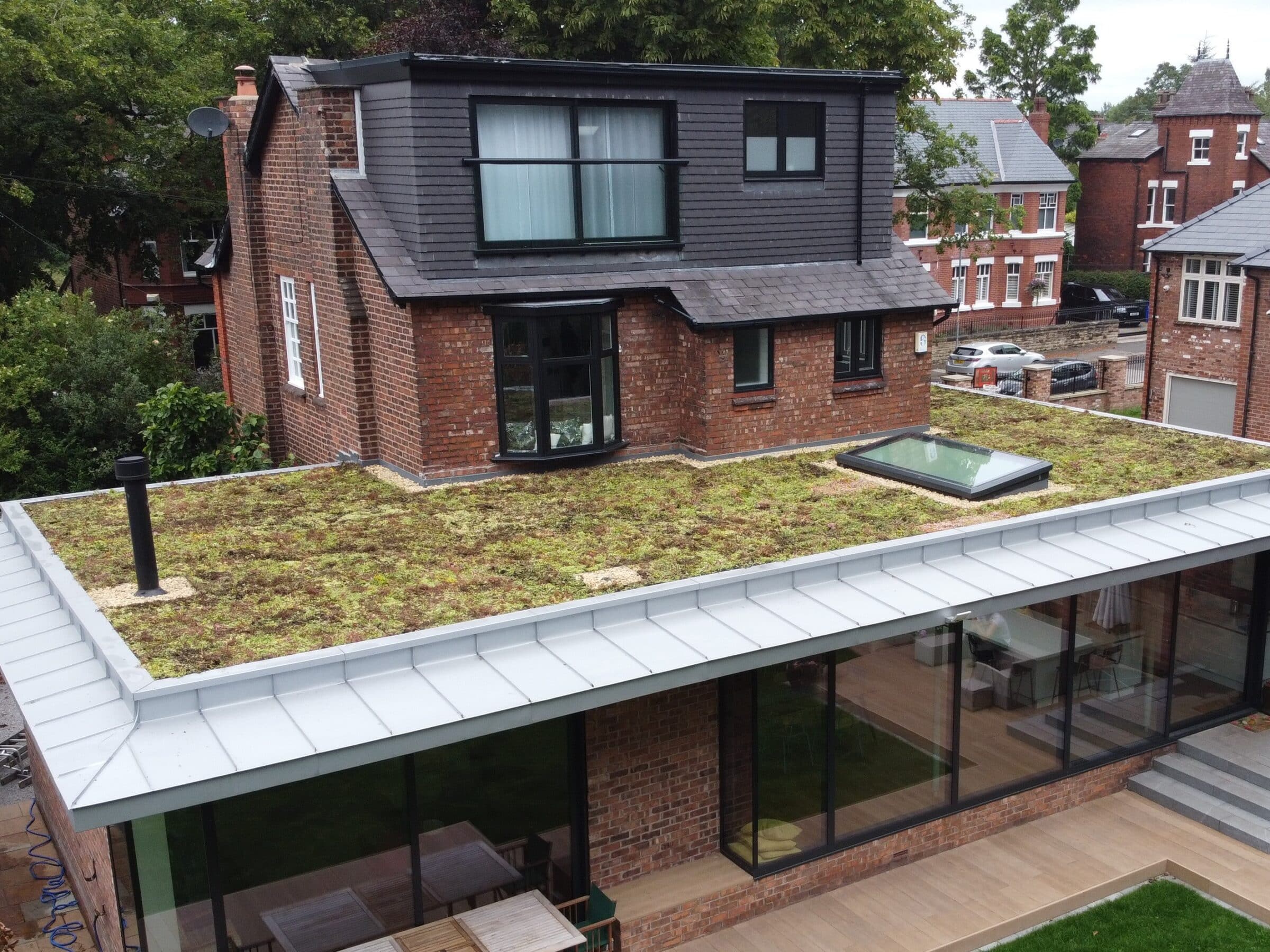
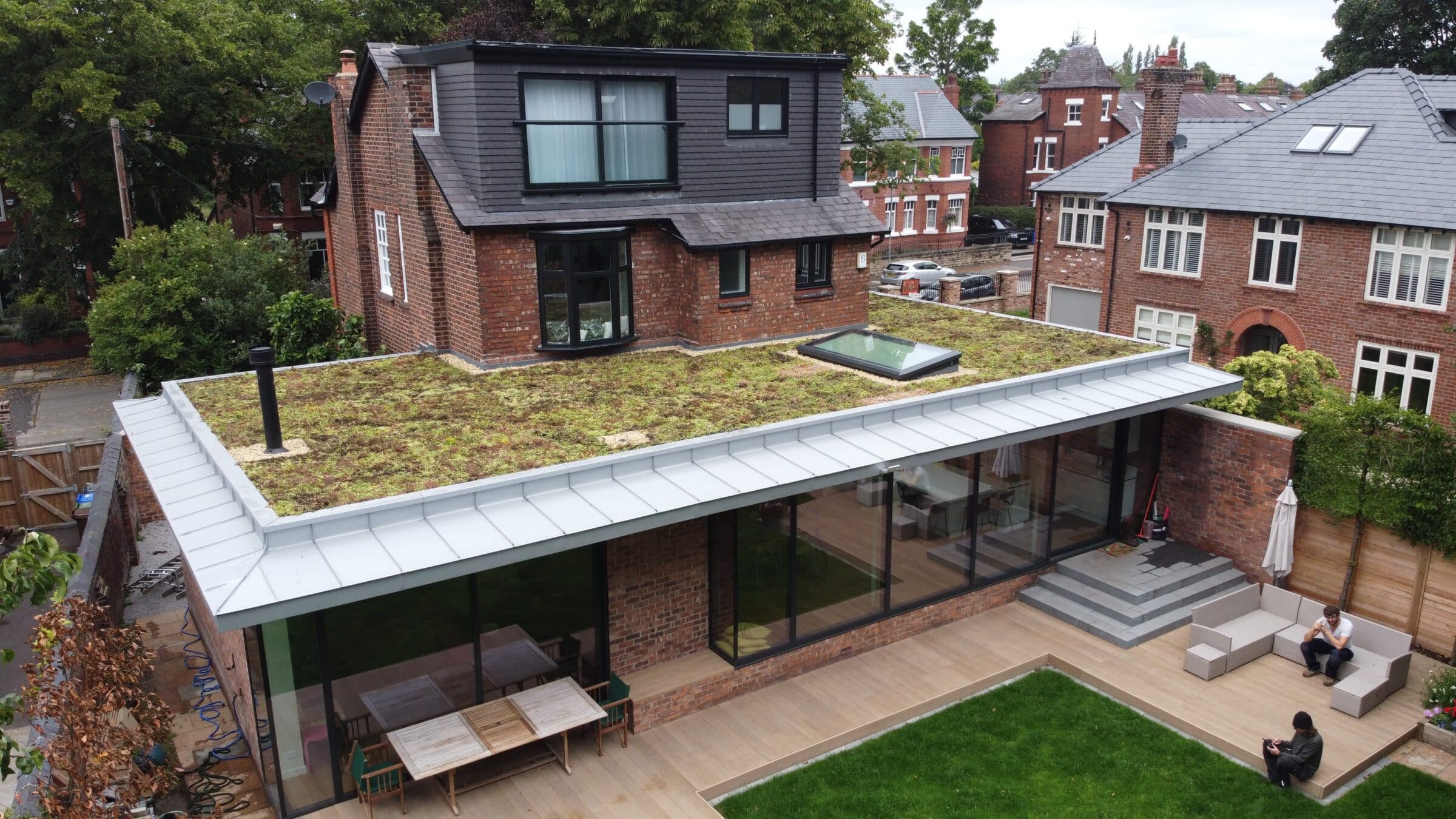
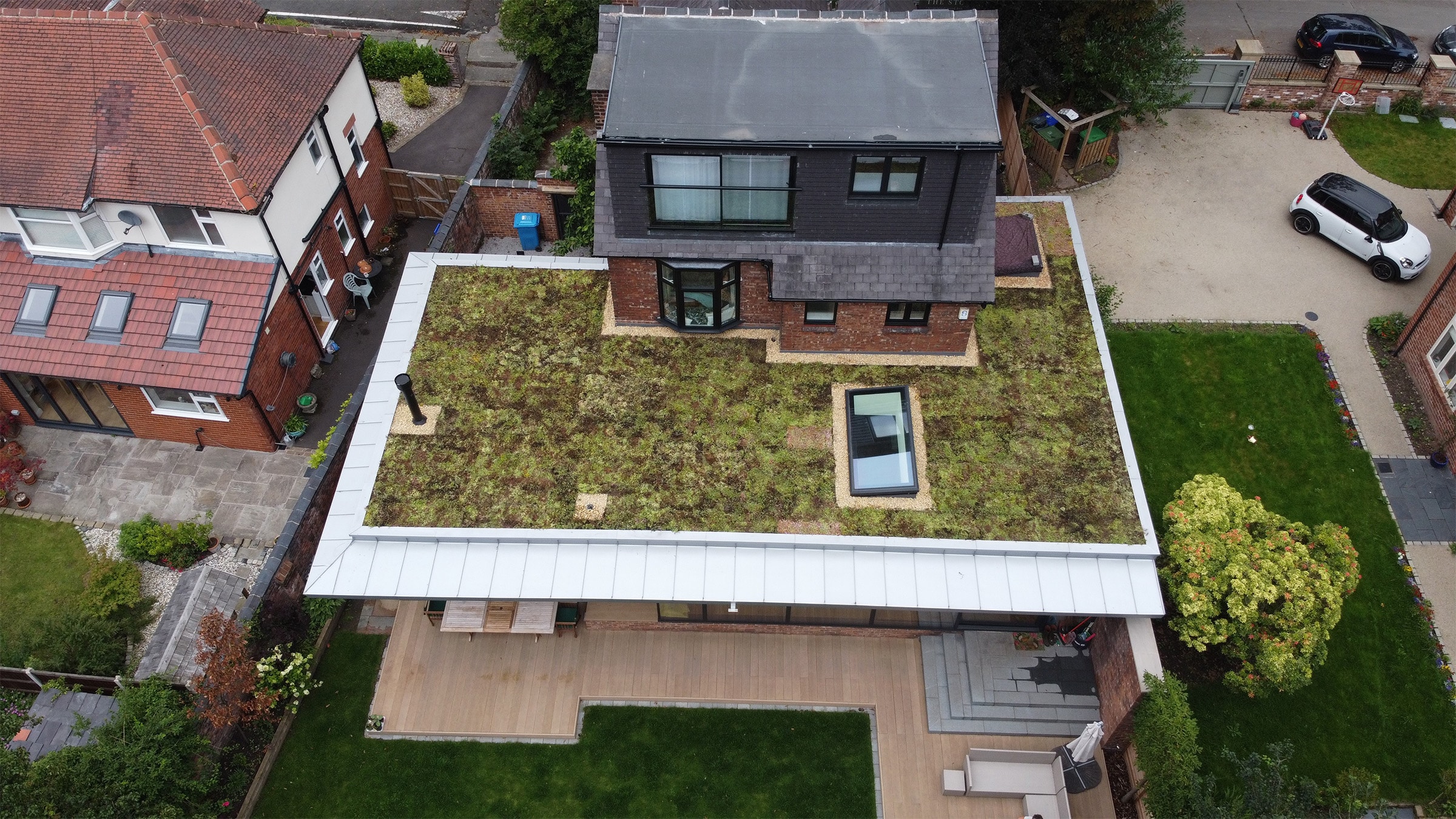
A private home extension in Manchester was fitted with a lightweight green roof from Sempergreen. Thanks to its innovative build-up, even this roof with limited load-bearing capacity could be greened. The result is a sustainable roof that contributes to biodiversity, stormwater retention and a more pleasant urban living environment.
Maximum saturated weight of just 45 kg/m².
Sedum vegetation attracts bees and other pollinators.
Combines low weight with high performance.
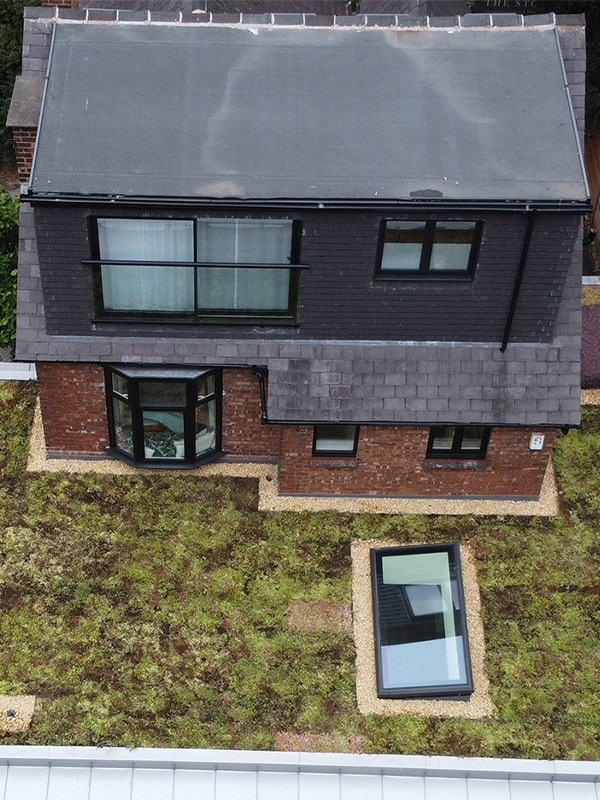
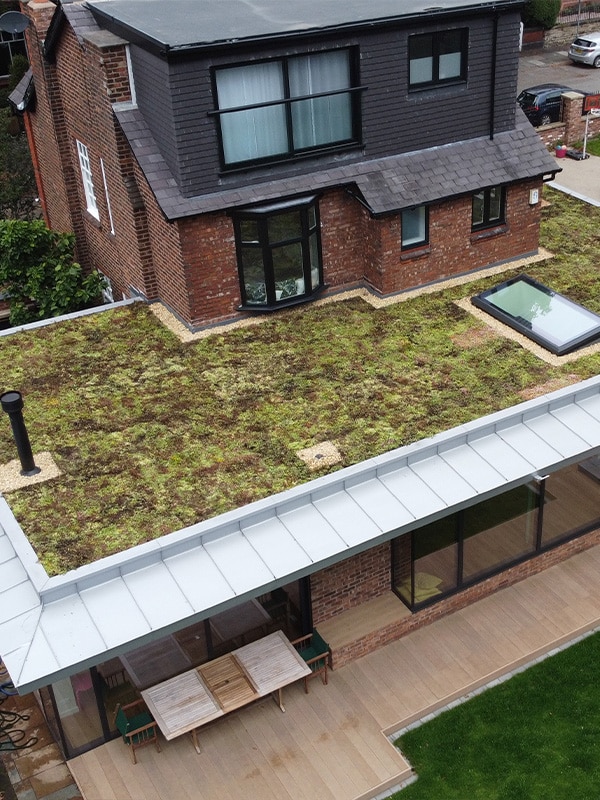
A lightweight green roof was installed on a home extension in a densely populated residential area of Manchester. Although the available roof space is relatively modest, the project demonstrates how even small surfaces can make a positive contribution to the urban environment. The green roof creates an attractive green feature within the cityscape while delivering benefits for both residents and the wider community. From biodiversity and stormwater management to noise reduction and urban cooling, the roof contributes to a more sustainable city in multiple ways.
“Even roofs with limited load-bearing capacity can be greened thanks to an innovative lightweight build-up.”
Not every roof is designed to support a traditional green roof system. In particular, home extensions, renovation projects and existing buildings often have structural limitations that make conventional green roofs unsuitable. To make rooftop greening possible in these situations, Sempergreen developed a specialised lightweight green roof system. This innovative solution allows roofs that would otherwise be unable to support a traditional green roof to benefit from all the advantages of rooftop vegetation.
The system installed on this project has a maximum saturated weight of just 45 kg per square metre, making it one of the lightest green roof systems available on the market. The foundation of the system is a specially developed mineral wool growing medium that combines low weight with excellent functional performance.
Despite its lightweight composition, the system is still capable of storing rainwater and slowing down runoff during rainfall events. This enables the roof to contribute to climate adaptation without placing additional strain on the building structure.
The lightweight green roof is planted with a carefully selected mix of six to eight different Sedum species. During the flowering season, the roof transforms into a colourful landscape that changes throughout the year. The vegetation provides food and shelter for bees, butterflies and other pollinating insects. Even relatively small roof areas can therefore create valuable habitat for species that are increasingly losing space within urban environments.
The benefits of a green roof extend beyond the roof itself. For residents, the system provides additional protection for the roof membrane against UV radiation, temperature fluctuations and weather exposure. This can significantly extend the lifespan of the roof. The green roof also helps reduce ambient noise and contributes to a more comfortable living environment. The wider neighbourhood benefits as well. The vegetation helps mitigate urban heat, improves air quality and supports local biodiversity.
As space becomes increasingly limited in cities, rooftops are playing a more important role in urban greening strategies. This project in Manchester demonstrates that limited load-bearing capacity does not have to be a barrier to sustainable ambitions.
Thanks to its lightweight build-up, many more existing buildings can now benefit from rooftop greening. The system creates new opportunities for architects, property owners and residents who want to contribute to climate adaptation, biodiversity and healthier urban environments.


Ready to make a difference? At Sempergreen, we believe in building a greener future, one step at a time. Our innovative solutions are designed to help you decrease your footprint and contribute to a more sustainable world. Join us in replanting the planet!