- Smart Renovation
- Knowledge
Enhance property value with eco-friendly remodeling
A living wall is planted with a combination of different plants. We are often asked which plants we use in our green facades. Thanks to years of experience with the cultivation process and maintenance of green walls, we have carefully compiled several standard plant assortments that are suitable for many sun orientations, wind directions, and climates.
Lenhard van Ballegooijen, director of Sempergreen Nurseries, and Peter van Klaveren, maintenance specialist at Sempergreen Vertical Systems, explain passionately in this article what criteria underlie the plant selection for a living wall.
The stronger the roots, the stronger the plant.
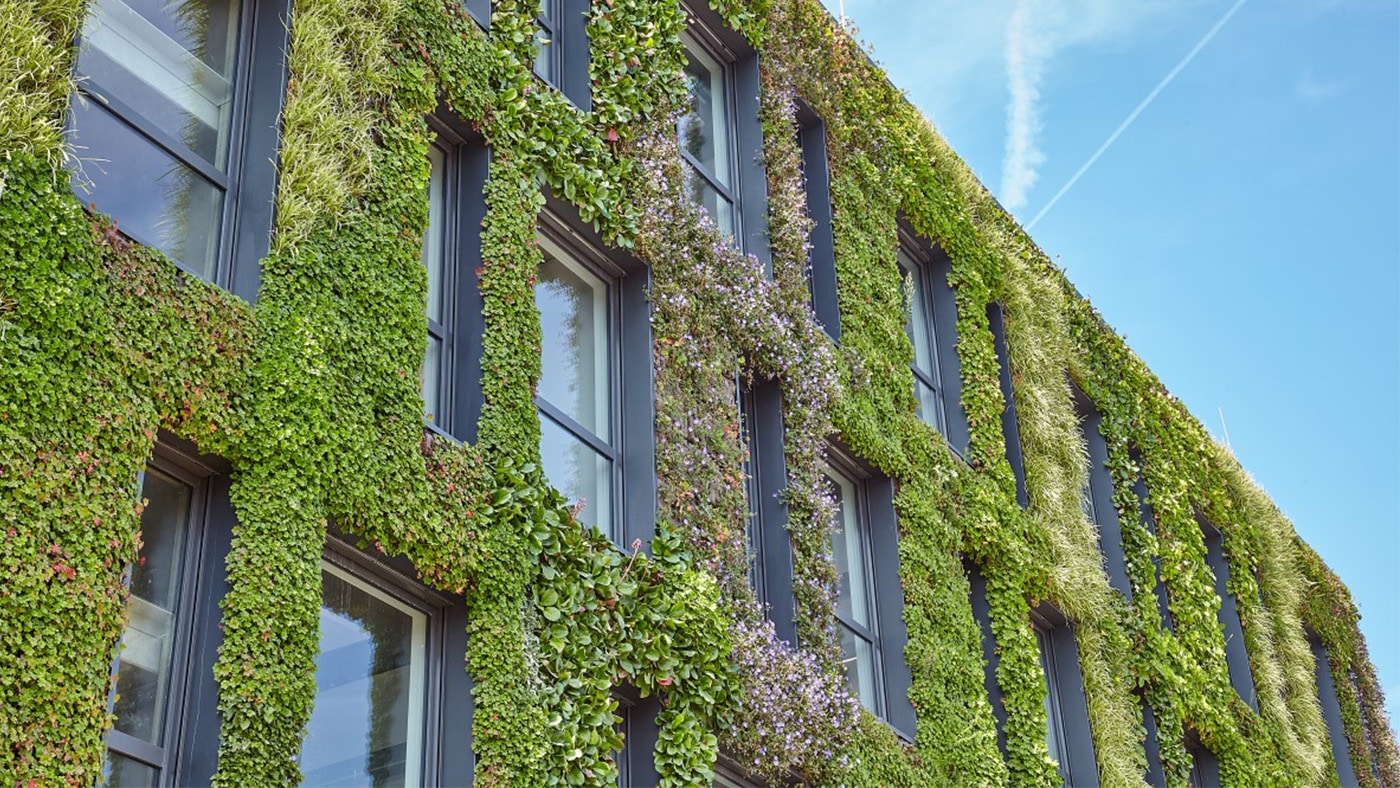
Van Ballegooijen: “Sun orientation is the first and foremost criterion when selecting plants for a green facade. Sunlight is decisive for the flowering of plants. Our standard plant mix always consists of a combination of hardy (and therefore always evergreen) and flowering plants. Flowering plants are often deciduous plants. These plants lose their leaves in autumn and come back in spring with new leaves and flowers. For a vertical garden with little light, e.g. due to a north or northwest-facing location, we offer two plant assortments especially for these type of projects. These plant selections include only hardy evergreens that thrive in semi-shade or shade conditions.”
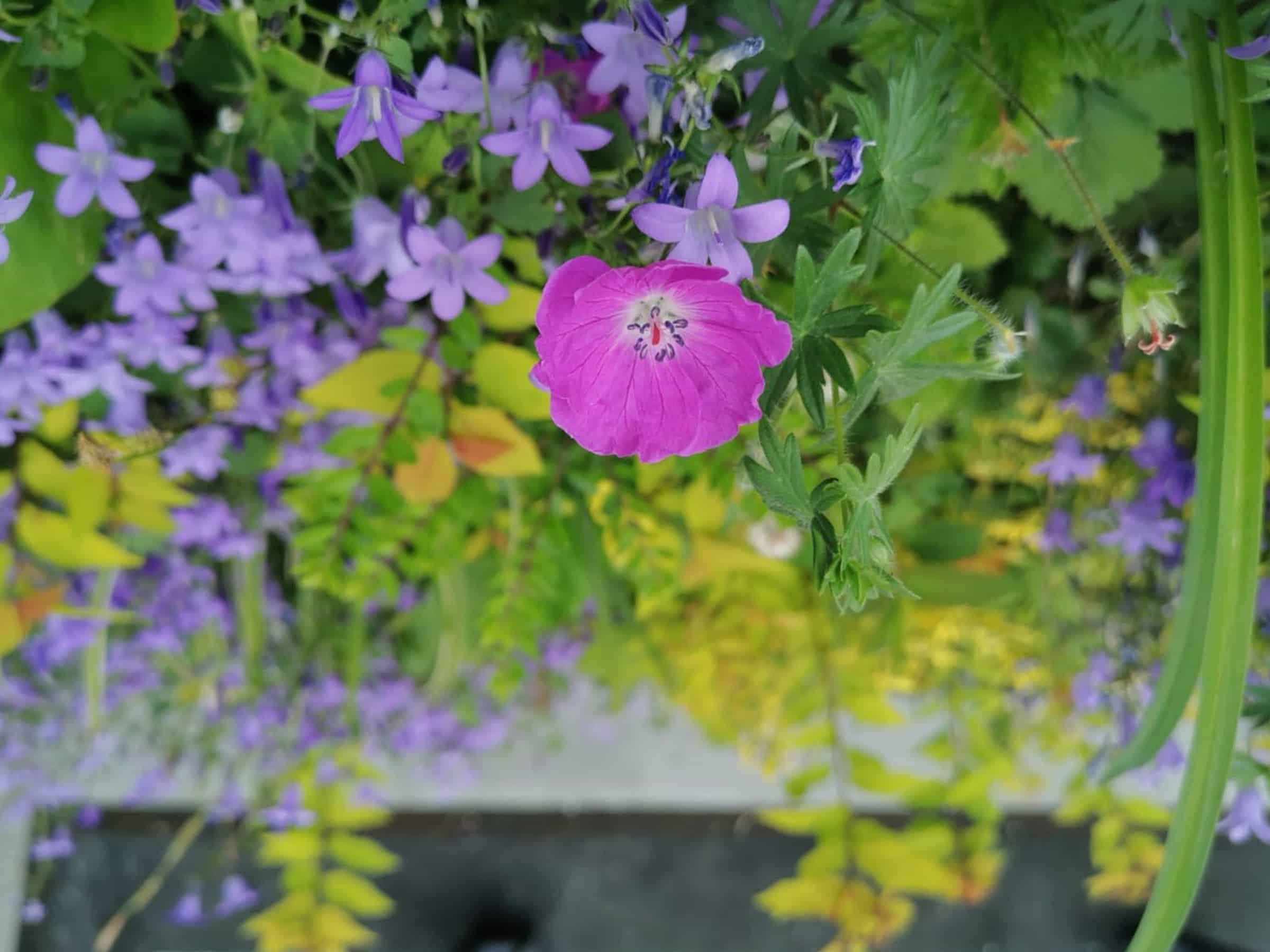
“In a planting plan for a vertical garden, we also take into account the flowering periods of the plants. We ensure that the flowering periods follow each other as much as possible, so that the facade is in bloom from spring to late summer. Beautiful flowering plants include Geranium sangineum and Potentilla fruticosa,” says Van Ballegooijen.
“Another aspect is the flower color. Sometimes customers have a preference for a specific color. For these projects, we have developed two planting schemes, which are perfectly matched in terms of color. So, in addition to the standard range, customers can choose a customized planting scheme with a variety of flower colors. For example, blue-purple plants such as Campanula poscharskyanam, Geranium renardii and Veronica prostrata. Or choose a more yellow-colored floral display with plants such as Hypericum calycinum, Iberis sempervirens and Waldsteinia ternata.”
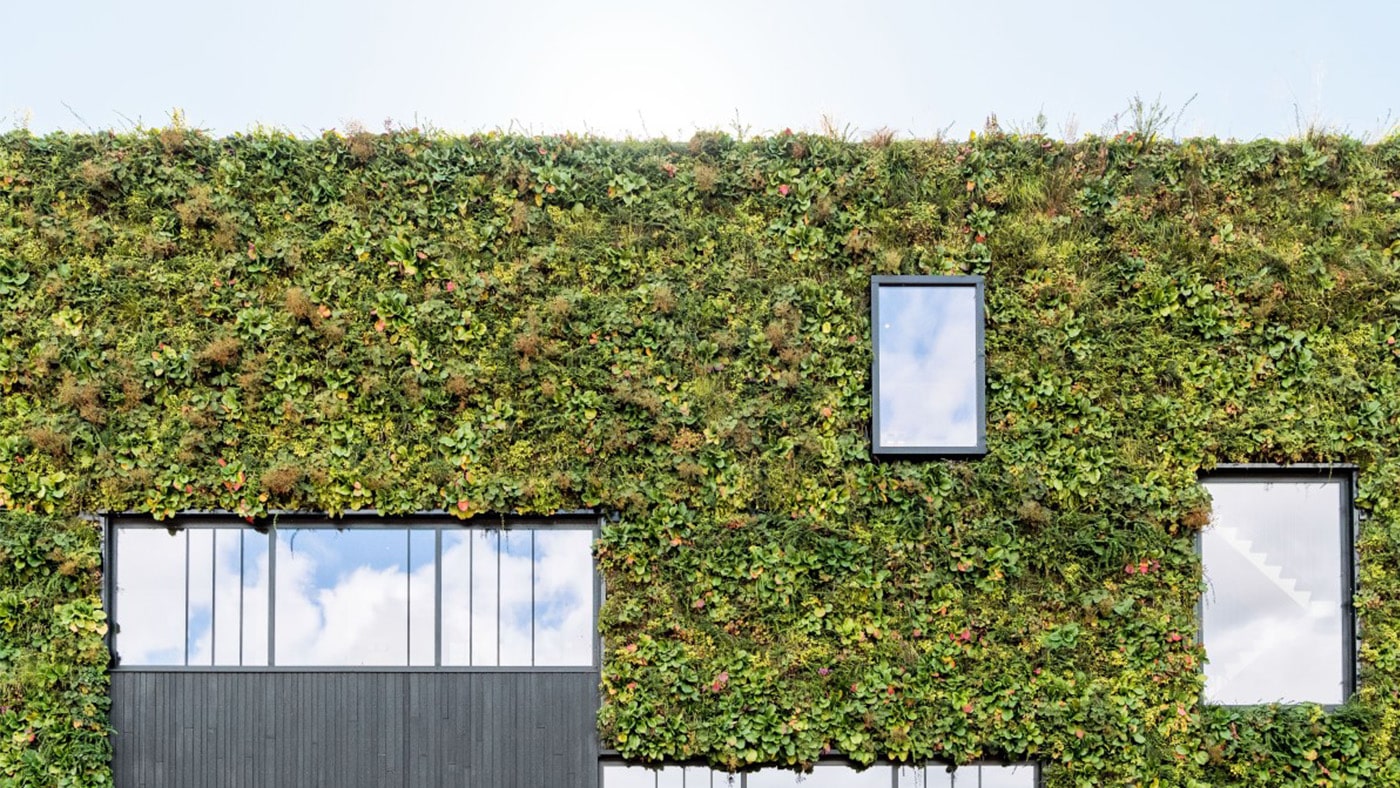
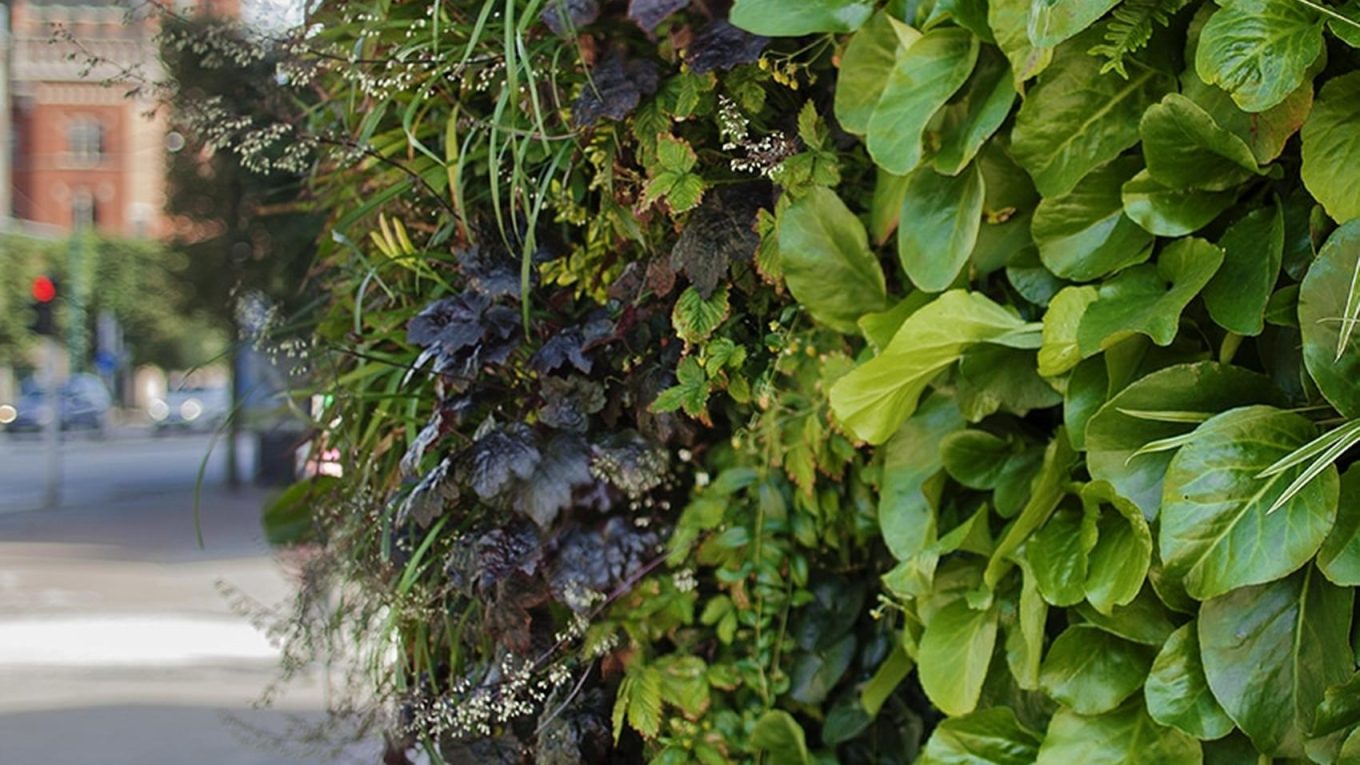
“By the way, we do not only look at the color of the flowers, but also at the color of the leaves. By accentuating the leaf color of the plants, a SemperGreenwall has an energetic look even outside the flowering periods. Different leaf colors can very well be combined. For example, fresh green and dark green leaves go well with more gray and red leaf colors. Leaf and flower colors can also be used to create beautiful patterns in a wall, if a customer so wishes.”
Peter van Klaveren adds: “In the plant mix, we also consider the leaf size. Combining plants with large and smaller leaves gives a nice 3D effect. Moreover, large leaves create a nice coverage of the wall. We take great care that the leaves do not grow so large that they overgrow the other plants and make sure all of them receive sufficient sunlight. This is an important balance that we are always looking for. Maintenance of a green wall plays a major role here, to preserve the diversity of the plants.”
“In our plant selection, we also always assess the degree of rooting of the plant. The stronger the roots, the stronger the plant. This is why we always choose plants that develop a strong root system and are therefore well suited for vertical growth.”
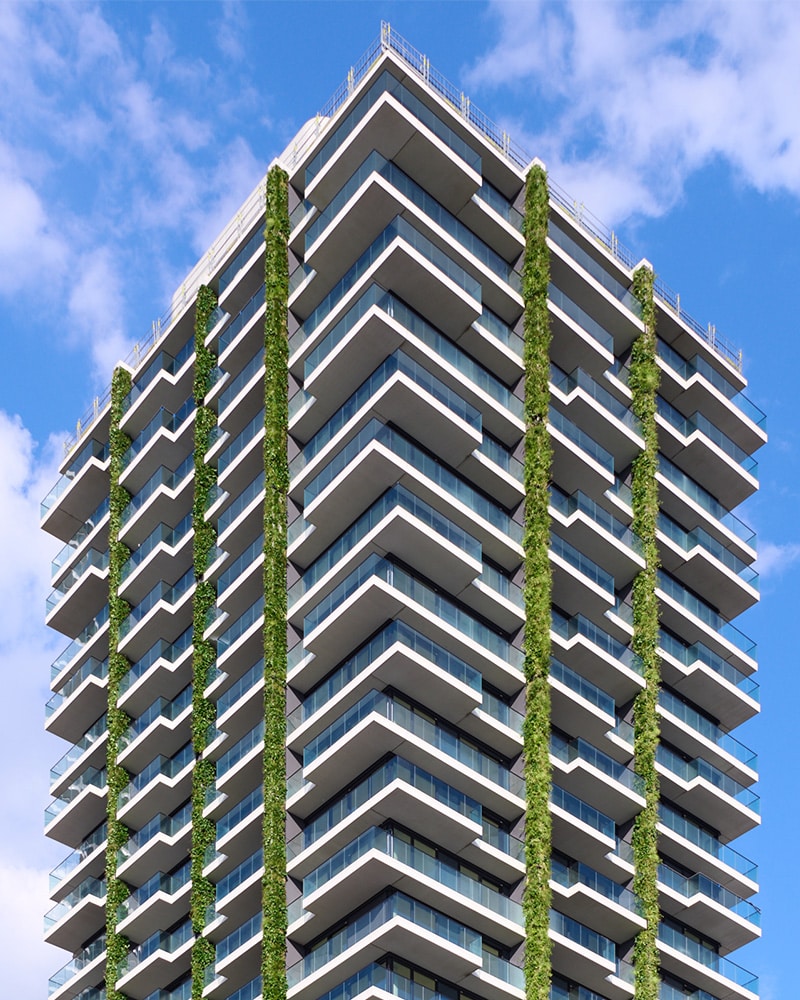
“Plants in an outdoor green facade should also be resistant to wind. Again, rooting is important. The stronger the roots of a plant, the better it can withstand strong wind conditions. Also, the higher the living wall, the more wind a green facade will catch. A good example of this is the Eden Tower project in Frankfurt, one of the tallest green facade projects in Europe. Here, the green facades reach as high as 321 feet and include a total of 185,000 plants, spread over more than 21,528 ft². To prevent plant failure at this height, wind resistance is extremely important.”
“We also always look carefully at a plant’s water requirements. There can be a significant difference in water requirements between different plant species. Without water, plants will perish. So if you place plants together where one plant needs a lot of water and the other needs very little, one of the plant species will not survive. That is why we search for species that are very similar in terms of water requirements. This way we can always provide the right amount of water through the automatic Plant Care System.”
“Finally, the local climate determines plant selection for a living wall project. Our standard range is suitable for almost any climate, from maritime to continental and from cold northern to warm southern climates. However, we can add accents, for example. For green facades installed on the coast, we will primarily select hardy plants and grasses, such as Calex oshimensis and Alchillea millefolium. These are plants with a high salt resistance.”
Van Ballegooijen continues: “Our standard plant mix for an outdoor green facade consists of 19 different species of plants, with different flowering periods, flower and leaf colors. This selection is a combination of sun and semi-shade plants, and an interplay between deciduous and hardy plants. 25 plants are planted per panel. This is done randomly, which results in a vibrant wall with a great diversity of plants.”
Download Technical Documentation“If you opt for a vertical garden in a low-light location, you need to adjust your plant selection accordingly. Since the choice of flowering plants is limited, we place the color accents here in leaf color. For a north-facing green facade, two different standard assortments have been developed; a Red-shade mix with plants such as Ajuga reptans, Bergenia cordifolia, and Physocarpus opulifoloius; and a Green-shade mix with, for example, Euonymus fortinei and Lonicera pileata. Only hardy semi-shade and shade plants are included in both mixes, making these facades excellent for shady conditions.”
Download Technical Documentation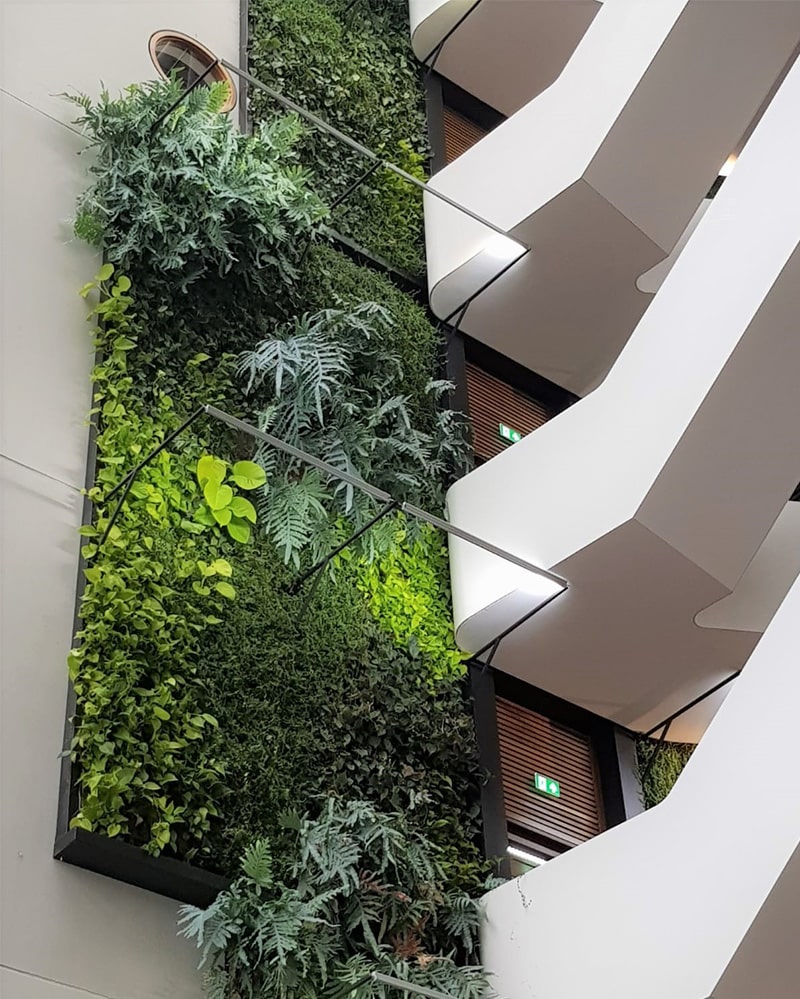
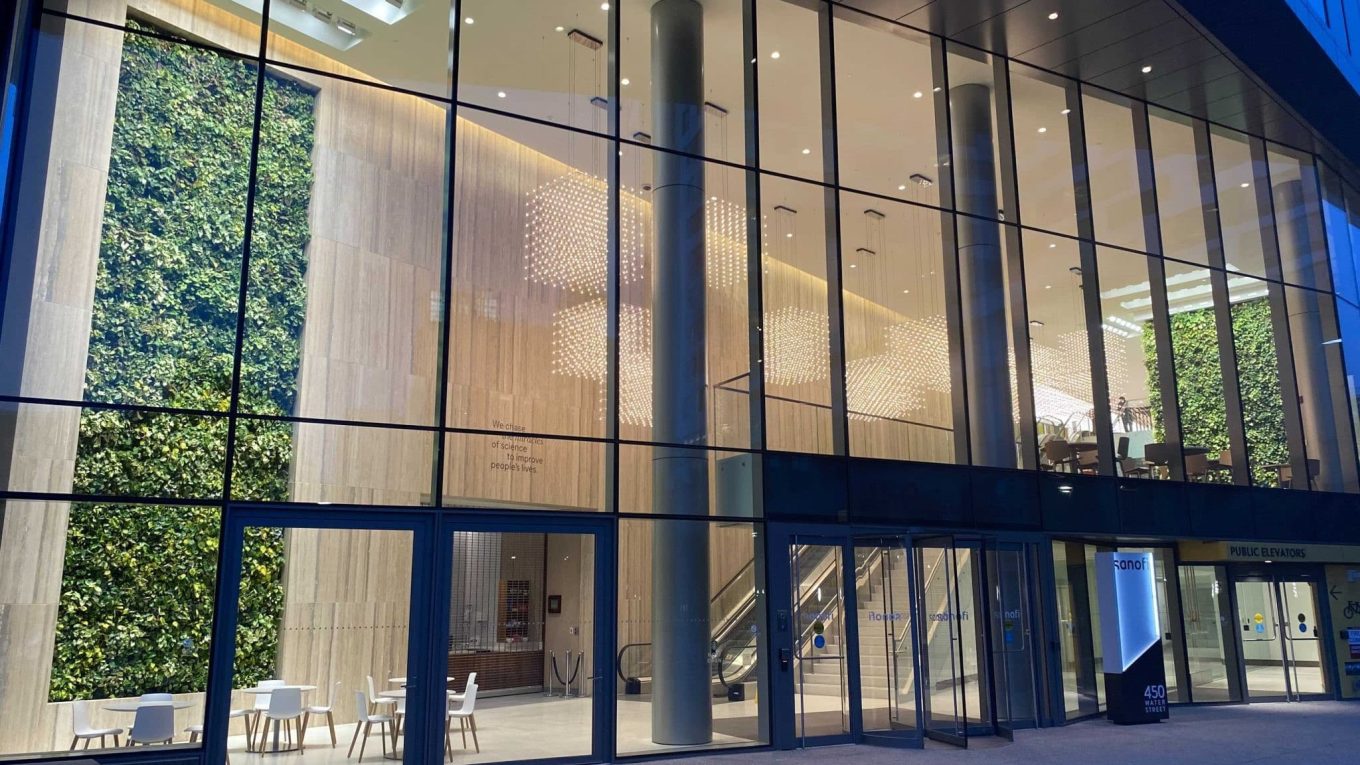
“A standard assortment is also available for an indoor green wall. The choice of indoor plants is smaller than for outdoor plants, as there are simply fewer of them available. For an indoor SemperGreenwall, we plant 20 plants per panel. The size of the plants is carefully matched. We also look closely at the water requirements of the various plants and the amount of light available. If an indoor green wall is installed in a dark place, we always advise adding extra lighting so that the plants remain in good health even in dark conditions,” says Van Klaveren. “Plants that do well in an indoor living wall include Epipremnum aureum, Philodendron scandens, and Spathiphyllum. These plants also have an extra high air-purifying effect!”
Download technical documentation
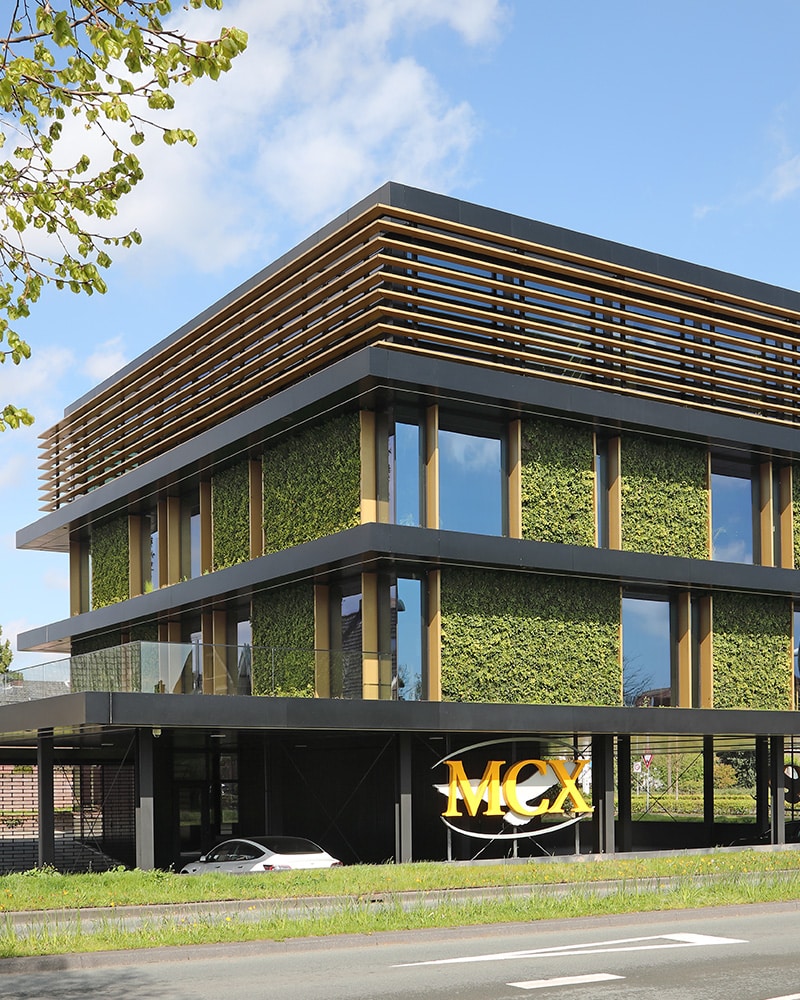
“Sometimes we are asked if we can also plant a green facade with plants selected by the customer. We certainly can! For this purpose, we have a list of 40 to 50 outdoor plant species and 20 indoor plants available for customers to choose from. We know the specific qualities of all these plants, whether they are suitable for vertical growth and how they behave under various conditions. For example, if it concerns a green wall in an extreme climate, we explain that it is wise to choose plants that are suitable for this situation. This way, together with the customer, we always achieve the best result for their living wall project.”
“A good example of a customized living wall is the MCX Apeldoorn project. Here, the customer wanted only two plants incorporated in the wall; Pachisandra terminalis ‘green sheen’ and Euonymus fortunei ‘Radicans’. We then check whether these plants match each other in terms of water requirements, leaf growth, and rooting. That turned out to be the case and this is how you get a beautiful result according to the customer’s wishes. Spa Zuiver in Amsterdam is another example of such a project. We are now working on a project in France, which will be designed and planted entirely according to the customer’s wishes,” Van Ballegooijen concludes.
“If we are in the growing season, i.e., spring, the minimum growing period is 14 to 16 weeks. If we receive an order outside the growing season, this period will be longer because it takes more time for the plants to mature in the living wall system. But normally, projects are notified to us well in advance so that we have enough time to grow a green facade for the project. Fortunately, we always maintain a base inventory, so should a project need to be delivered quickly, we can often find a way around that.”
Want to know more about which plant assortments we use for our living walls? Feel free to contact one of our green wall specialists.