- Water Management
- Knowledge
Water Storage in the Garden: Smart Solutions for Heavy Rainfall

By now, most of us are aware that there are numerous benefits to having a Sedum roof. But what’s it like to actually own a Sedum roof and what kind of care does it necessitate? In this article, we depict a green roof with Sedum mats throughout the seasons, elucidate when a Sedum roof can be installed, and what maintenance it requires.
Before we discuss a year in the life of a Sedum roof, the question arises: at what time of the year can a Sedum roof be installed? Actually, this can be done at any time of year, except in the event of prolonged frost. However, during dry periods, and immediately after installation, ensure that the Sedum plants are watered for a few days so that they can recover properly.
Here’s what you need to consider when planting a green roof in the winter.
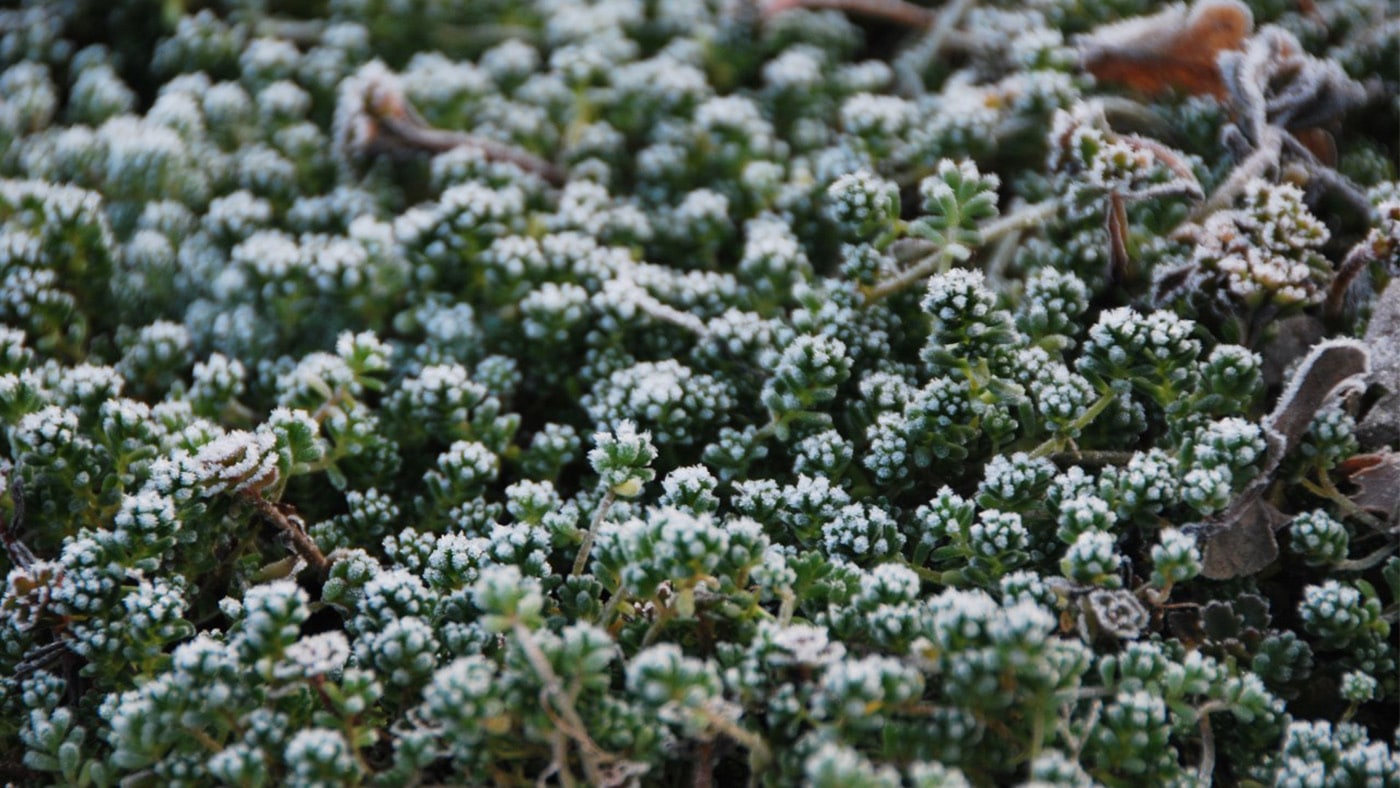
It’s winter at the time of writing, so let’s start there. In case of heavy frost, the Sedum plants will endure it well. Sedum is a hardy plant and during this time it will be dormant. This means that the roots of the plants remain inactive until spring. Snow on green roofs is not a problem either. In fact, snow has a positive effect on the Sedum roof by insulating it and providing additional frost protection. It’s also a useful source of water when it starts to thaw.
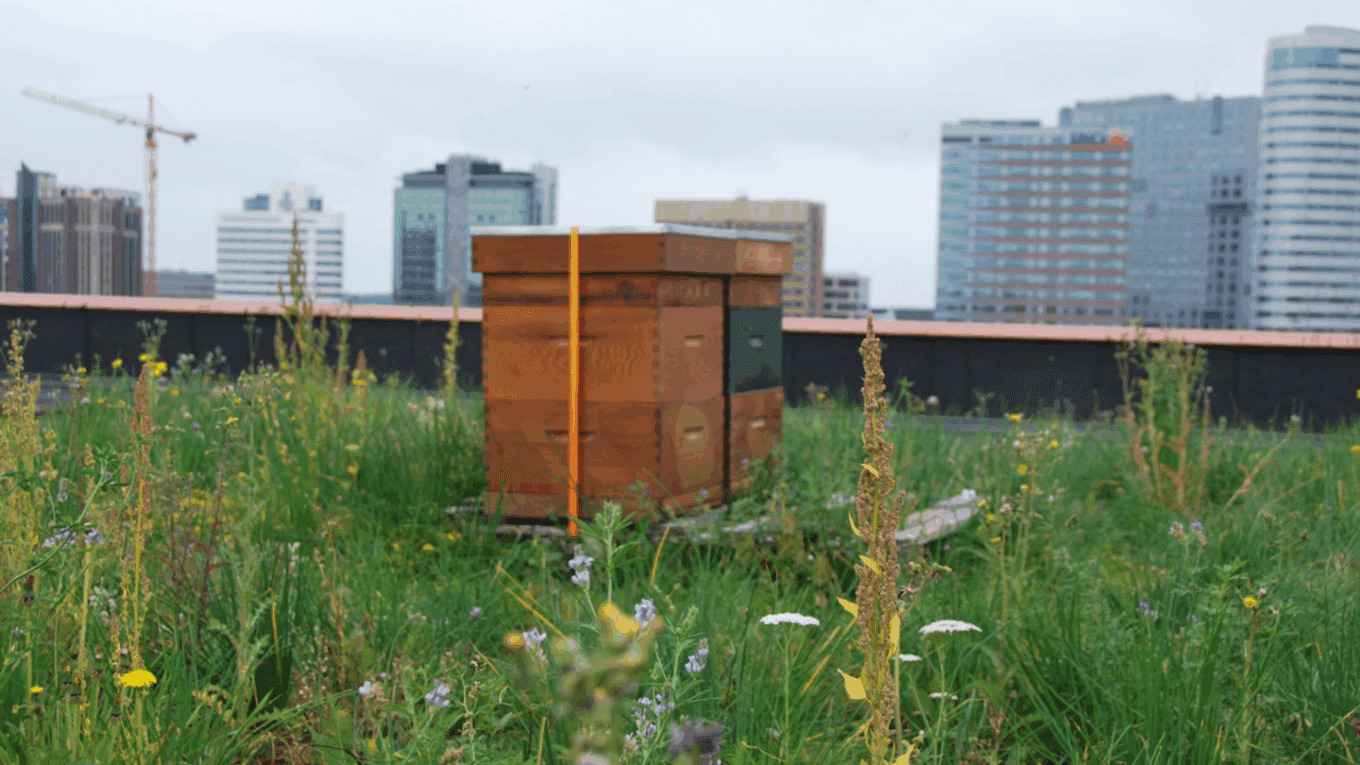
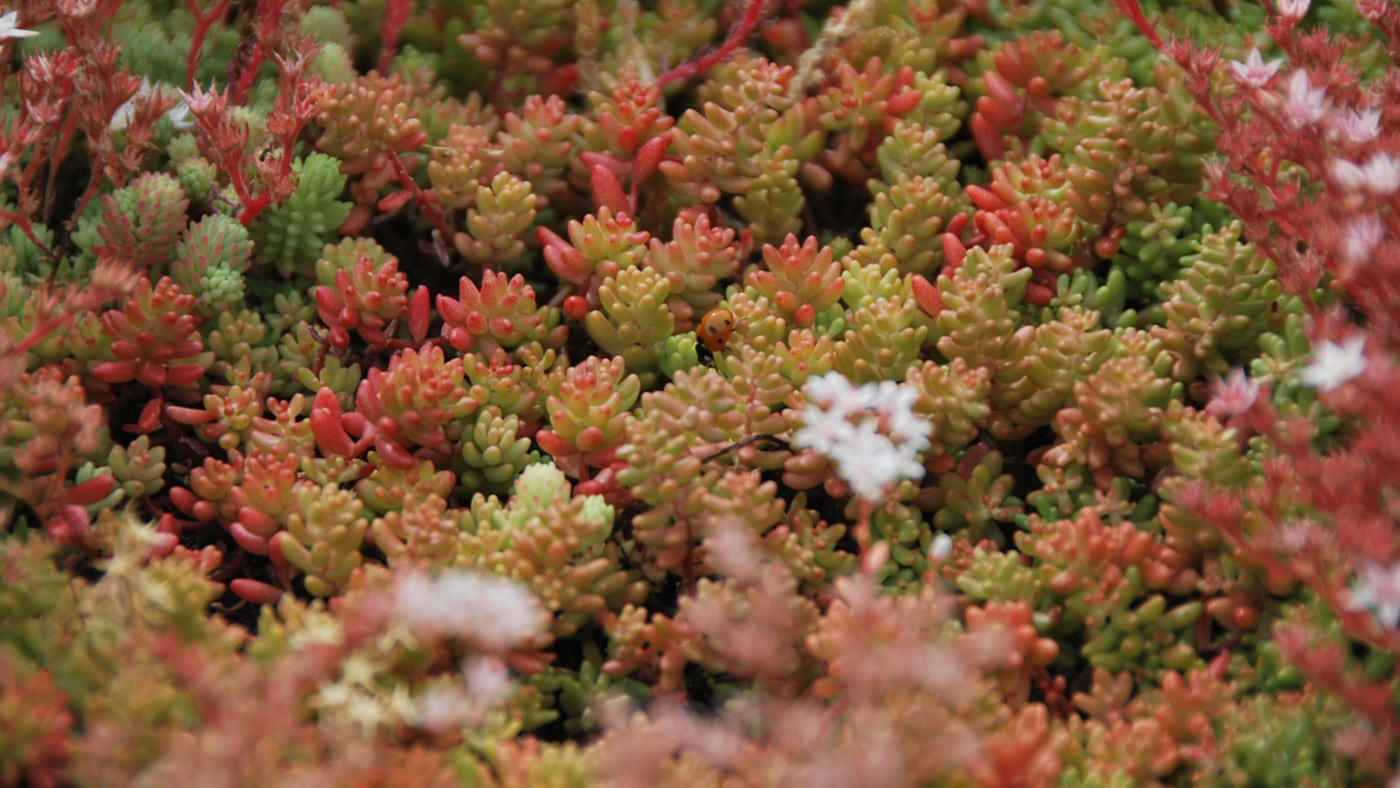
At the beginning of spring, the green roof still looks fresh and green. If it has been a dry winter, the plants may have a red appearance. This is easily remedied by watering the roof with a sprinkler, garden hose, or previously applied irrigation system. Now that winter is over, the Sedum plants need feeding. The best time to fertilize the Sedum plants is at the end of April. Around this time, it’s also advisable to carry out a roof inspection and manually remove any weeds, or leaves that have fallen into the gutter. The first Sedum species start to flower in May. That is when the first pollinating insects arrive on the green roof. Birds also find it a nice place to stay or even build nests in spring.
More information on biodiversity on green roofs? Click the link.
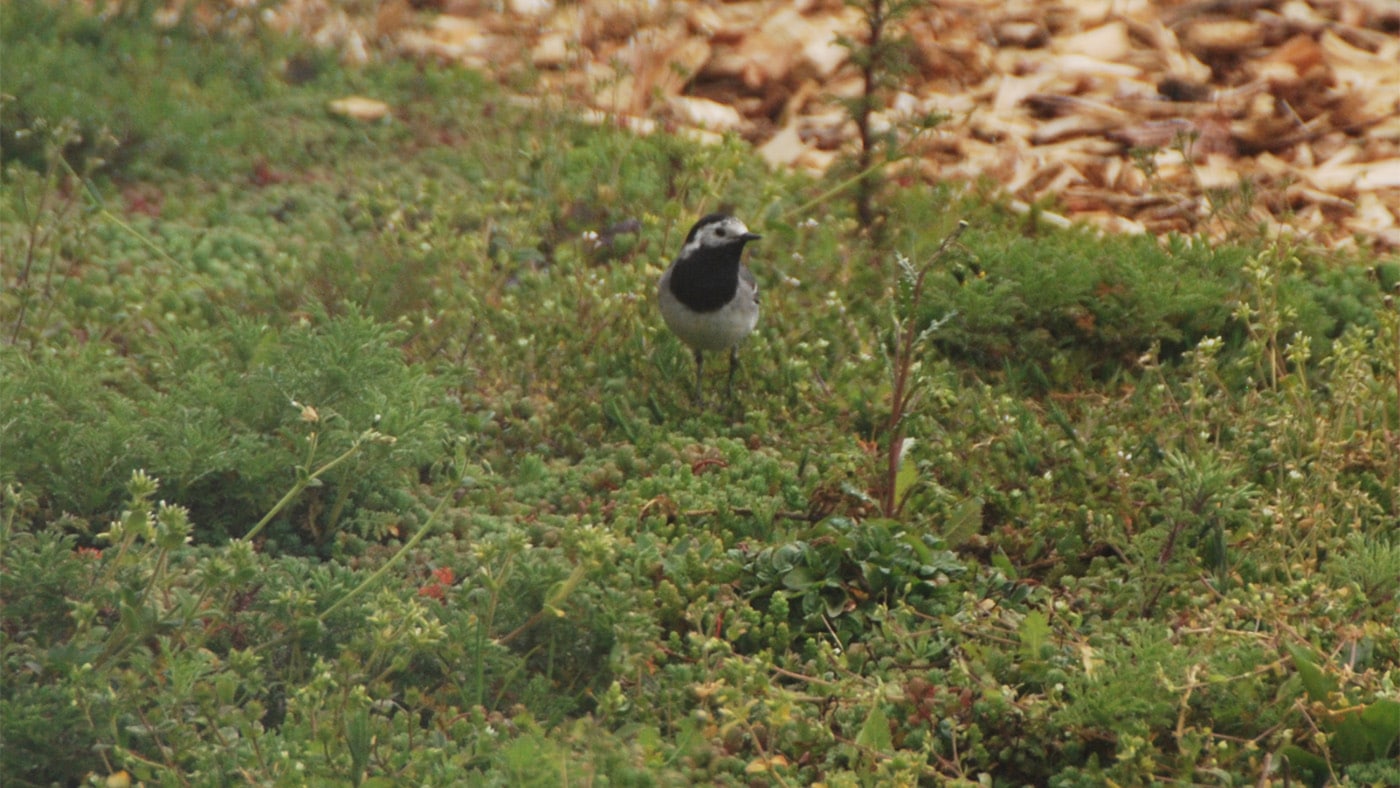
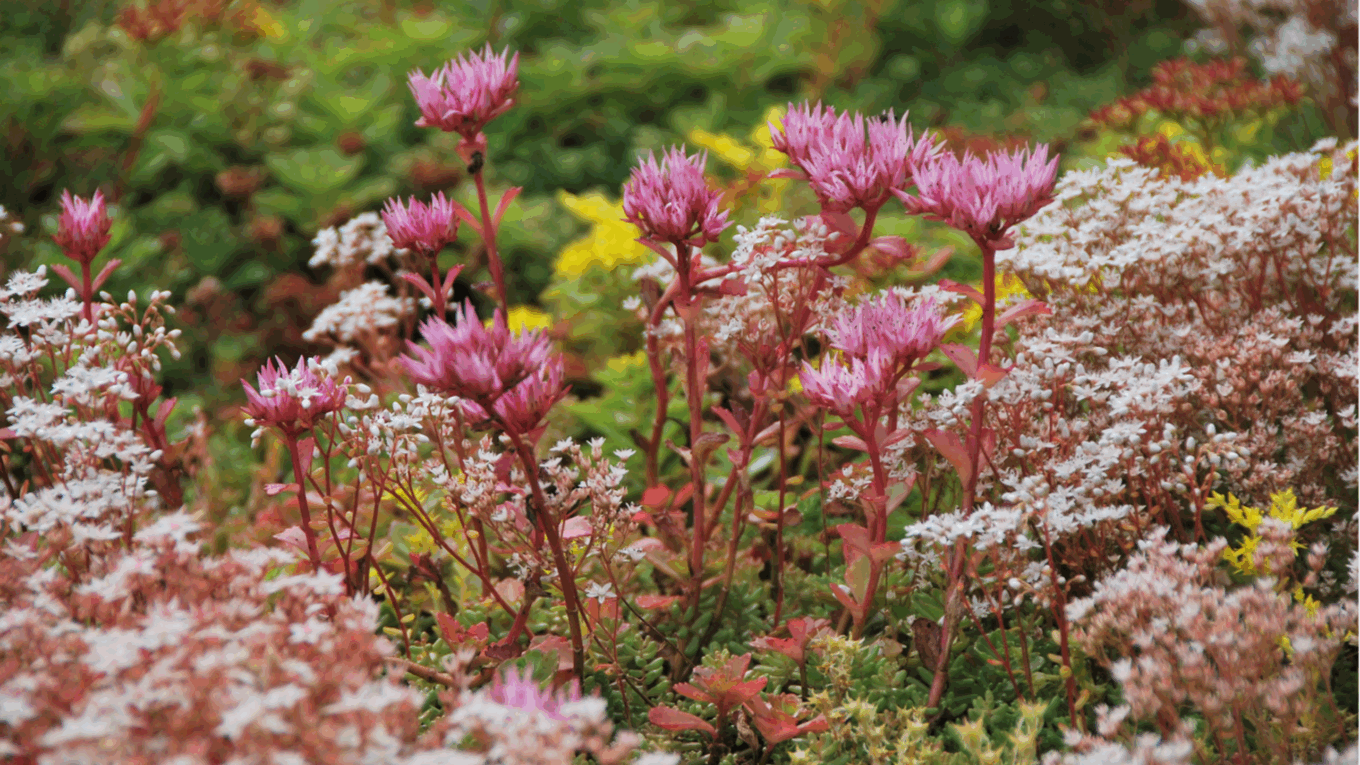
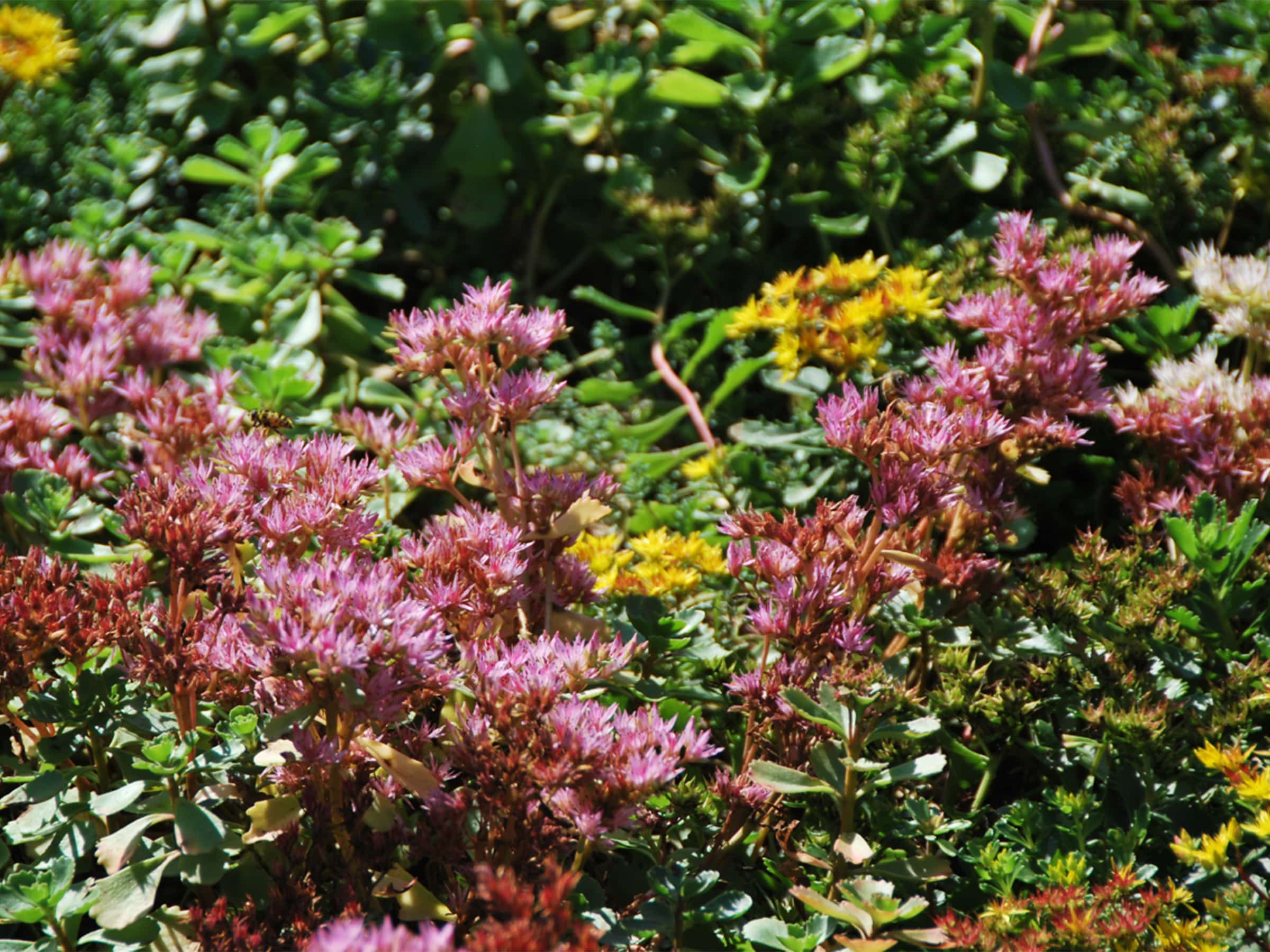
In the course of summer, you can observe an increasing number of Sedum species beginning to bloom on the green roof. The roof buzzes with bees and is frequented by other pollinators such as hoverflies and butterflies. Water the green roof regularly during prolonged dry spells to prevent the Sedum plants from turning red. This also enhances the cooling effect of the green roof on hot days.
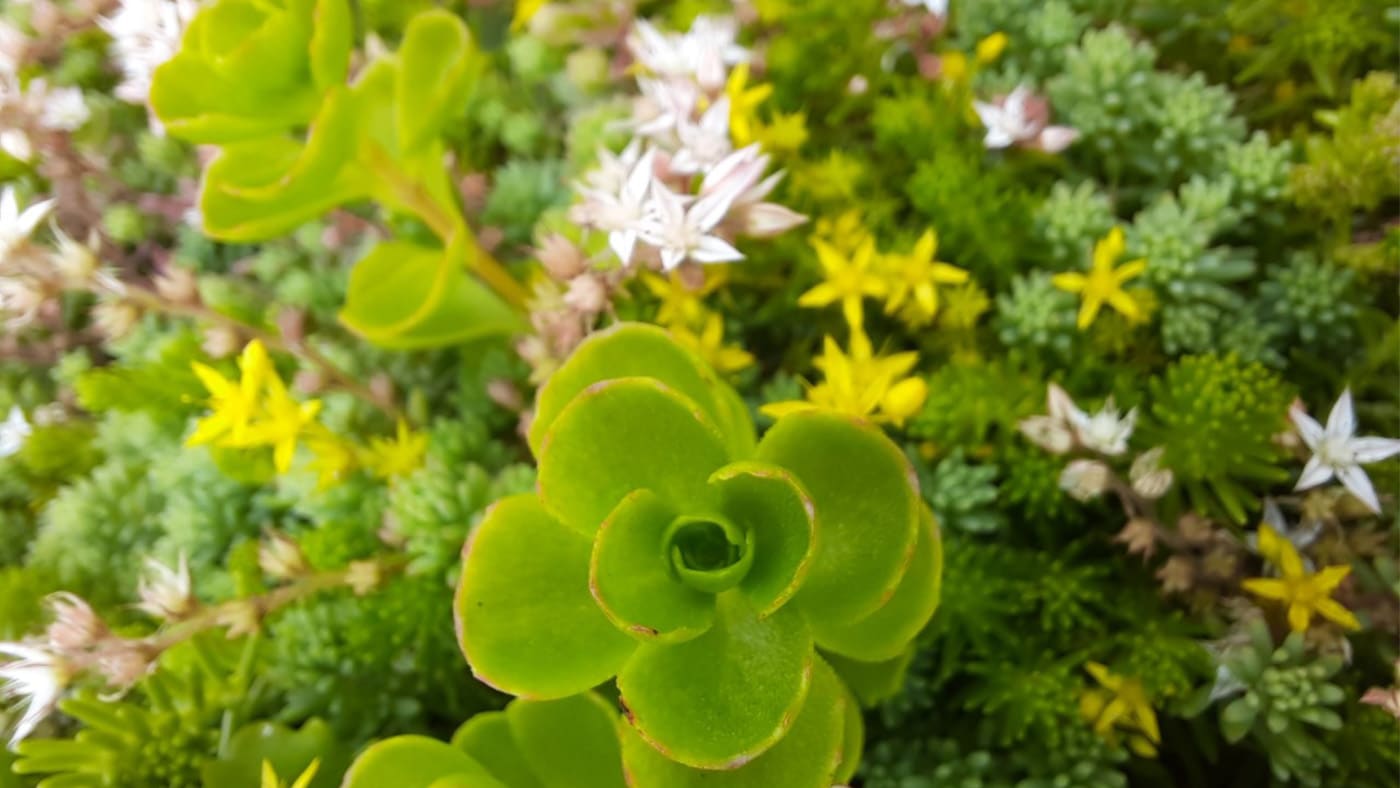
Even in September, the Sedum roof is visited by bees and other insects in search of nectar. The green roof also has another important function in fall. When it rains, it catches some of the precipitation. This reduces the burden on the sewer system during rain showers. In preparation for the winter, the green roof is fertilized in early September. A second roof inspection is also recommended at this time. The Sedum plants go dormant in late fall so that they can flower beautifully again in spring.
Read more about green roof maintenance here.
Do you wish to know more about Sedum roofs throughout the seasons? Get in touch with our experts. They will be happy to assist!