- Indoor Climate
- Knowledge
White paper: The importance of good lighting for a living wall
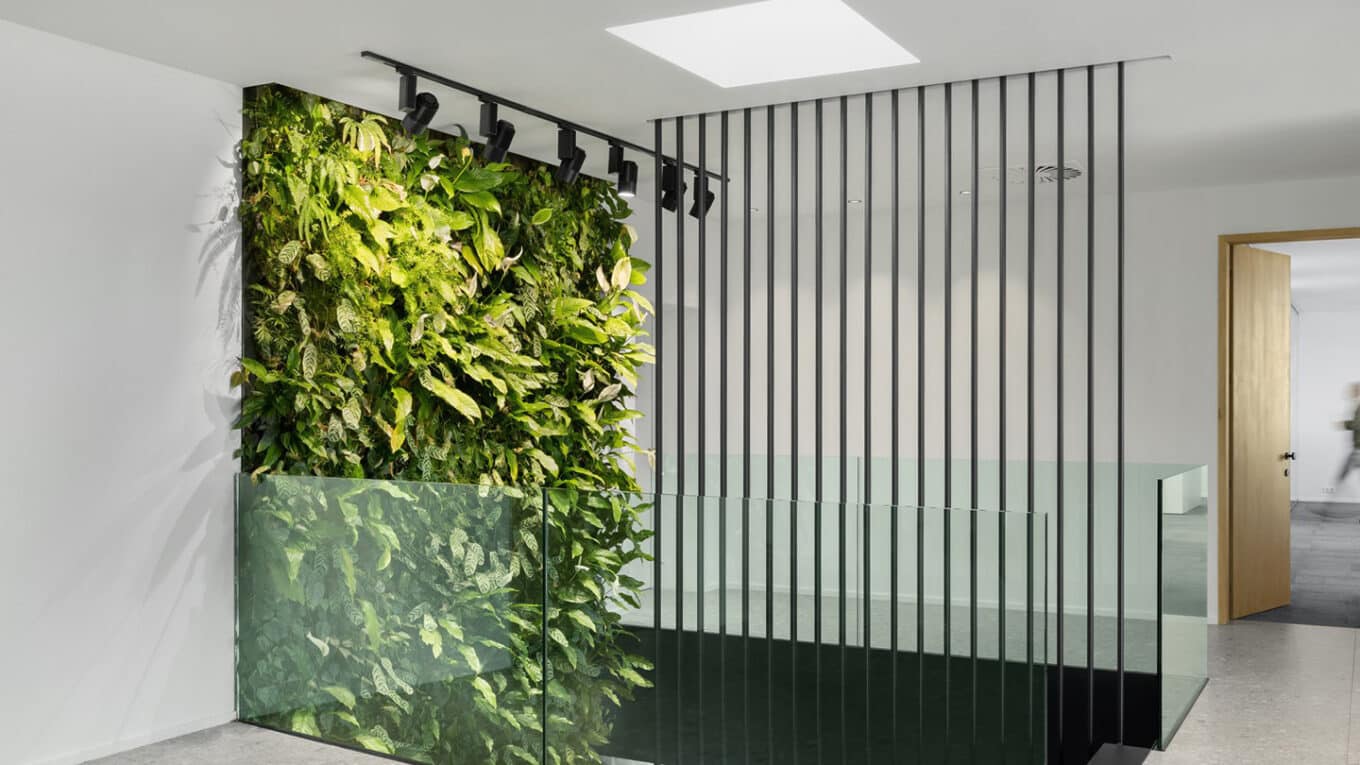
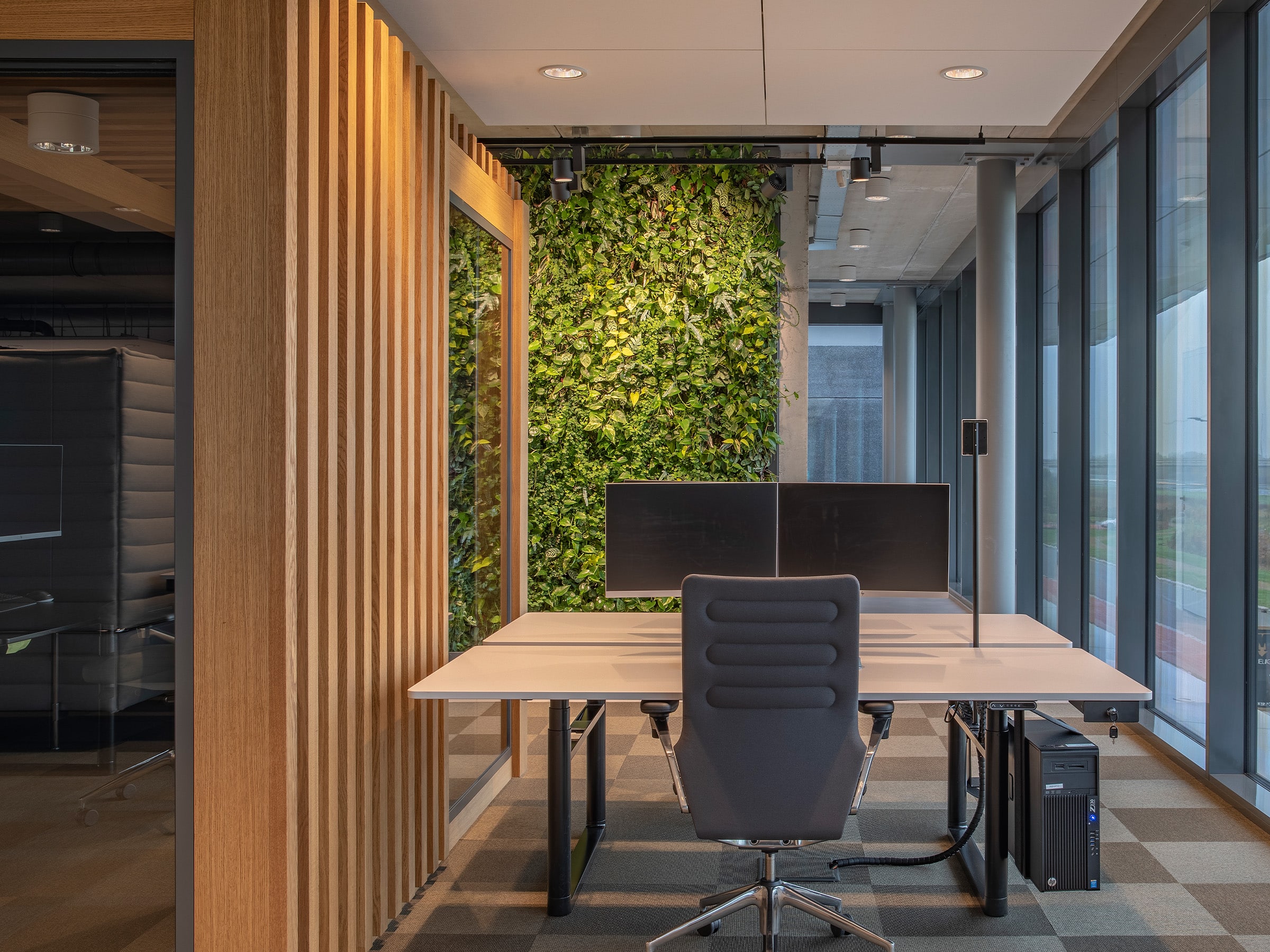
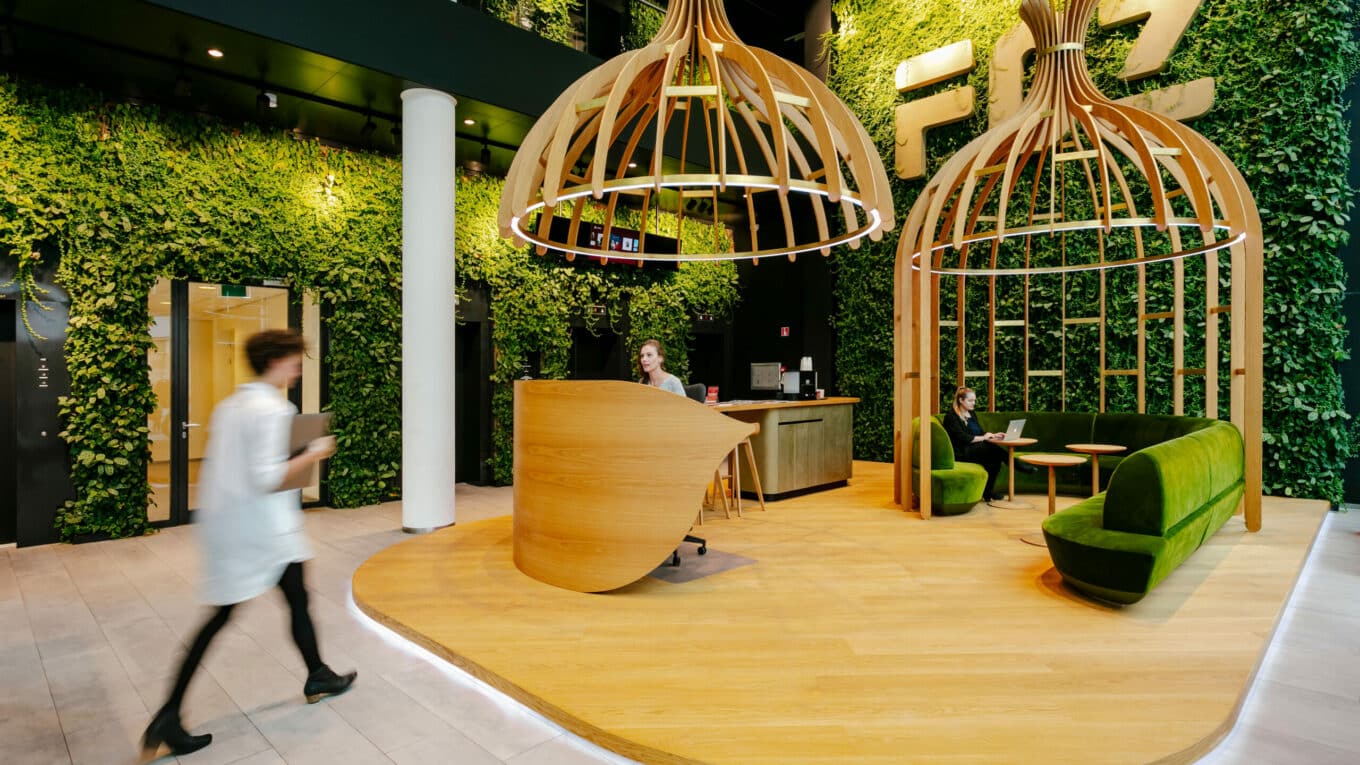
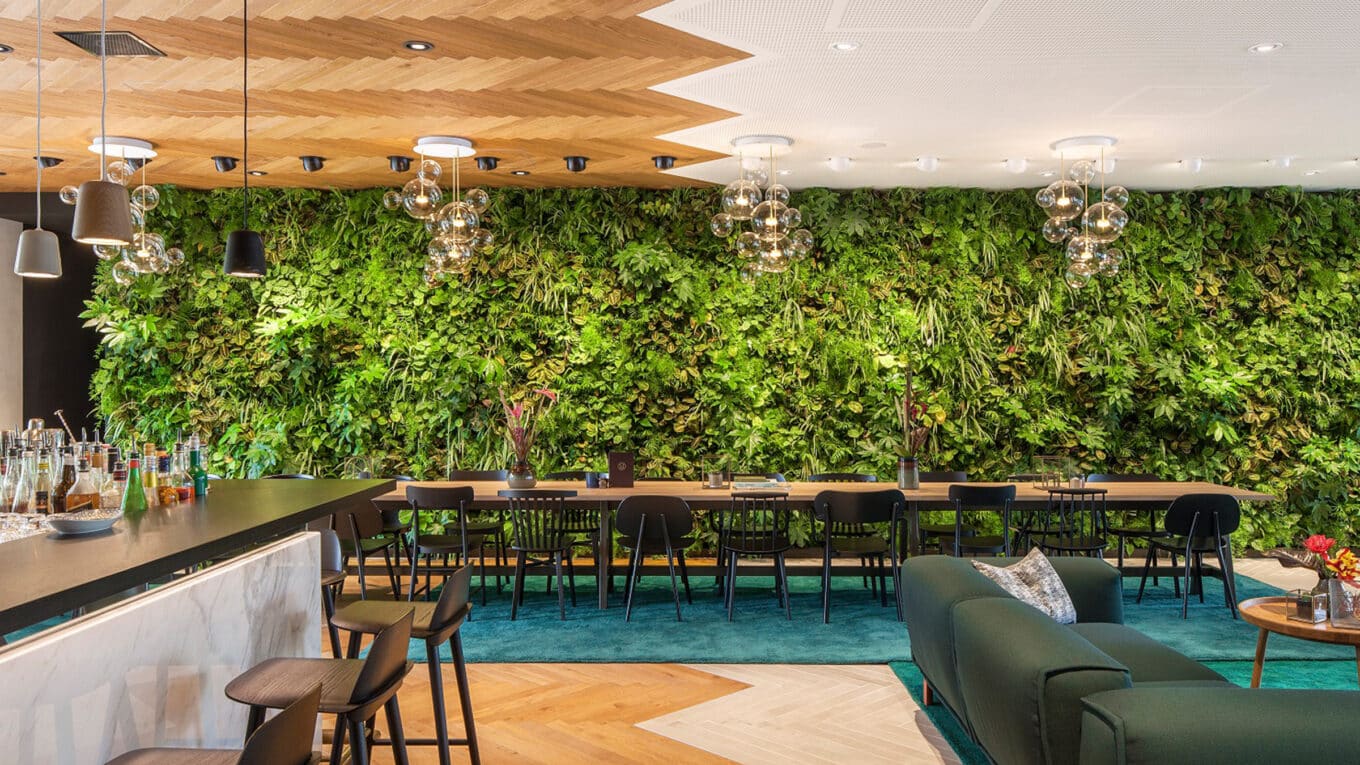
Sustainable entrepreneurship is a hot topic. It’s becoming more and more common for companies to implement office design that embodies their sustainable ambitions. For example, by placing a green wall in the office, the reception, or the meeting rooms. But how do you discover which green facade is the best choice for your office? If you prefer real sustainability, then you naturally opt for a living green wall. Yet there are also companies that go for a wall with fake plants. The appearance may look green, but does it provide the same health benefits? Which is the best choice? In this article, we compare the advantages and disadvantages of a green wall with living plants and those of an artificial green wall.
Scientists are unanimous: green has a calming effect on people 1. In addition, having a green view from the workplace is associated with a reduction in people’s stress level and an improvement in concentration 2. An additional benefit is the increased employee productivity, which tends to be even 15% higher than in office spaces without plants 3. Plants create a pleasant atmosphere 4, which leads to increased satisfaction with one’s own workplace 5. And this in turn ensures that people get more work done.
Here’s another important argument: green brings people together. People like to visit each other in a green environment. A green wall can therefore function well as a meeting place within an organization. The arguments in favor of green are evident. However, if you intend to introduce greenery in the workplace, you are faced with the choice between real and artificial plants.
The possibilities with real plants are endless. Real plants can be used in any room, because living walls are equipped with special plant lighting. The choice of plants is also virtually unlimited. You can often choose from a standard plant range, but if you prefer just that one special favorite plant in your green wall, it is often also possible. Below we list the most important benefits of real greenery.
Real plants are healthy. They release oxygen into the air, remove CO2 from the air and lower the concentration of harmful substances. Plants evaporate moisture, which benefits the humidity. An important positive consequence of this is that employees experience fewer health problems, like headaches, irritated eyes, dry throat, and fatigue. Plants also absorb sound in the room, which reduces noise pollution and nuisance. This has a positive effect on employee absenteeism and makes employees feel more comfortable in the workplace.
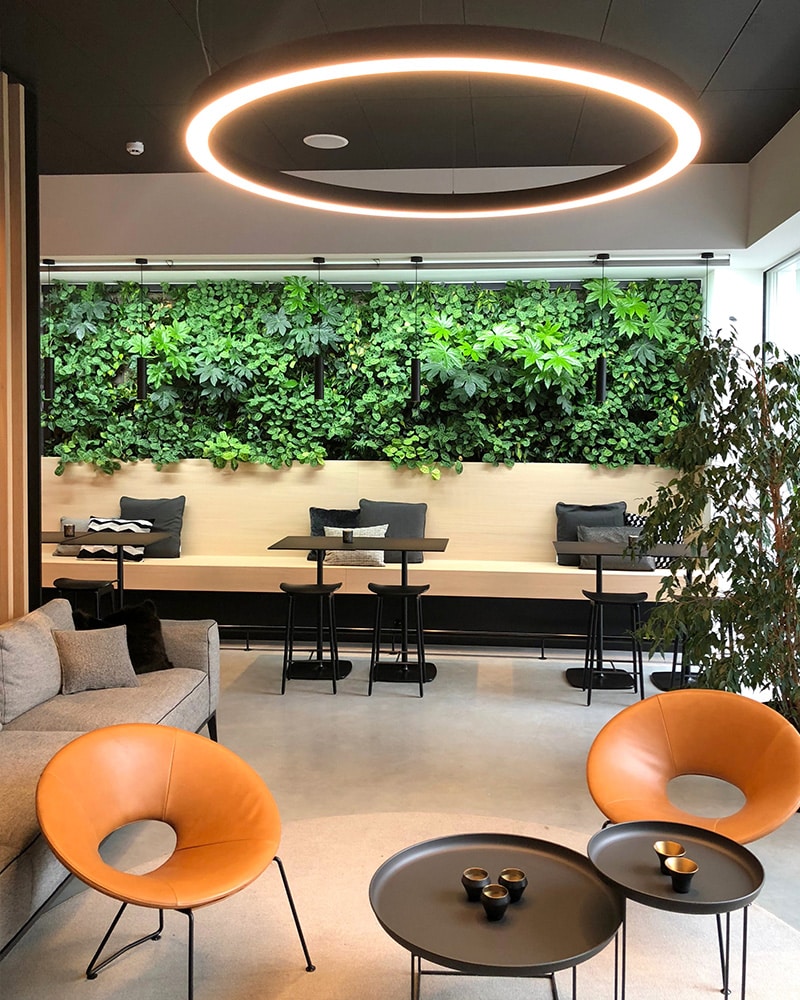
In addition to the health benefits, there are also many sustainable benefits of choosing living greenery in the office. Plants are naturally UV resistant. Pre-treatment of the plants to withstand the influence of sunlight is not necessary. This makes real plants very durable. Some living wall systems even have been thoroughly assessed and certified with a sustainability label, such as the SemperGreenwall. This green wall system is provided with the Cradle-to-Cradle sustainability label. This also means that all components of the green facade system can be fully recycled. Furthermore, living plants naturally contain 90% water. Thanks to this composition, plants do not ignite quickly and burn poorly, so they are fire retardant by nature. The Flexipanel, the building block of the living wall system SemperGreenwall, even has been granted the European fire classifications A2-s2,d0 and B-s2,d0, which is unique in the world. Thanks to the A2 certification, the SemperGreenwall system can be used, for example, in high-rise projects or other projects with very strict fire safety requirements.
Real plants have a heat-regulating effect. Implementing a significant number of plants in the workspace enhances thermal comfort. By reducing the ambient temperature, the energy costs for cooling and production loss are decreased. If you include a maintenance contract, all service is taken care of, and the annual costs for plant care are transparent in advance. Another important financial argument is that sustainable greenery in or on a building increases the sales value of the building. In various countries, it’s also possible to receive financial incentives like subsidies for the installation of a living wall, which lowers the cost.
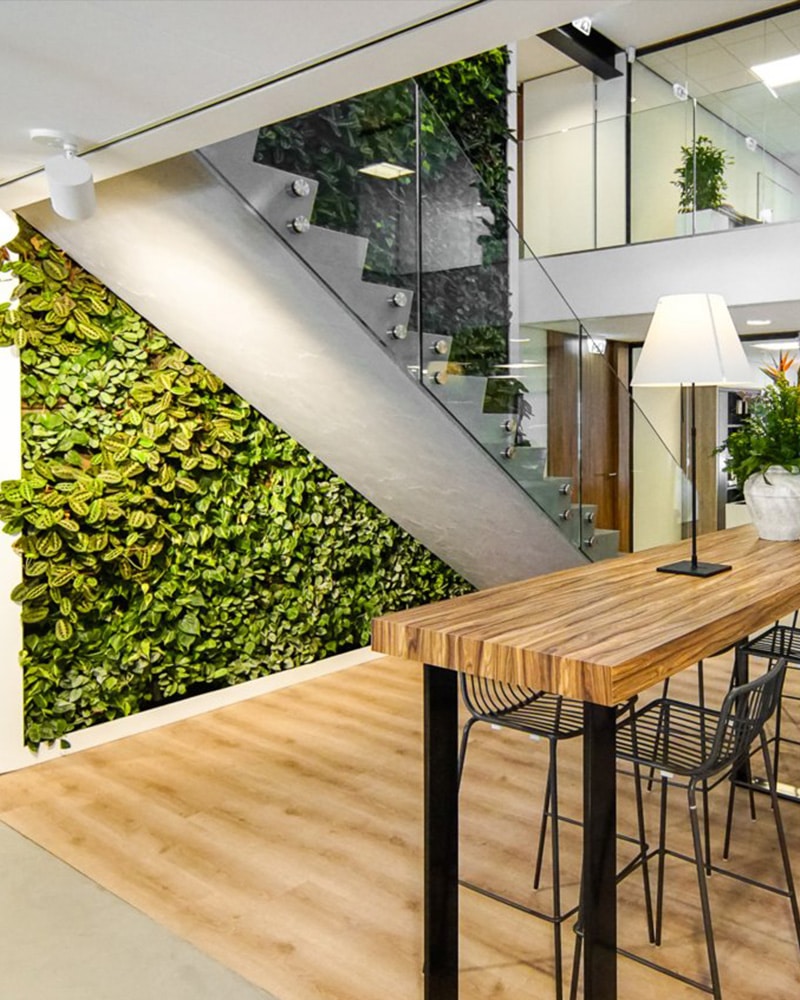
Artificial greenery resembles real plants but is made of plastic and artificial silk. Artificial plants have the advantage of low maintenance costs. In addition, artificial plants do not require daylight, which means that installation in dark places is also possible without additional lighting. An artificial green wall can also often be recycled and is available in many sizes and models to fit in places with limited space. Moreover, artificial plants are UV-resistant, and the wall can be made fire-retardant by impregnating the artificial plants with a fire-retardant coating. The appearance is guaranteed to remain the same in the long term. There is also no chance of plant diseases or insects.
To quote the world-famous soccer player Cruyff: “Every advantage has its disadvantage.” Of course, this also applies to the options mentioned. We list them below:
Living plants require care. To ensure that you do not have to worry about this, there is the possibility of using a service contract like we offer for the SemperGreenwall. A living wall with real plants also needs a little more space to accommodate a water and nutrient tank. Finally, if you have special plant preferences and wishes, there may be a longer delivery time, for example if a green wall must be specially cultivated.
The biggest disadvantage of artificial greenery is that it is not sustainable and environmentally friendly. Plastic and artificial silk are used to produce the plants. Paint is used to create the plant colors. Although artificial plants look more and more natural, they still have a different appearance from living plants; real plant lovers recognize artificial plants from afar. This can have a negative effect on a company’s sustainability goals and the sustainable values they want to show. Finally, artificial plants catch a lot of dust and must therefore be cleaned. The investment in time and costs for this is sometimes overlooked when choosing artificial plants.
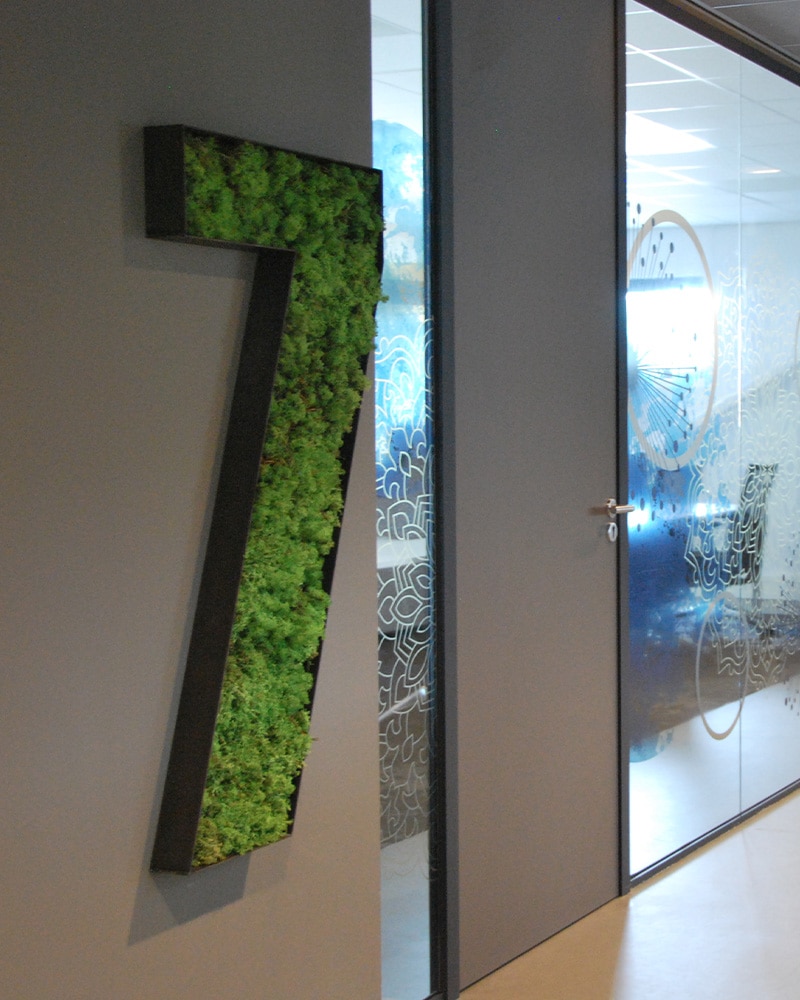
We often receive the inquiry: “What about a moss wall, isn’t it alive?”. The moss wall occupies a gray area within the spectrum of green walls. Moss is not synthetic; it is a plant that originates from nature. However, before moss is installed on a green facade, it undergoes a thorough pre-treatment with a preparation liquid and paint. Moreover, the moss is treated with natural salts, which adversely affects biodiversity. By the time the moss is affixed to the wall, it is no longer living. This is also evident from the fact that a moss wall does not require light, water, or maintenance. Indeed, the moss does not fare well under direct sunlight, as the dyes on the moss will fade.
Are there no advantages to a moss wall?
Indeed, opting for a moss wall presents several benefits. For instance, the wall is low-maintenance, dust-resistant, fire-retardant, sound-absorbing, and it serves as an attractive artistic addition to the interior, such as in the form of a painting. However, bear in mind that a moss wall is sensitive to changes in a room’s humidity. Fluctuations in the atmosphere can harm the moss or cause it to dry out and crumble upon touch. This does not enhance the wall’s appearance. And here again, the primary argument is that a moss wall does not contribute to healthy air quality, whereas real plants do. And then you are missing out on an important benefit of a green wall in your office.
Real plants in the office offer many advantages over artificial plants. Especially in the field of air quality, thermal comfort, employee satisfaction and productivity as well as the reduction of employee absenteeism due to illness, a living wall wins out over the artificial variant. The biggest advantage of an artificial green wall is the lower maintenance costs. On the other hand, the cost reduction due to decreasing absenteeism thanks to the use of real plants could even out with maintenance costs.
Moreover, a wall with artificial plants can have the opposite effect on the sustainable image that a company wants to radiate to the outside world. True lovers of greenery will recognize an artificial plant from afar. You may also recognize yourself in the fact that you tend to feel a plant to see if it is real. Many people have this habit. If the plant turns out to be fake, this often is a turn-off. In short: make your employees happy with a truly green wall. Because people are keen on green!
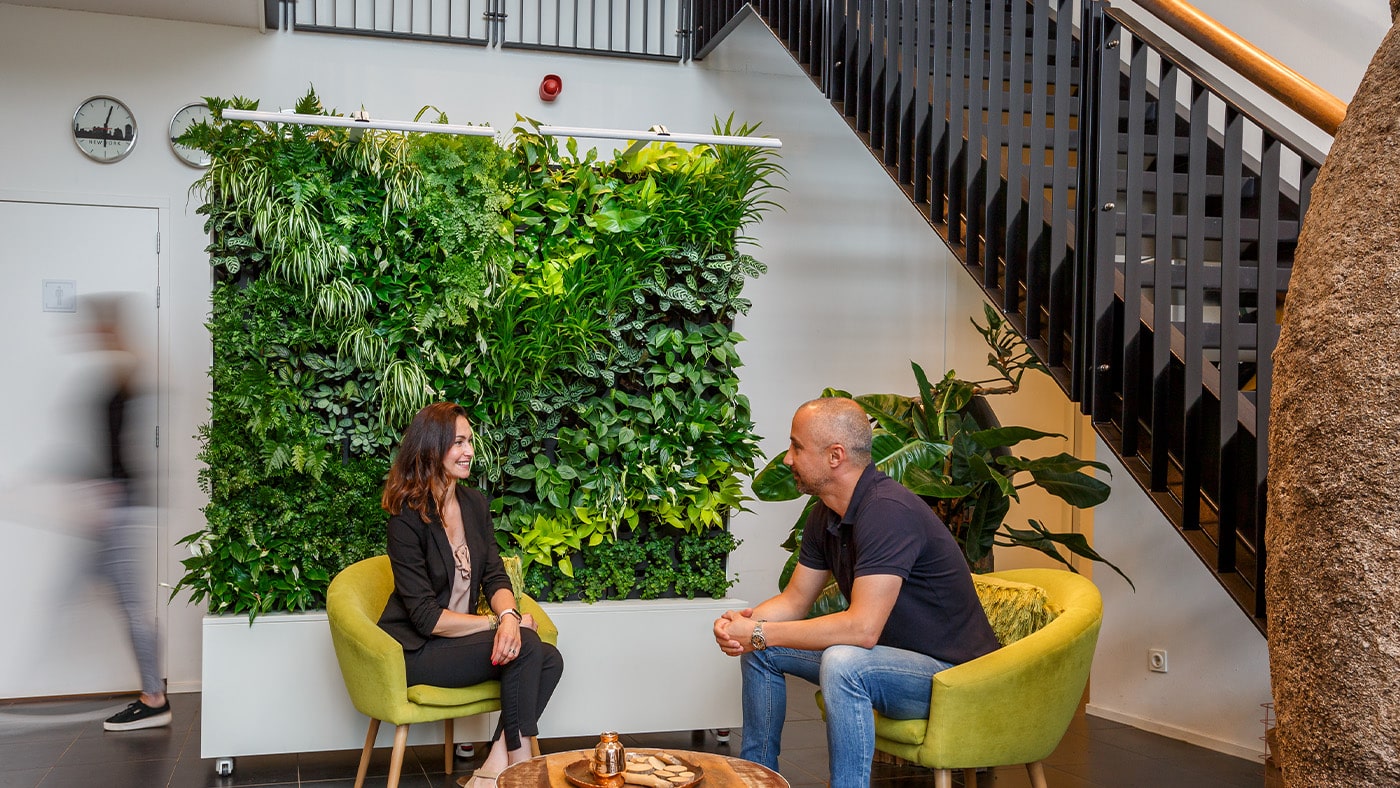
Would you like to know more about the advantages of a green wall with real plants? Look at this page. Or view these wonderful reference projects to get an idea of what a living wall can look like in the workplace. Would you like to be advised about your office space? Please contact one of our green wall consultants. They are happy to help you.
Sources