- Urban Greening
- Knowledge
Enjoy a climate-conscious vacation at these 7 green hotels
It is either too hot or too wet, and the view is frequently dismal. Many industrial estates and office parks are gray and unappealing. This is surprising, given that these sites are heavily utilized and a significant portion of the working population spends their time there day after day. These ‘concrete deserts’ are often outdated and in urgent need of climate adaptation. Fortunately, change is on the horizon.
We are increasingly experiencing negative consequences of climate change, such as heat stress, flooding, and loss of biodiversity. It also leads to economic damage, which will only increase if we do not act now. That is why cities are already taking measures regarding climate adaptation. As it turns out, a lot can be gained by greening industrial estates. These business parks are designed purely with a view to efficiency and accessibility, without considering the quality of life for employees and animals. They are often petrified areas with little greenery, large amounts of asphalt, concrete blocks, and flat roofs. Research even shows that industrial estates are the hottest places in a country.
Ironically, these sites also often suffer from flooding. But not only that. The biodiversity is poor and it is not a pleasant work environment, although people do spend a large part of their time here. And since these sites cover a large surface of the built environment – for example, more than one sixth in the Netherlands and 18% in Germany – any positive change will have a major impact.
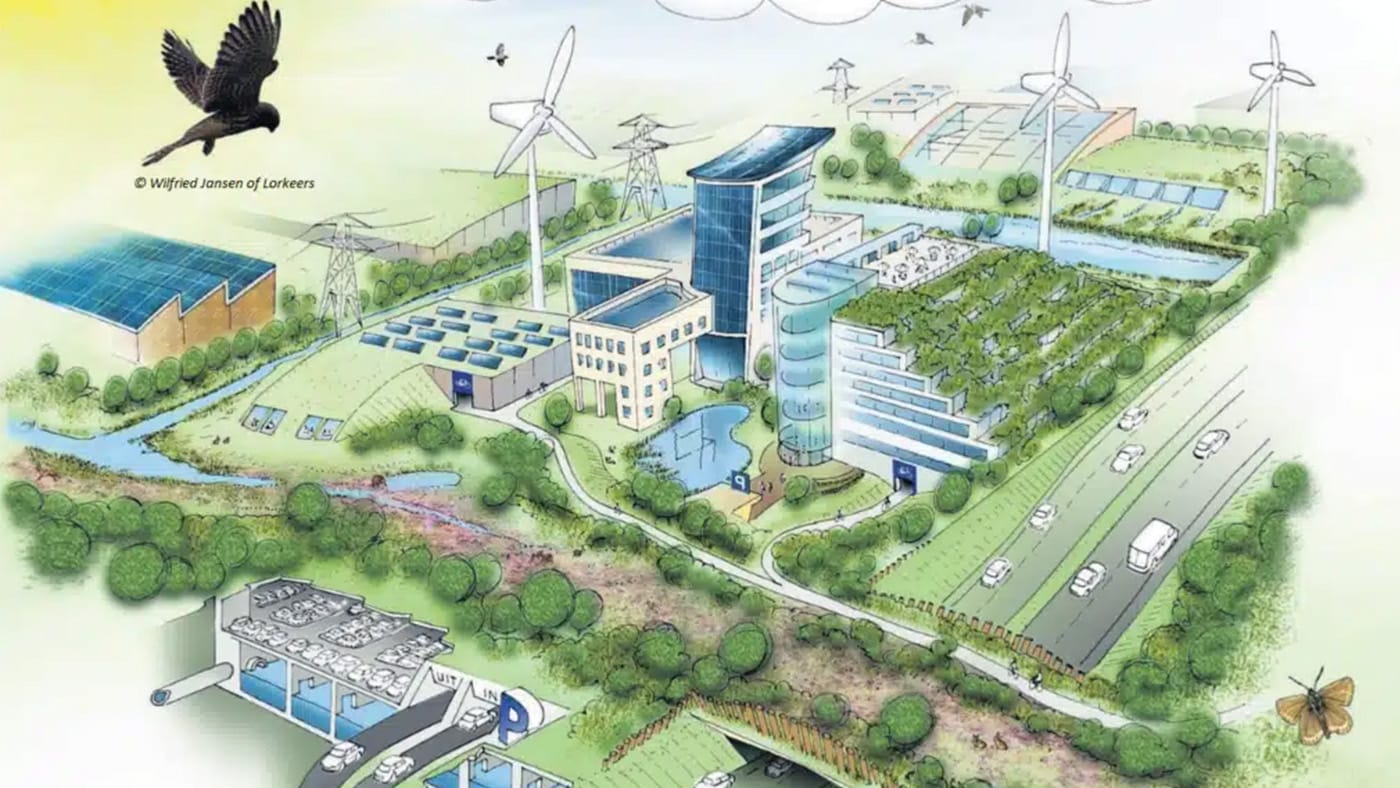
Photo credits: Wilfried Jansen of Lorkeers – Source: IVN Nature Education
The primary cause of the aforementioned issues is the solidification of the business park area. Concrete areas are significantly hotter on warm days compared to locations with abundant greenery. This results in a heat island effect, which can induce heat stress for both humans and animals in the vicinity. If no changes are made within the next thirty years, the average perceived temperature on a summer day at a business park could escalate to 104.4 degrees Fahrenheit. Due to the heat, air conditioners will need to operate more intensively, consuming more energy as a consequence.
Heat stress maps offer a rapid insight into urban ‘hotspots’. Here are some examples of these maps:
The solidification can also lead to flooding, as sewers overflow during heavy rainfall. Rainwater is unable to drain away because the ground is predominantly composed of concrete, stone, and asphalt. And as industrial estates continue to expand, the habitat for plants and animals is rapidly diminishing. The sites also obstruct the migration paths of many animals, which adversely affects biodiversity in the region. This is concerning, given that there is an average 69% decline in wildlife populations globally. Without biodiversity and healthy ecosystems, the future will face severe food and drinking water shortages. Sustainability and active greening are of paramount importance. Therefore, immediate adjustments should be made with an eye towards the future.
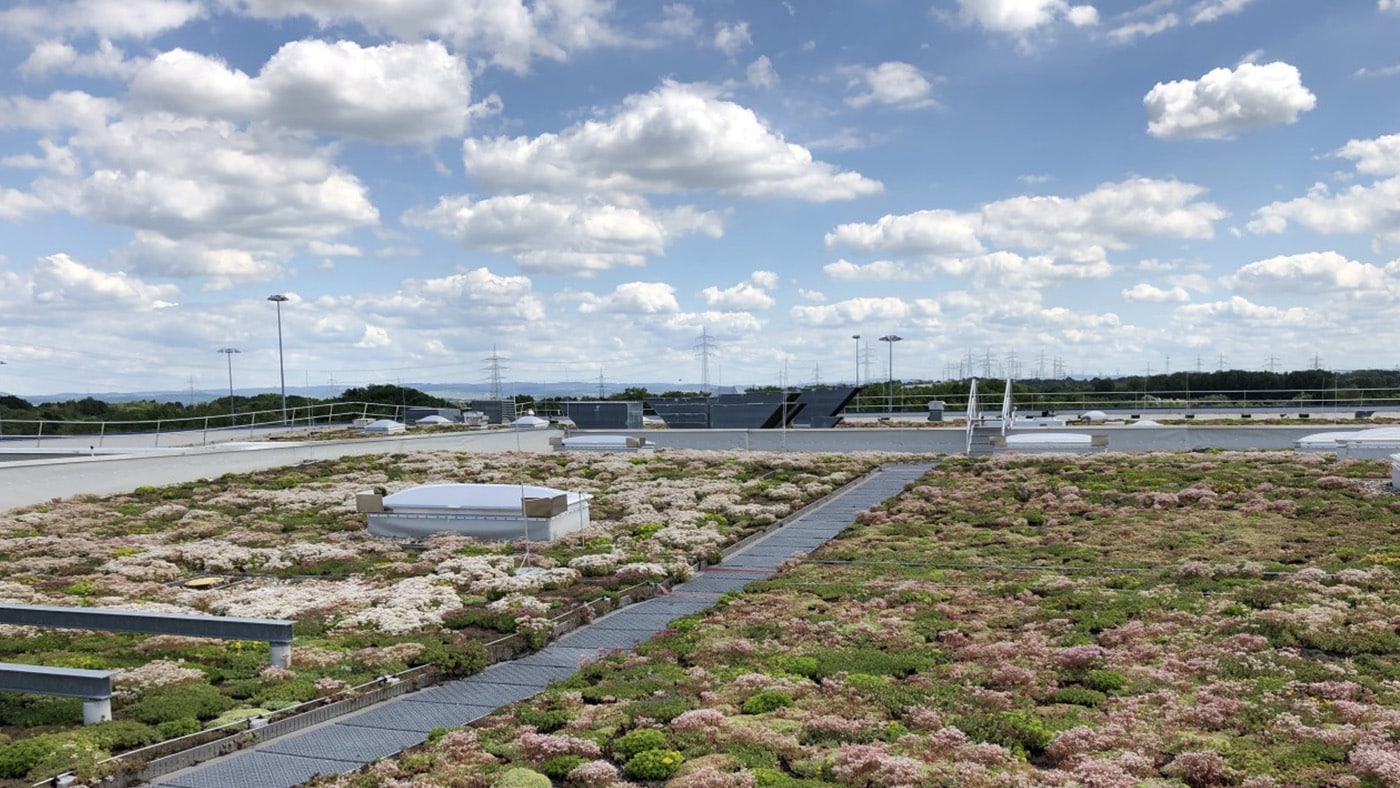
Reduce heat stress by installing a green roof, as seen here on the IKEA building in Ludwigsburg, Germany
We have good news in that respect: industrial estates are very suitable for biodiversity measures. They are located between urban areas and the countryside. This allows them to provide habitat for, and even proliferate, both urban and rural flora and fauna. They also form a good corridor from one habitat to another. It is comparable to a wildlife bridge over the highway, but for birds and insects and small creatures, instead of big animals such as deer. Finally, there is often a combination of fallow areas that are suited for pioneer species and permanent green structures for permanent plant species.
This is excellent, because greenery has many more benefits in addition to improving biodiversity, especially for the people who work there:
Finally, a beautiful green business park is a real calling card for visitors. A good example of a climate-proof business park is Park 20|20 in Hoofddorp, the Netherlands, which is built based on the Cradle-to-Cradle philosophy. A lot of greenery can be found here, both on and surrounding the buildings. Have a look at this business park in summer:
Accept marketing cookies to view this video.
But how to go about greening? Business parks have a big advantage here. One of the problems faced by people in the city is a lack of space (and they therefore must make difficult choices). Industrial estates on the other hand often have a lot of space to install all kinds of green solutions. When one thinks of greening, usually one first thinks of adding plants, trees and shrubs. The more greenery is implemented, the cooler the ambient temperature will be. Greenery often also has a sound-dampening effect. Ditches, ponds, bioswales and permeable parking spaces are good options for natural water storage. Flower meadows also provide water drainage and are an important source of food for insects. In addition, it is a very attractive environment to walk along, during lunch breaks for example.
The buildings themselves can also be greened, using green facades and green roofs. These solutions also provide additional benefits. In more and more countries it is mandatory to install solar panels on new and/or renovated buildings. If solar panels are installed in combination with a green roof, they will generate an extra amount of energy of at least 6%. In addition, green roofs act as a rainwater buffer (also in the form of Retention and Detention Roofs) against flooding, provide a home for birds and insects and have a cooling effect inside the building.
For the indoor climate, this means that the air conditioning has to work 33% less hard.
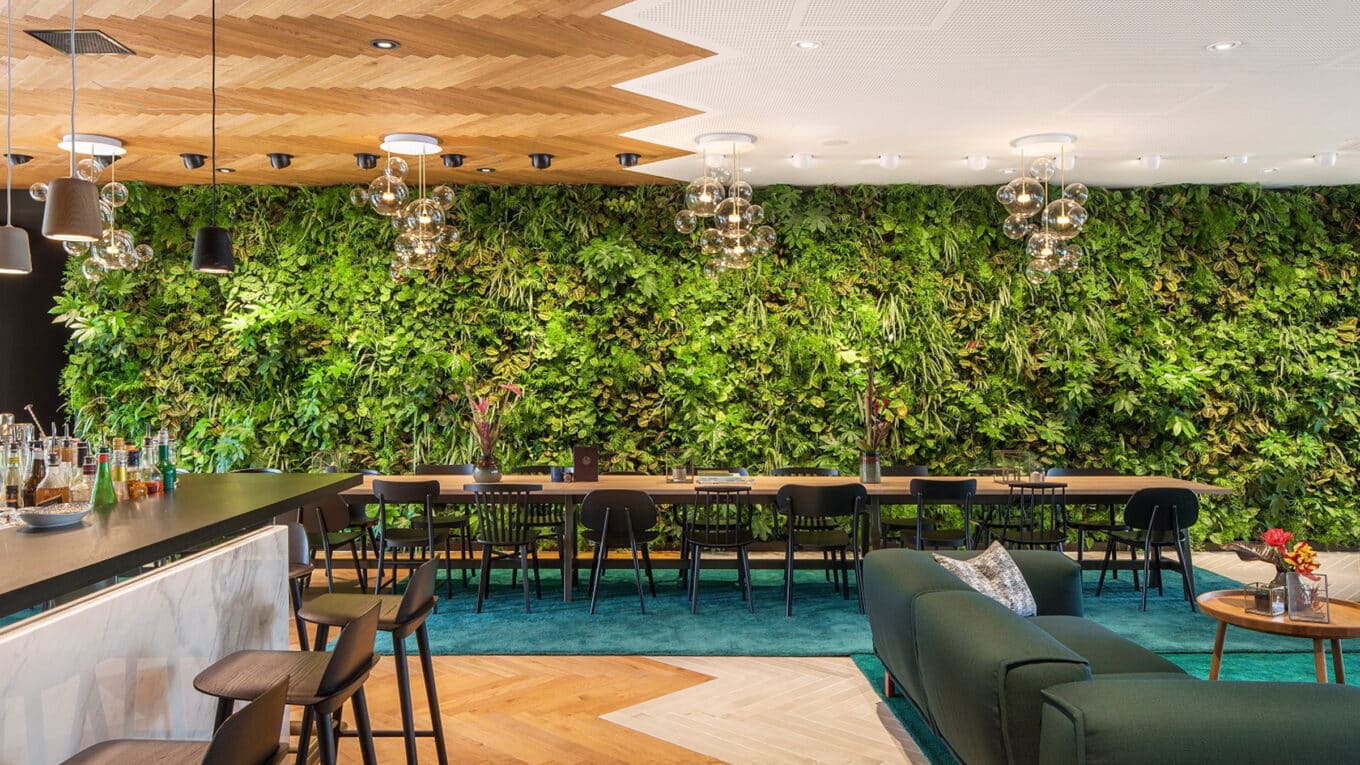
Living walls have a heat-reducing effect as well. For the indoor climate, this means that the air conditioning has to work 33% less hard. This in turn leads to energy savings. In addition, a commercial building loses 30% less heat when a green facade is installed. And the natural air-purifying effect of plants ensures that the air quality is considerably improved. Finally, green walls also contribute to biodiversity and sound insulation in the area. If a living wall is also installed inside the building, this will have important advantages for the employees.
Both the installation of green roofs and green walls contribute to BREEAM and LEED certifications. They also help companies in reaching their Sustainable Development Goals.
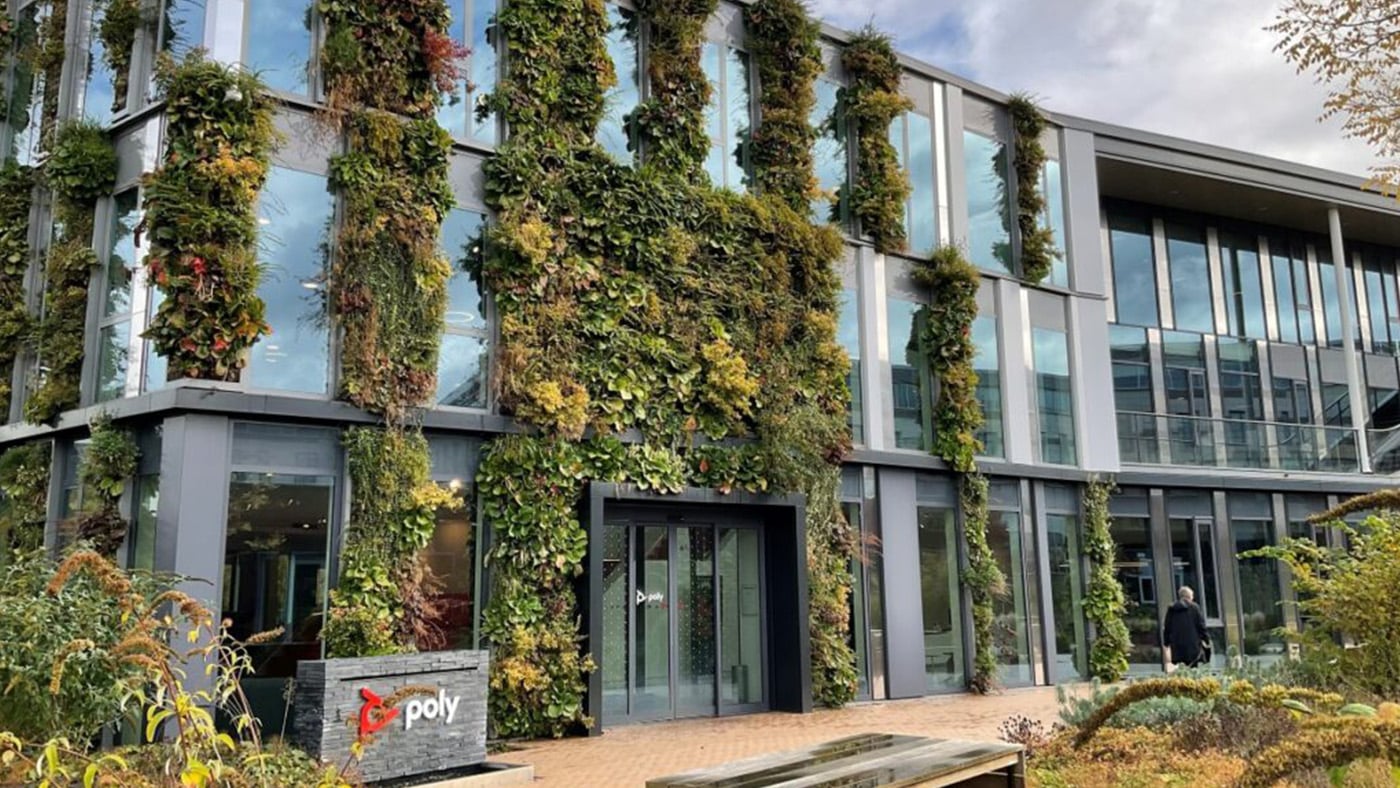
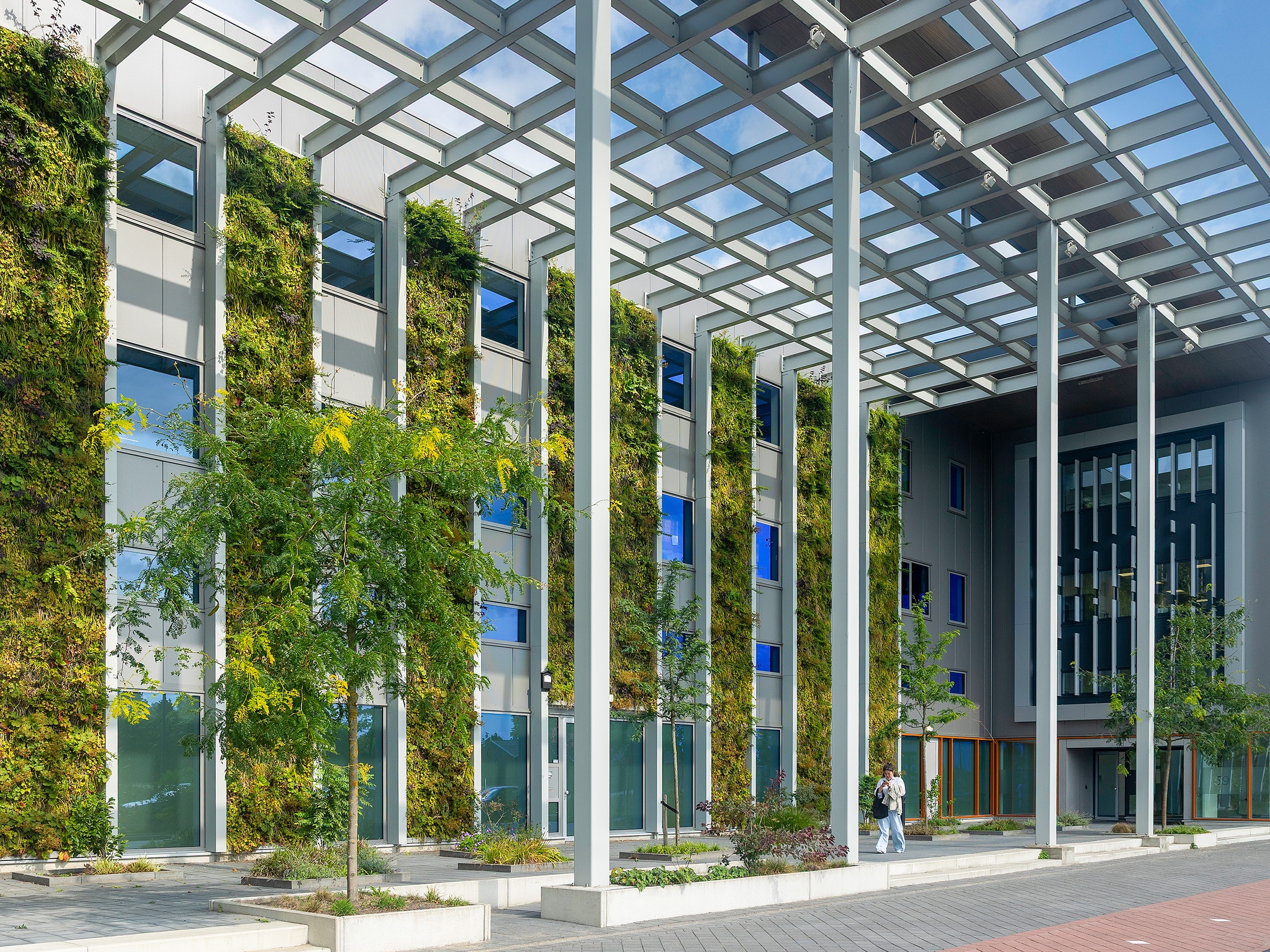
A green facade not only ensures a pleasant working area and a better environment, but also looks beautiful
In order to make business parks greener, several important steps need to be taken. Fortunately, an increasing number of countries offer funding to facilitate this. Check your local government or council website to see if your project qualifies for government funding.
More information about greening business parks
Looking for more information on how to green your office building? Please contact our experts. They will be happy to assist you!
Sources
Ready to make a difference? At Sempergreen, we believe in building a greener future, one step at a time. Our innovative solutions are designed to help you decrease your footprint and contribute to a more sustainable world. Join us in replanting the planet!