- Future proof
- Innovation
Green data centers: The future of sustainable technology
Hospitals and care centers face a significant challenge in becoming healthy and sustainable institutions. The built environment impacts our health. Numerous contemporary environmental health issues, such as climate change, toxic pollution, and loss of biodiversity, can be linked to the production and maintenance of the built environment. The health sector, given its market power, has the potential to positively influence the construction industry to develop safer, greener, and healthier building products and systems.
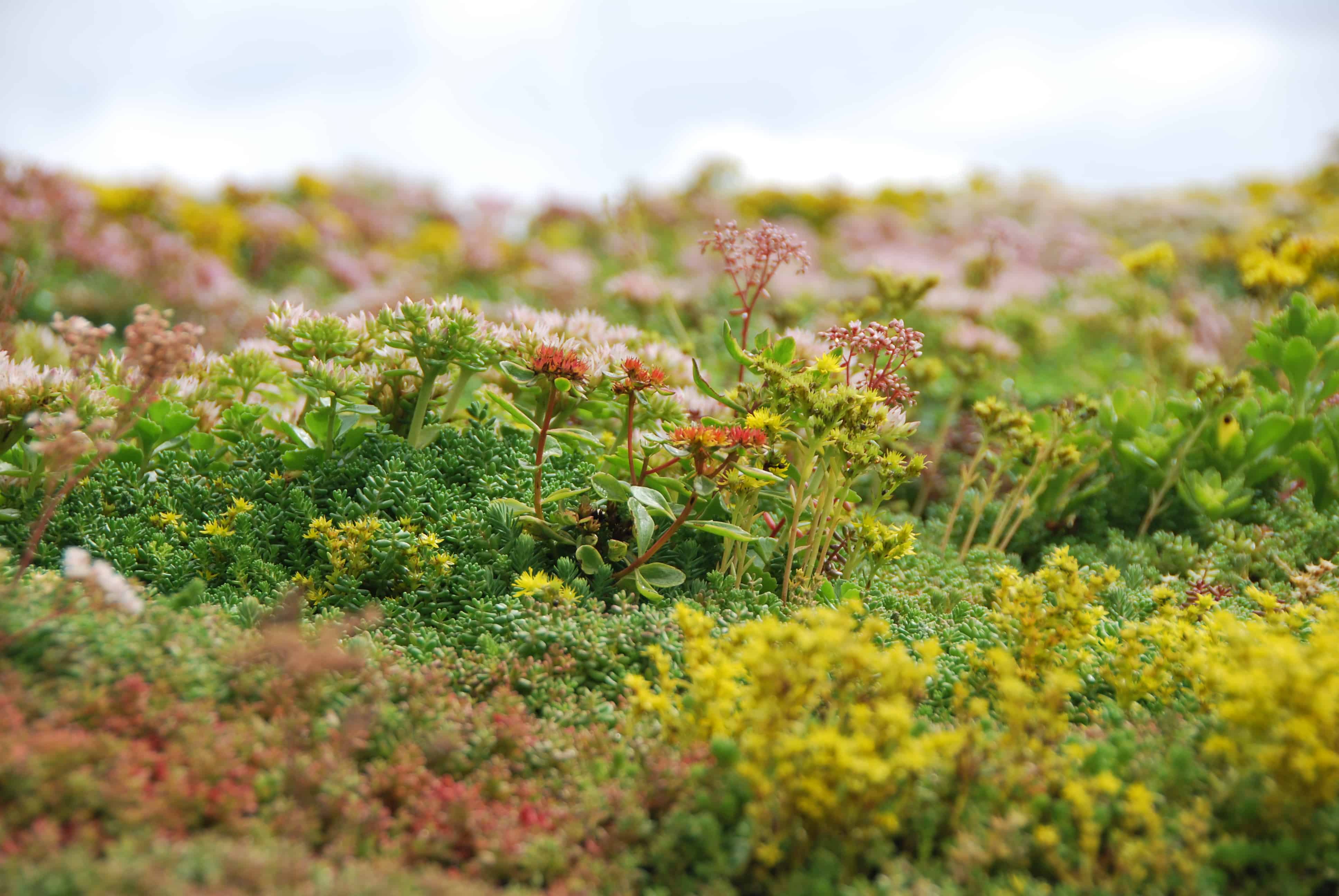
Furthermore, governments worldwide have committed to reducing CO2 emissions. Hospitals can make an important contribution to this, because they have relatively high CO2 emissions. The time is now to take major steps towards a sustainable and climate-proof design of care centers and the associated environment. Installing green roofs – whether or not in combination with solar panels – and green facades can easily contribute to ‘building green’.
In the healthcare sector, quality of care and patient safety are of utmost importance in the objectives. At the same time, the ecological footprint of healthcare institutions – through CO2 emissions, waste production, and unsustainable food supply – significantly impacts the health of the environment. In the past, the focus in healthcare was on medical innovations. When sustainability was discussed, there were concerns that this might compromise the quality and safety sought. However, there is gradually a growing realization that both objectives can be pursued and achieved simultaneously.
Creating a healthy living and working environment does not have to be complicated. Applying a green roof to a hospital or installing a green facade on the exterior or, for instance, the reception area of a care center is straightforward to implement. A green roof or green wall can usually be installed in a few days, without significant modifications to the building structure. The green roof or living wall can be part of a ‘healing environment design’; a healthcare environment that contributes to well-being, faster recovery, and equally important, a positive hospital or healthcare experience.
Numerous scientific studies have demonstrated that being in or viewing a green environment positively affects people’s well-being. This effect has been proven on both physical and mental well-being. Below you will find a brief summary of scientific research into the positive effects of a green and nature-inclusive environment:
When patients stay in a green environment, their pain tolerance is higher (1). This reduces the need for painkillers, for example, after surgery. The patient’s recovery is also faster, which shortens the number of patient days. A green environment also has a positive effect on the sleep rhythm. A good night’s sleep promotes a faster recovery of muscles and the removal of waste and thus the overall recovery (2). In addition, greenery lowers blood pressure and heart rate, improves the immune system, and reduces inflammation (3). The benefits for the patient are therefore numerous.
A green environment is also beneficial for employees in the healthcare sector on various fronts. Working in a green environment reduces cortisol levels (stress hormone) and therefore a state of stress. In addition, the greenery absorbs many harmful substances from the air, such as CO2. Due to fewer pollutants in the air, asthmatic complaints decrease and there is less damage to the central nervous system, resulting in fewer psychological disorders, such as depression. Thanks to the plants creating an oxygen-rich environment, employees experience fewer headaches and fatigue. Ultimately, these benefits lead to lower absenteeism among healthcare workers.
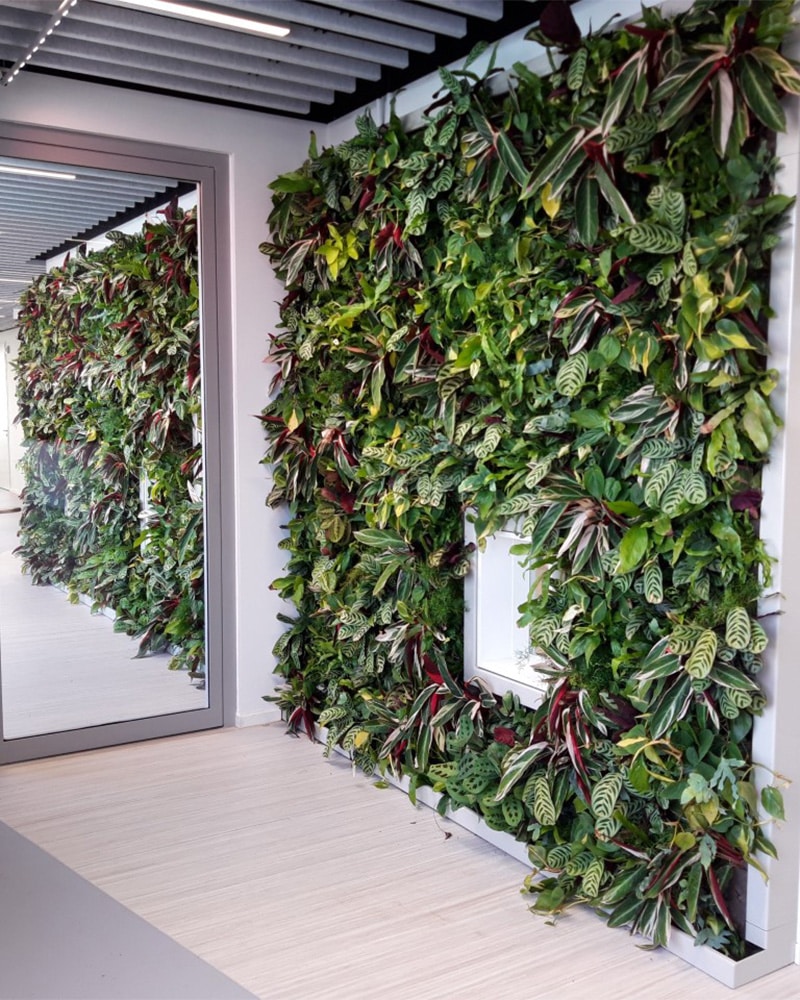
For some of the above effects, it is not necessary for the greenery to be present in the room itself. Looking out onto a green roof or green facade is therefore an effective way to achieve health benefits for both employees and patients. If you want to benefit from the positive effects of indoor plants, but there is no or limited space for greenery, a plant wall can offer a solution.
Investing in greenery will undoubtedly pay off. According to recent Dutch research (6) by the engineering consultancy firm Sweco, conducted among 104 Dutch municipalities, every hectare of green space leads to a reduction of 8.6 patients per year. If all Dutch municipalities were to green the available spaces, nearly 2 billion euros in healthcare costs could be saved by 2050! According to a study (7) from Kaiser Permanente in California, published in Environment International, the healthcare sector spends hundreds of dollars less per person per year on medical care for individuals living in the greenest environments compared to those in the least green neighborhoods.
Another study (8) by the accountancy and consultancy organization KPMG indicates that a 10 percent increase in greenery in residential areas would result in over 84,000 fewer patients visiting their general practitioner in the Netherlands each year. This represents a potential saving of 65 million euros in healthcare costs. Including the avoided labor costs, the total savings could amount to more than 394 million euros.
Beyond the societal savings on healthcare costs through investment in green spaces, savings can also be achieved during construction by choosing sustainable building methods and products. In many countries, subsidies are available for constructing green roofs or living walls. This is often part of a national ‘Green Deal’. However, there are also various subsidies at the local level from municipalities, regions, or water boards. Inquire with your local authorities about the possibility of receiving a subsidy for constructing a green roof or green facade.
The financial return of a green roof is further enhanced when it is installed in conjunction with solar panels. The green roof boosts the efficiency of the solar panels because the plants lower the surrounding temperature, and solar panels perform better at lower temperatures. The efficiency of the solar panels increases, and moreover, this combination contributes to a reduction in energy costs and CO2 emissions, thereby making hospitals and healthcare institutions climate-proof.
Numerous healthcare institutions have already made strides towards sustainability. The practical examples below illustrate how green roofs or living walls can be implemented at healthcare facilities.
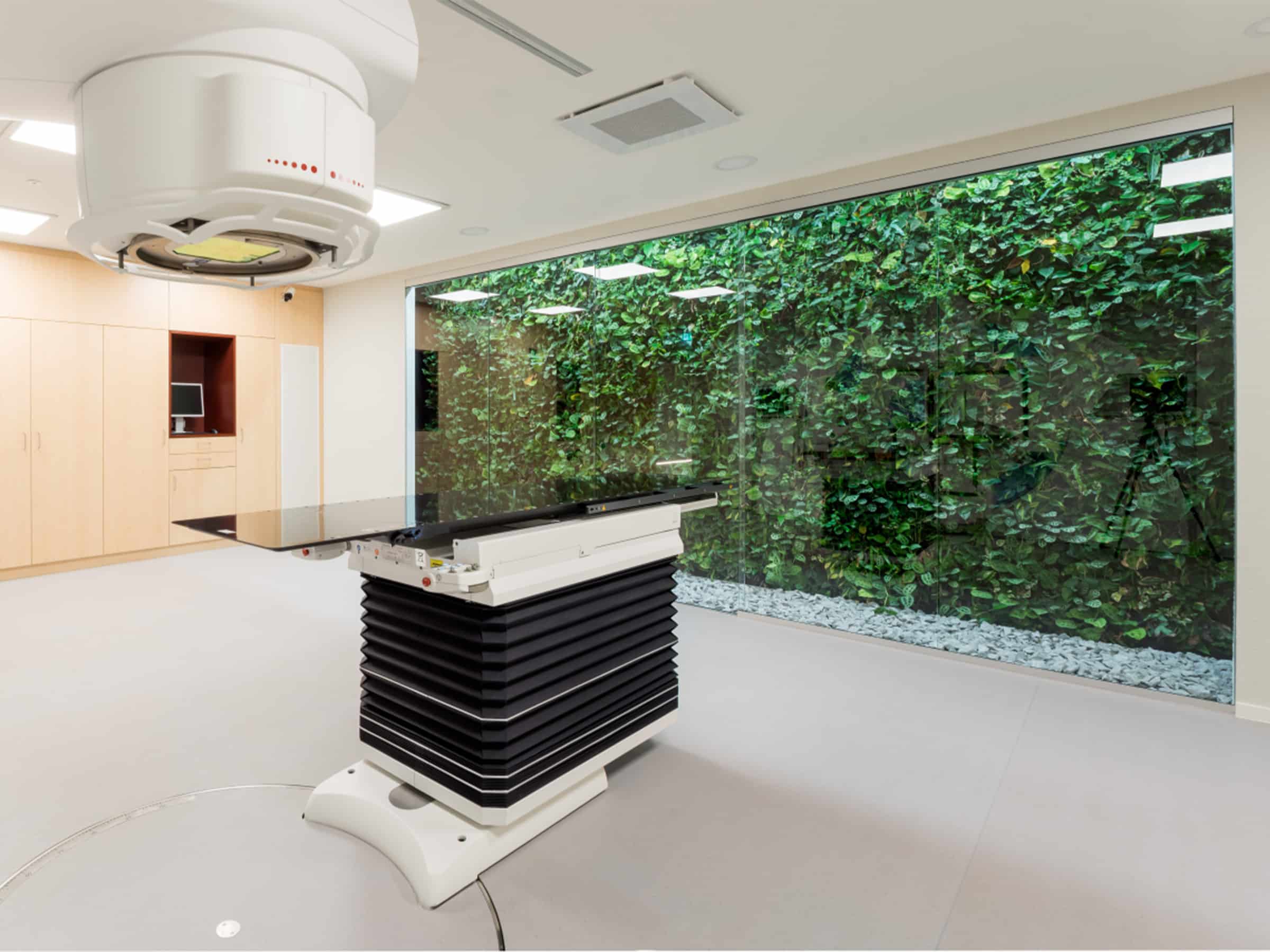
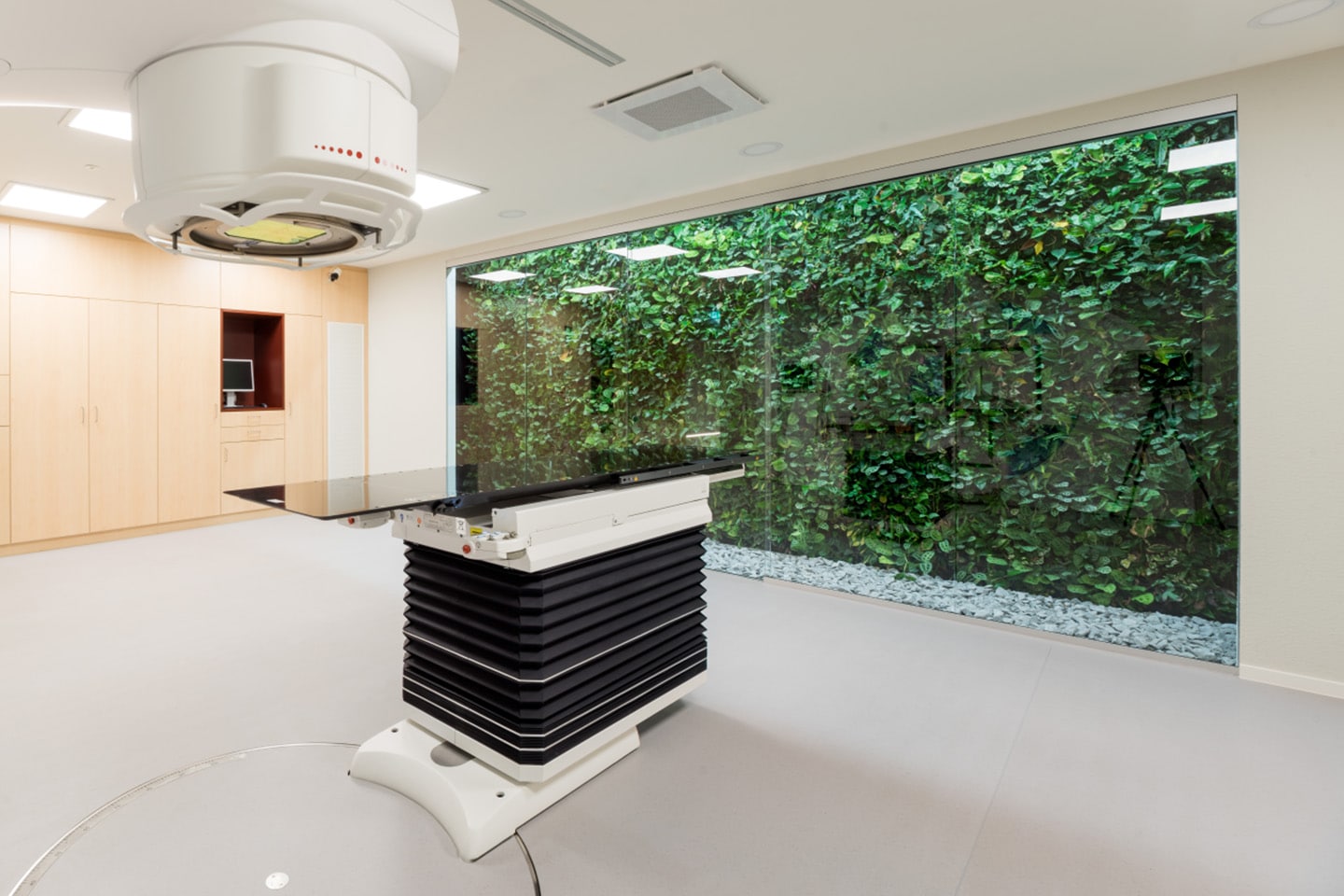
At the radiation center OncoCubus in Recklinghausen, Germany, a living wall was realized in the radiation room. To prevent the sterile room from being compromised, the SemperGreenwall is placed behind a glass wall. In this way, patients still benefit from the calming appearance of the greenery during a potentially stressful treatment.
A good example of the implementation of a green roof is this care clinic in Colombia. Patients have a direct view of the lush green roof from their room. Walking paths have been laid over the roof, so that patients can also enjoy the greenery in the open air. The green roof contributes to a healthy care environment.
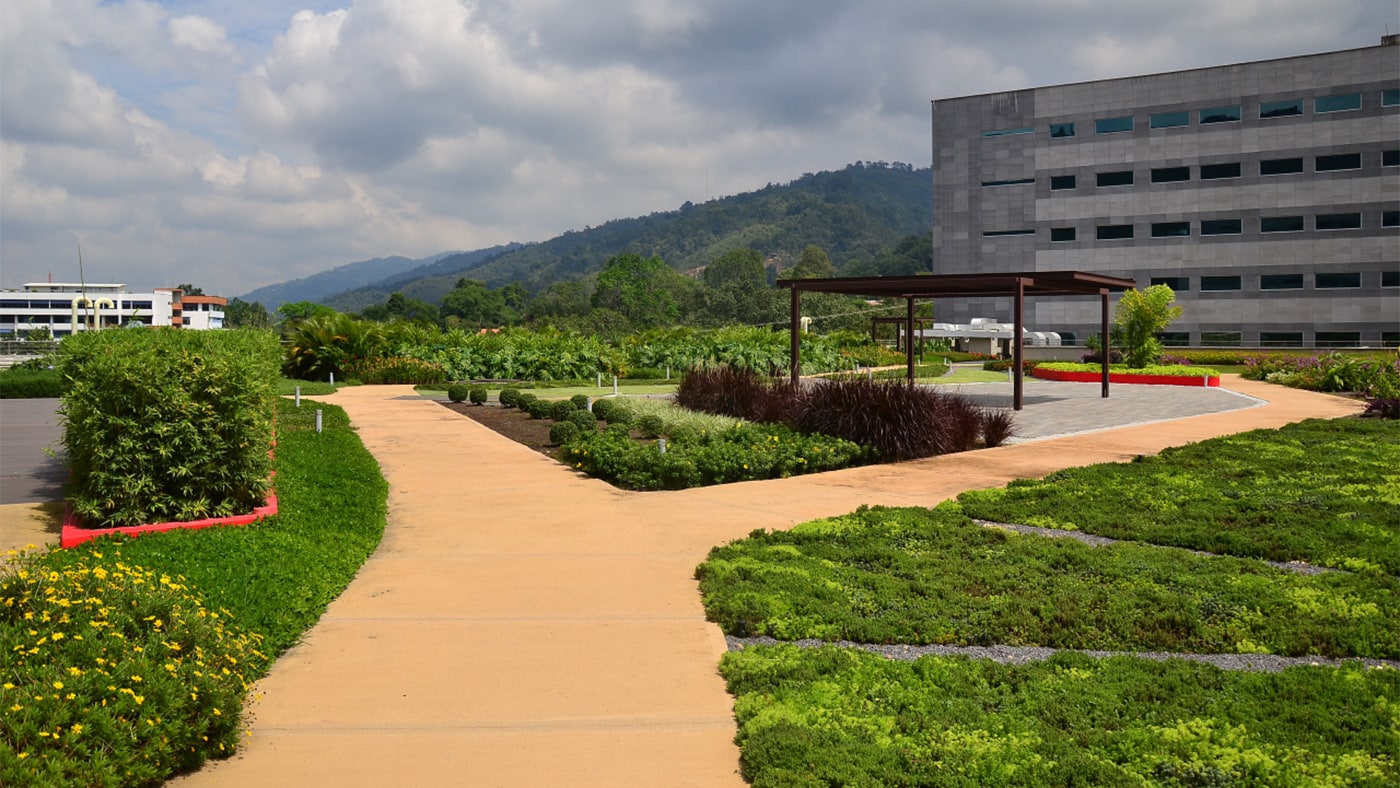
Photo: Hegeman
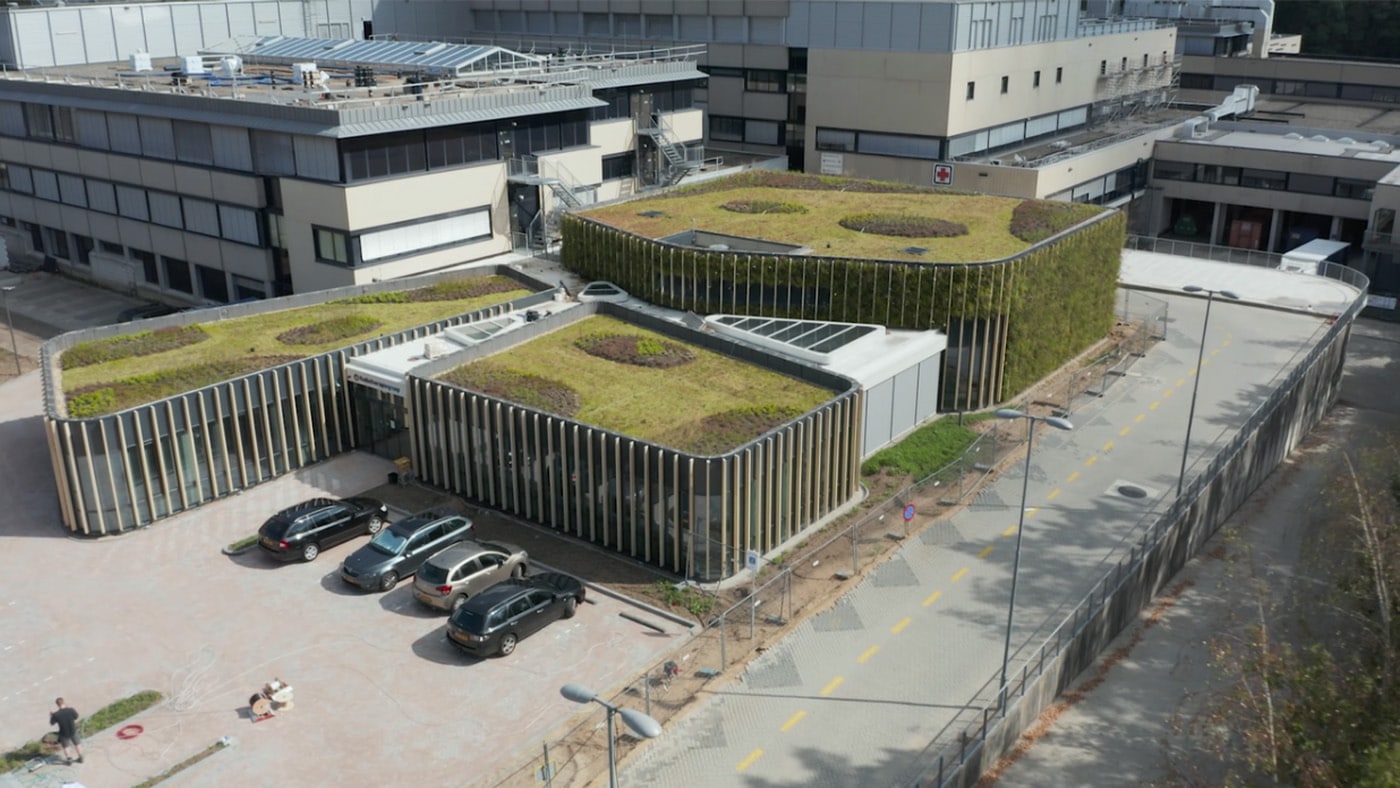
In Apeldoorn, the Radiotherapy Group has opted for greening the building all around. Both the roof and the facades are equipped with plants. This makes the green visible from different floors. This nature-inclusive environment has a positive effect on both the health of patients and the well-being of healthcare workers.
The Middletown Community Health Center in Connecticut, USA is a centralized care facility for the entire region. All kinds of care providers offer their services here. Plant beds, a lawn, vegetable gardens, fountains, and an outdoor living wall have been installed on the large roof terrace. The roof terrace serves a dual purpose. It is utilized both by the medical providers in the building and for social events. The vegetable gardens are jointly cultivated by the social workers present and their clients.
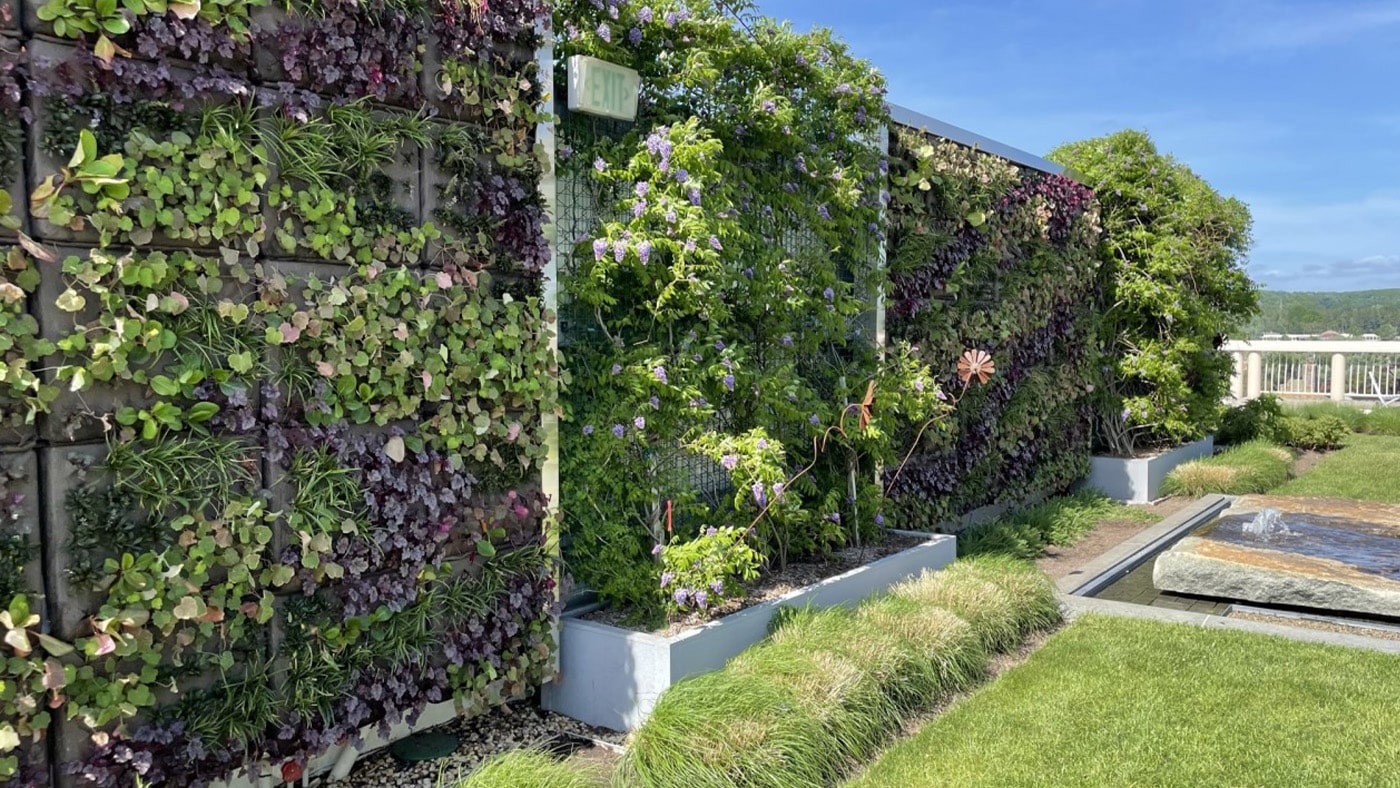
Photo: T&G Group
The Park Boswijk residential care complex is situated on the Utrecht Hill Ridge, nestled amidst the vast forests of Doorn and Driebergen. By incorporating an 800m2 large green roof, the building seamlessly integrates with the surrounding natural environment. This structure is described as an ‘apartment complex plus’ for seniors, with the ‘plus’ denoting the verdant backdrop. The Sedum roof aids in maintaining a cooler indoor temperature during the summer and also enhances tranquility, as the plants absorb ambient noise.
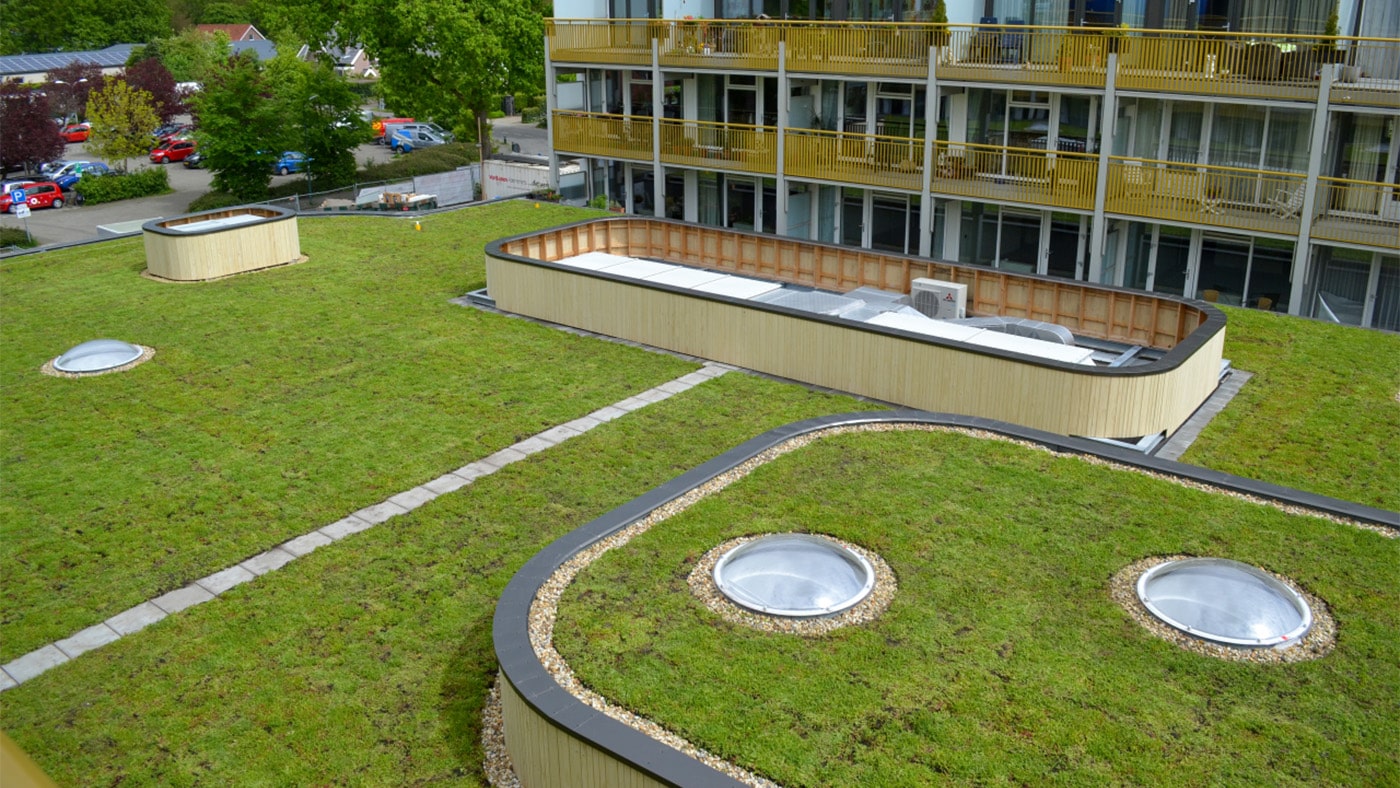
Photo: MASTOP
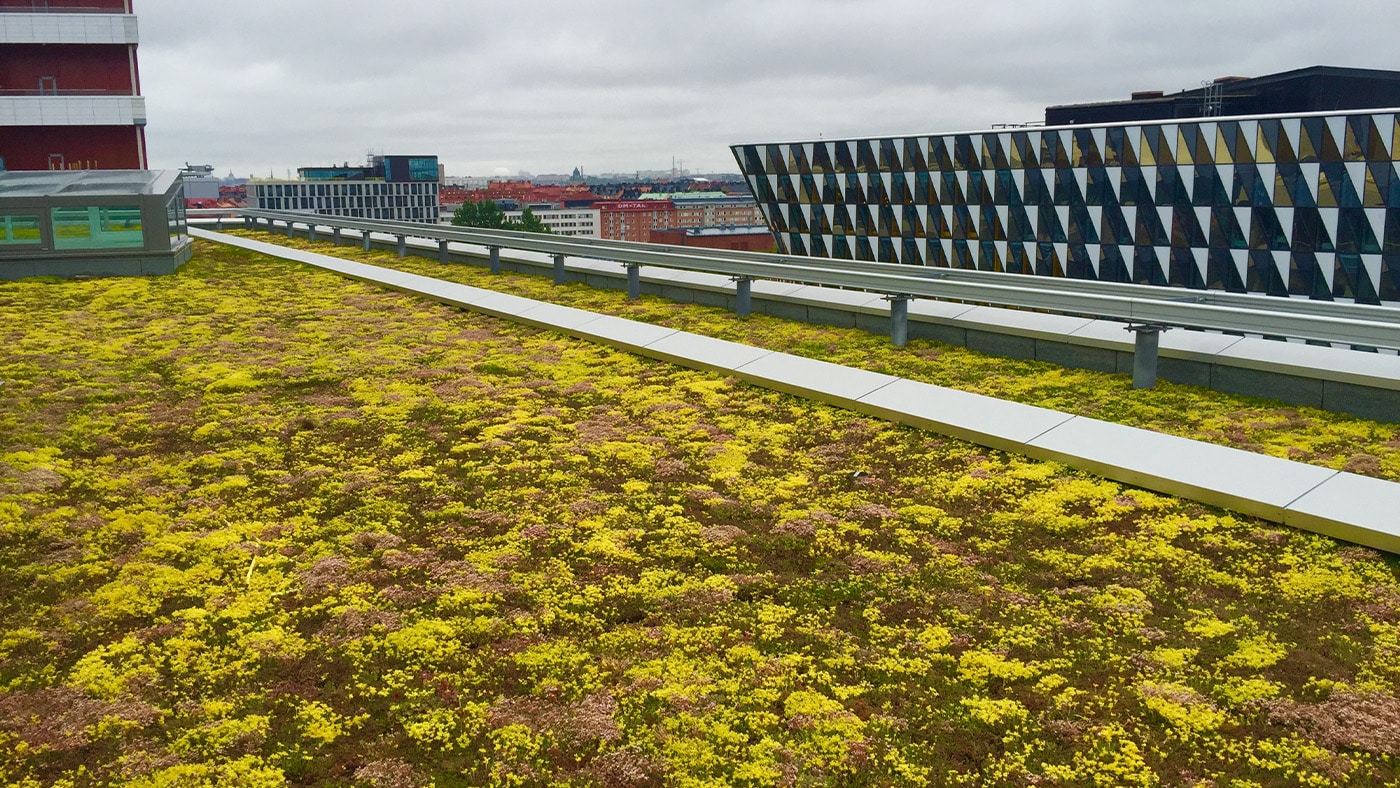
During the construction of the Karolinska Hospital, the entire design was focused on what is best for the patient. This has led to a prestigious project and one of the first university hospitals worldwide with LEED Gold certification. The building has also received the highest environmental rating from the Swedish Green Building Council (Miljöbyggnad Guld). Because of the proven positive effect of green roofs on the health and recovery of patients, it was decided to use a large Sedum roof of no less than 20,000 m2 on the hospital. In addition to the ‘healing environment’, the green roof also contributes to rainwater management and energy efficiency.
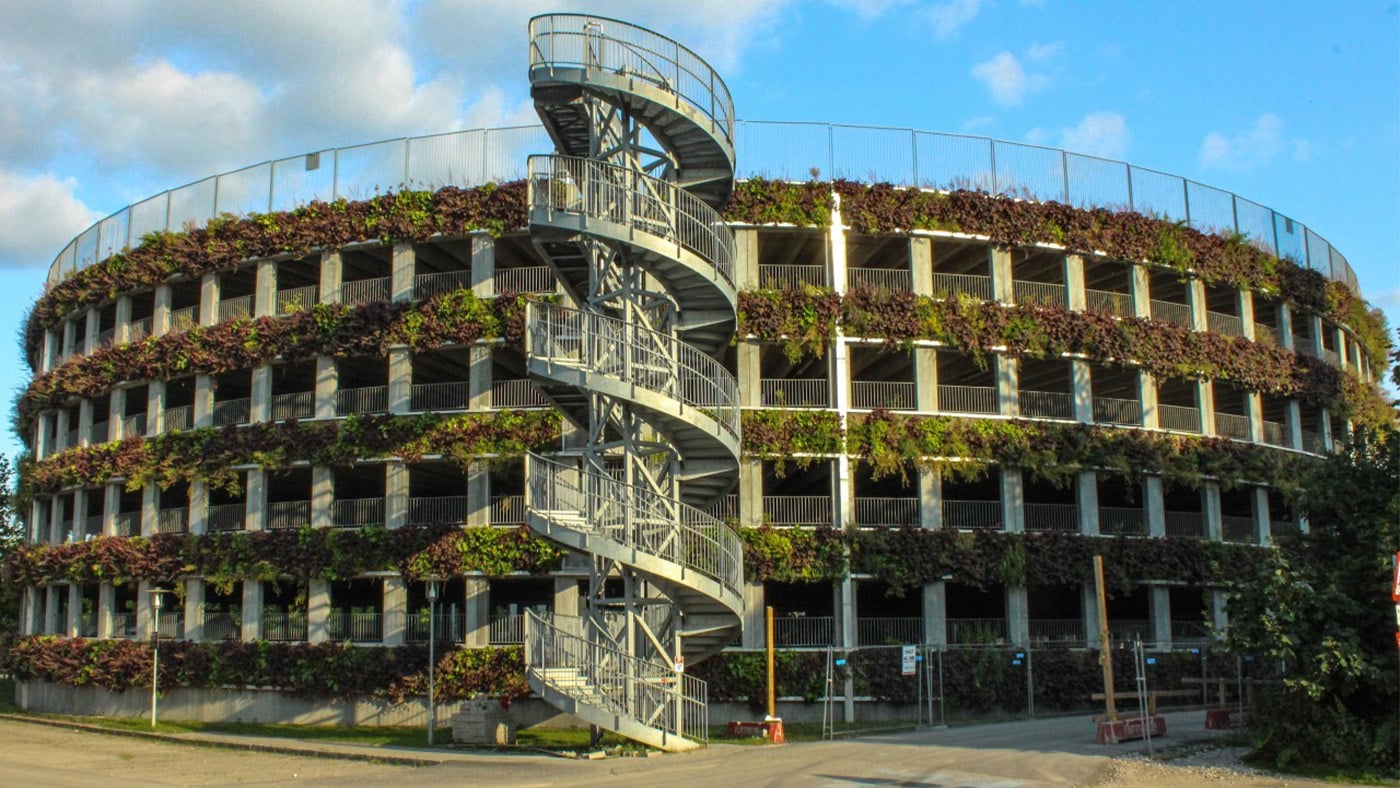
This hospital in Glostrup, Denmark, demonstrates that the facilities surrounding a healthcare institution should not be overlooked in terms of greening. Here, the parking garage is completely enveloped by a green facade. The plants filter CO2 from the air and produce oxygen, greatly enhancing the air quality around the hospital. Furthermore, the greenery provides a pleasant view and a calming sensation right upon arrival.
Would you like to know more about how green roofs or vertical gardens can offer added value to the health of patients, visitors, and employees of healthcare institutions? Or are you building or renovating a medical institution and would like advice on greening? Please feel free to contact one of our advisors without obligation.
https://www.healthdesign.org/sites/default/files/article-pdfs/Ulrich-1984-CHD-KPS.pdf
https://www.rivm.nl/sites/default/files/2022-05/Kennisbundeling%20Groen%20en%20Gezondheid_V6.pdf
https://core.ac.uk/download/pdf/48159917.pdf
https://klimaatadaptatienederland.nl/%40265571/whitepaper-voorkomen-beter-dan-genezen/
https://spotlight.kaiserpermanente.org/green-space-health-care-costs/

Ready to make a difference? At Sempergreen, we believe in building a greener future, one step at a time. Our innovative solutions are designed to help you decrease your footprint and contribute to a more sustainable world. Join us in replanting the planet!