- Water Management
- Knowledge
Water Storage in the Garden: Smart Solutions for Heavy Rainfall
In urban areas, we increasingly face challenges in water management. Due to the growing urbanization and paved surfaces, rainwater has difficulty infiltrating the ground. The result? Flooding during heavy rainfall and drought during other periods. The solution lies in innovative and sustainable approaches to urban water management. One effective measure is integrating water management on rooftops, for example through green roofs. But how exactly does this work, and what benefits does it bring for urban water systems? In this blog, we dive into solutions for capturing and retaining rainwater in cities.
In cities, rainwater is often collected in underground systems or infiltration basins (“Wadis”) to help it soak into the ground. However, a large portion of rainfall doesn’t land on the streets—it falls on rooftops! That’s why more and more innovative technologies are being developed that use rooftops as the first collection point. A good example of this is the water roof.
Such a roof acts as a temporary storage system for rainwater, which is then discharged slowly to prevent sewer overflows during heavy rainfall. Especially in densely built neighborhoods, a water roof offers major advantages in reducing waterlogging.
Are you looking to go beyond a traditional water roof? The green roof is your answer. This roof type merges water collection with natural filtration and evaporation. Vegetation on the roof captures rainwater and retains it within the substrate and drainage layers. The outcome? Rainwater remains on the roof longer, allowing it to slowly evaporate, infiltrate, or be gradually drained away. This renders a green roof a more efficient system for rainwater management than a standard water roof. In addition to actively managing water, green roofs aid in cooling buildings, enhancing urban air quality, and increasing biodiversity.
Intense rainstorms are becoming more frequent. Climate change leads to short, heavy downpours that can swiftly flood urban areas. Green roofs play a vital role in mitigating waterlogging. They act like sponges: during peak rainfall, the vegetation and underlying layers absorb rainwater and slowly release it into the sewer system.
This alleviates pressure on urban drainage systems and aids in preventing flooding. Moreover, the plants help cool both the building and its surroundings, which is particularly beneficial during hot spells, enhancing overall urban livability.
Installing a water-retaining roof—such as a green roof or water roof—also entails specific regulations. In the Netherlands, there are national and local requirements for rooftop water storage capacity, depending on the project’s size, building structure, and location. Municipalities may also impose additional conditions for drainage and maintenance, especially in flood-prone areas.
The Bbl (part of the new Environment and Planning Act) supersedes the old Building Decree 2012. It mandates buildings to manage rainwater safely and sustainably, possibly by processing it on-site using green or water-retaining roofs. The system must be capable of handling peak rainfall based on the roof’s size and location.
Many municipalities, in cooperation with water boards, have their own ordinances governing rainwater management. These often specify:
Water boards concentrate on reducing peak loads in the water system by requiring rainwater to be retained or delayed on-site, especially in flood-prone regions.
Technical guidelines, such as NEN 3215, detail how to safely and effectively drain rainwater to prevent flooding.
Many municipalities offer financial support for installing green or water-retaining roofs as part of climate adaptation programs. Always check with your local municipality for eligibility.
Every roof is unique. In areas with high flood risk or special soil conditions, customized solutions may be necessary—such as a larger buffer capacity or slower drainage rate.
Regulations in the Netherlands regarding roof water storage heavily depend on the project, the location, and local (municipal and water board) guidelines. If you’re considering a green roof or water roof, it’s prudent to seek expert advice on what’s technically and legally feasible within both national building regulations and specific local requirements.
Sustainable water management means more than just collecting rainwater—it’s about smart buffering, controlled processing, and reuse, all without compromising water quality. A green roof is ideal for this purpose: it captures rain, prevents flooding, and holds the water until it gradually evaporates. This controlled evaporation not only helps cool cities but also improves air quality.
But there’s more! A green roof allows for practical rainwater reuse. The collected water can be used to irrigate façade vegetation, flush toilets, or for other purposes that don’t require drinking water. This saves valuable tap water and reduces strain on urban drainage systems.
Reusing rainwater creates multiple benefits: less flooding, lower costs, more biodiversity, and a healthier living environment. Green roofs are therefore a smart, sustainable solution for future urban water management.
We’re seeing it more often: short, intense downpours that flood streets in no time. These “peak storms” are a direct result of climate change. To make cities more resilient, we must adapt their infrastructure—and green roofs play an important role in this. A green roof acts like a sponge: it captures rainwater, holds it temporarily, and releases it gradually. This prevents sewage overload and keeps streets, gardens, and homes better protected from flooding during heavy rain.
Climate adaptation means modifying cities and nature to withstand the effects of climate change. Building a climate-resilient city involves multiple measures, and green roofs are a prime example of an effective one. These roofs store water, reduce flooding, cool the environment, and promote biodiversity—creating greener, more livable cities. In short, green roofs combine ecology and technology in a smart way, making cities greener, healthier, and more resilient to climate extremes.
Want to prevent flooding from heavy rainfall around your project in the future? Then consider a green roof early in the design phase. By collecting and slowly releasing rainwater directly on the roof, a green roof prevents sewer overload and protects homes and gardens from flooding. Integrate a green roof at the start of your building or home design and contribute to the sustainable water management of tomorrow.
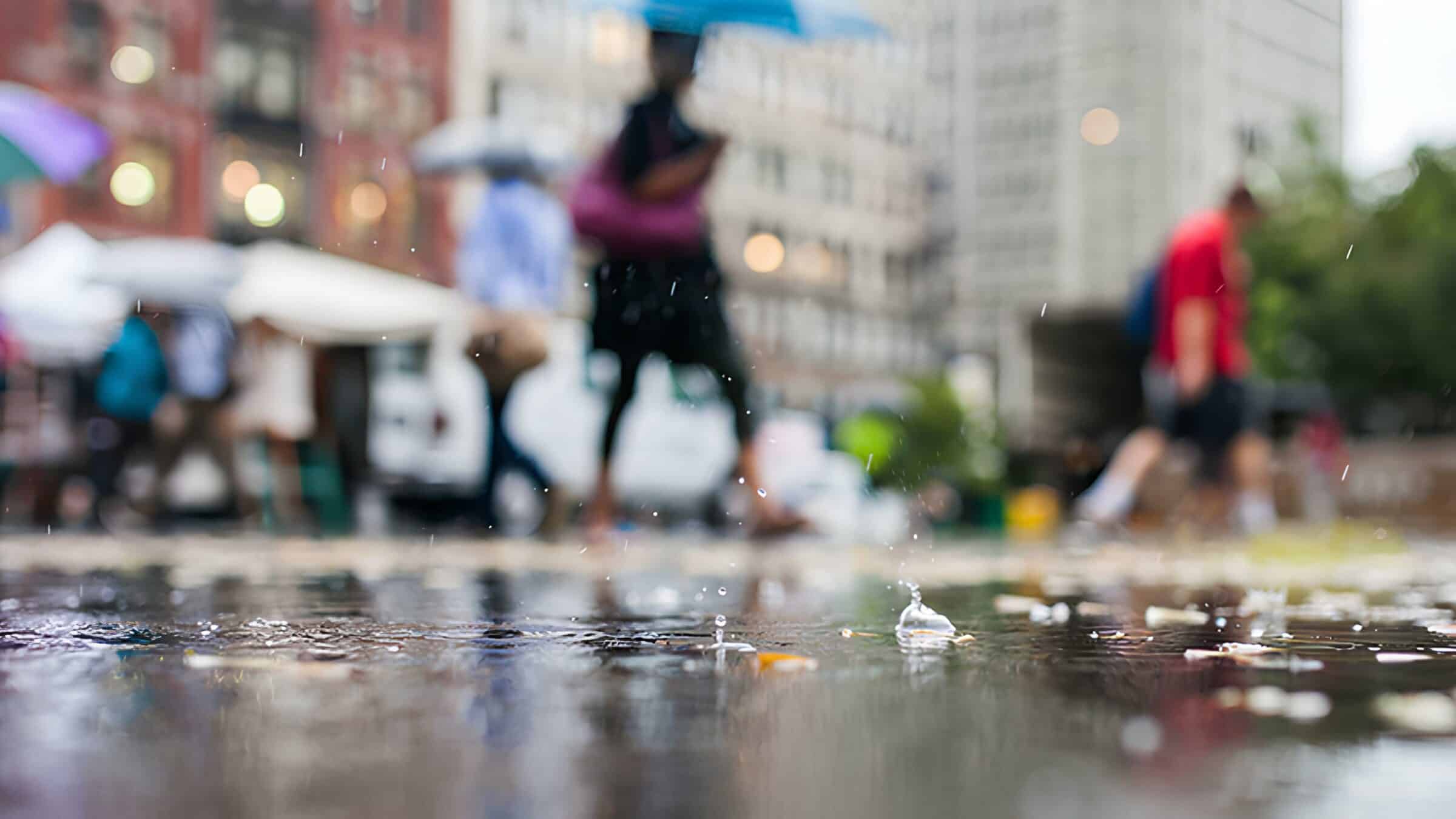
Green roofs are no longer just aesthetic or ecological—they are vital to urban water management. They can be designed as retention roofs or detention roofs, depending on how water is captured and released.
Retention roofs store rainwater for longer periods, allowing gradual evaporation or discharge. This system is ideal during dry spells, as stored water benefits plants and cools the building and its surroundings. Water is stored in special crates or layers that act as a buffer during rainfall.
Detention roofs, by contrast, focus on controlled discharge right after a storm. They temporarily store water and release it slowly to prevent sewer overloads. Detention roofs are suitable for areas with frequent heavy rainfall and limited sewer capacity. Their lightweight design also makes them ideal for renovation projects, even on sloped roofs (up to 5°).
Both systems provide significant environmental and practical benefits:
By choosing a retention or detention roof, you contribute to a climate-resilient city and a sustainable urban future.
Although installing a green or water-retaining roof involves upfront costs, the long-term benefits often outweigh the investment. In addition to flood control and climate adaptation, various financial incentives—such as municipal subsidies and tax deductions (e.g., the MIA-VAMIL scheme)—make these systems even more attractive.
Urban water management requires innovative and sustainable solutions. Green roofs—such as retention and detention systems—offer an effective way to capture, store, and reuse rainwater. With the right setup, you can handle heavy rain events, reduce flooding, and contribute to a more livable city. Add in the financial incentives, and you have a powerful tool for building the climate-adaptive cities of tomorrow.

Ready to make a difference? At Sempergreen, we believe in building a greener future, one step at a time. Our innovative solutions are designed to help you decrease your footprint and contribute to a more sustainable world. Join us in replanting the planet!