- Water Management
- Knowledge
Water Storage in the Garden: Smart Solutions for Heavy Rainfall
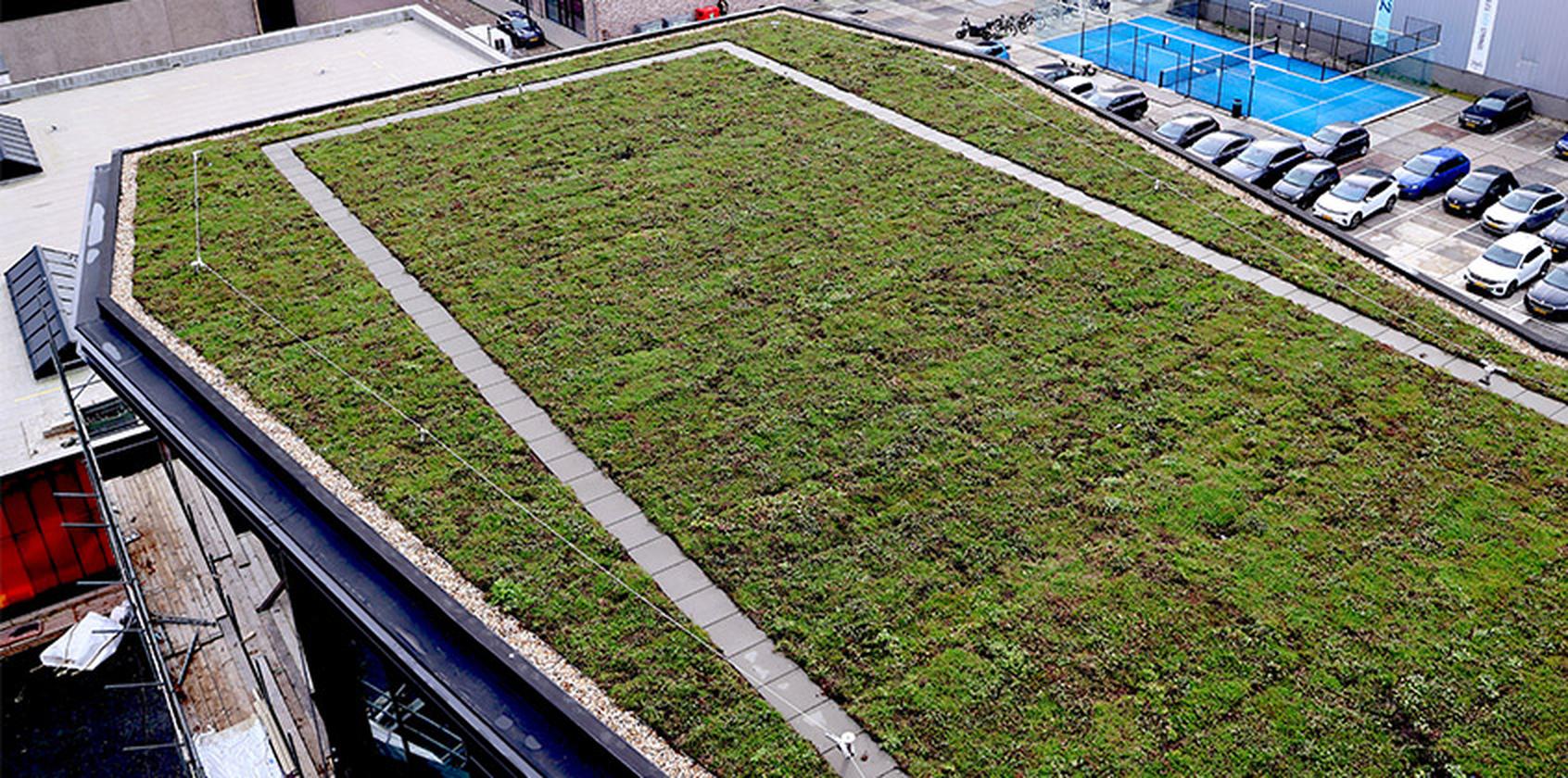
As heavy rainstorms become more frequent, cities are searching for smart ways to prevent flooding. One of the most promising solutions? The water roof. This innovative type of roof not only temporarily retains rainwater but also provides cooling, biodiversity, and a more sustainable living environment. A water roof, also known as a blue roof, is specifically designed to store rainwater in a temporary buffer tank on top of the roof. This technique helps prevent flooding during peak rainfall and provides natural cooling for the building below. When combined with a green roof, it becomes a water retention or detention roof—a multifunctional roof with numerous benefits.
The climate is changing. We are increasingly faced with heavy, short rain showers. Urban areas, where there is a lot of paving and little greenery, are especially vulnerable to flooding. Sewer systems cannot always handle the volume, resulting in flooded streets and basements.
That is why it is crucial to retain water where it falls, and the roof is the ideal place for this. Instead of draining rainwater directly into the sewer, water roofs temporarily store it. This relieves pressure on the drainage system and prevents sudden surges during heavy rainfall.
But it goes beyond water buffering alone. Because the water remains on the roof, it also has a cooling effect on the building, especially during warm periods. This effect is enhanced when combined with a green roof. The result: less heat stress and a contribution to urban climate adaptation.
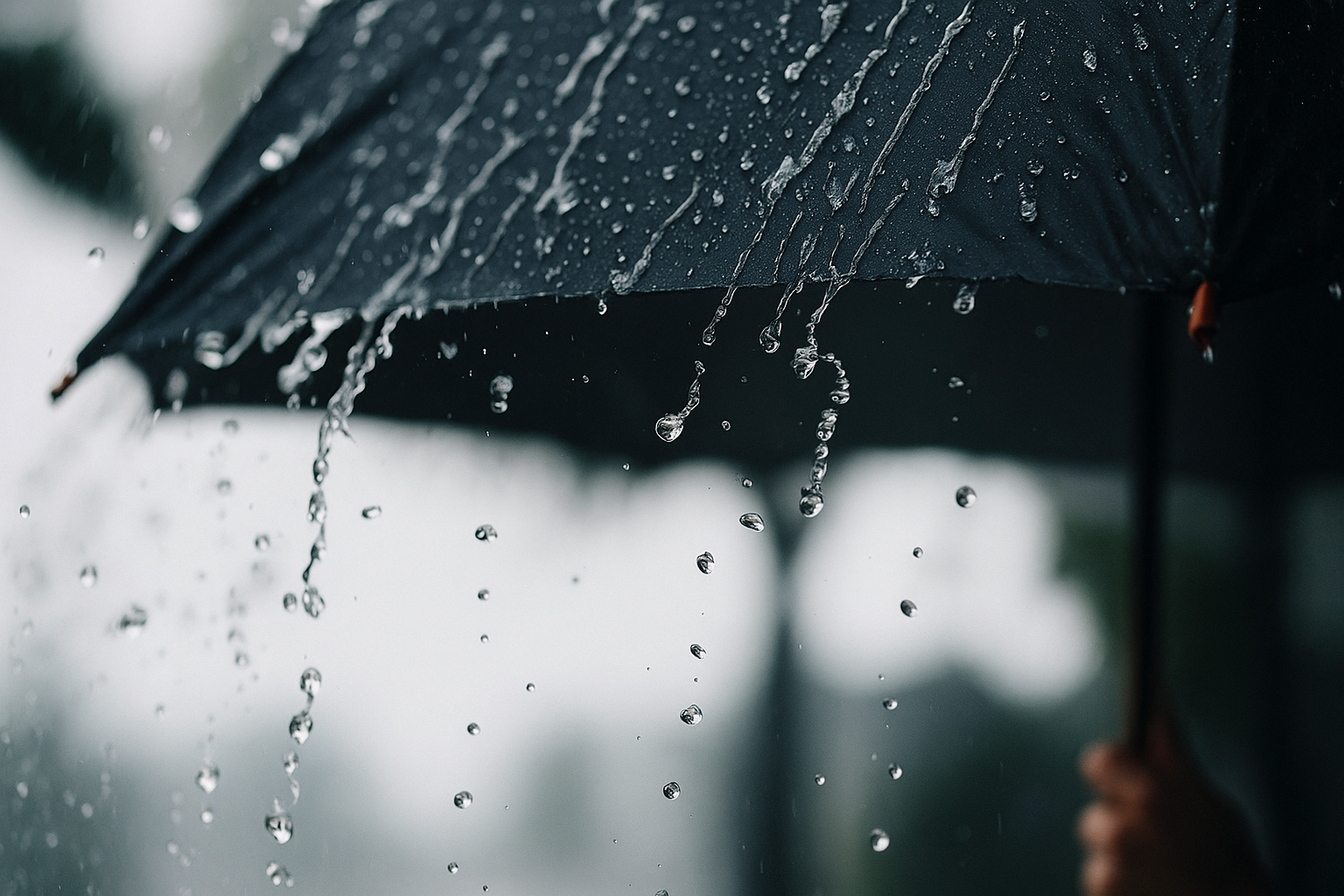
A roof no longer solely functions as protection against rain and sun. Roofs are increasingly being endowed with additional purposes—consider solar panels, rooftop gardens, or green terraces. With a water retention roof, you introduce another vital function: water storage and delayed drainage.
A retention roof temporarily holds rainwater in a special buffer zone. Through controlled outflow, the water gradually drains, preventing peak loads on the sewer system. The system can even be intelligently operated via sensors so that, when rain is anticipated, space is automatically made for new rainfall.
And the best part? You can combine a water retention roof with a green roof. This results in a roof that contributes to:
The technology behind a water roof is impressively smart. Depending on the system and type of building, various solutions are available. Some common systems include:
Each situation demands a unique approach. For existing buildings, considerations such as load-bearing capacity, drainage capability, and maintenance are crucial. For new constructions, specifications can be incorporated from the outset. Thus, it is always prudent to collaborate with a specialist.
An increasing number of buildings are opting for water roofs because they contribute to climate adaptation, energy savings, and sustainable use of space. The following project examples demonstrate how theory is applied in practice—each an inspiring instance of intelligent water buffering combined with green and energy-generating roofs.
The redevelopment of the former Chewing Gum Factory into the creative KBF Warehouse imposed high standards for sustainability, aesthetics, and functionality. The greatest technical challenge? Developing a fully functional water retention roof on a completely flat surface without slope, while also adhering to the strict requirements of the Amsterdam Rainwater Ordinance (at least 60 liters/m² of water storage).
In collaboration with Daktec, Sempergreen, and Optigrün, an innovative retention roof system was installed that retains 37,200 liters of rainwater on the roof. Thanks to a controlled drainage capacity of 1 liter per m² per hour and an emptying time of 60 hours, peak loads on the sewer system are significantly reduced. The vegetation layer, consisting of Sempergreen’s Sedum mix mats, is combined with retention crates and integrated solar panels. This creates a multifunctional roof that merges water buffering, vegetation, and sustainable energy generation.
The outcome is a future-proof water roof that fulfills all water storage and multifunctional requirements. It actively aids in water retention during heavy rainfall, diminishes heat stress, and fosters biodiversity. Furthermore, it is accessible to employees as a usable space. Thanks to the intelligent combination of blue (retention), green (vegetation), yellow (solar panels), and red (use), the roof was nominated for Roof of the Year 2024. The project exemplifies how innovative water roofs are pivotal in climate-adaptive urban redevelopment.
At Vrumona’s business site in Bunnik, there was an increasing risk of flooding due to extreme rainfall and hardened surfaces. The climate adaptation project group of Green Business Club Bunnik, together with the regional water authority De Stichtse Rijnlanden, mapped out vulnerable areas. The conclusion: the roof surface of the Vrumona building offers great potential for buffering water and relieving the sewer system.
To address this challenge, an innovative detention roof of nearly 600 m² was installed on the Vrumona headquarters. This smart water retention roof buffers rainwater on the roof and drains it slowly, even when the system is fully saturated. This greatly reduces peak sewer loads during heavy rainfall. Sempergreen supplied the green roof, which was installed in collaboration with Van Doorn Roofing Specialist and De Dakdokters. Within two days, both roof surfaces were equipped with a climate-adaptive solution.
The water roof on the Vrumona building reduces peak discharge by as much as 97%. The peak is also delayed by 25 minutes, while the roof takes a total of 38 hours and 24 minutes to drain the rainwater in a controlled manner. This means the project meets municipal and water authority standards. The result is not only a technically advanced water retention roof but also an inspiring example of how companies can actively contribute to water retention, climate resilience, and a more sustainable living environment.
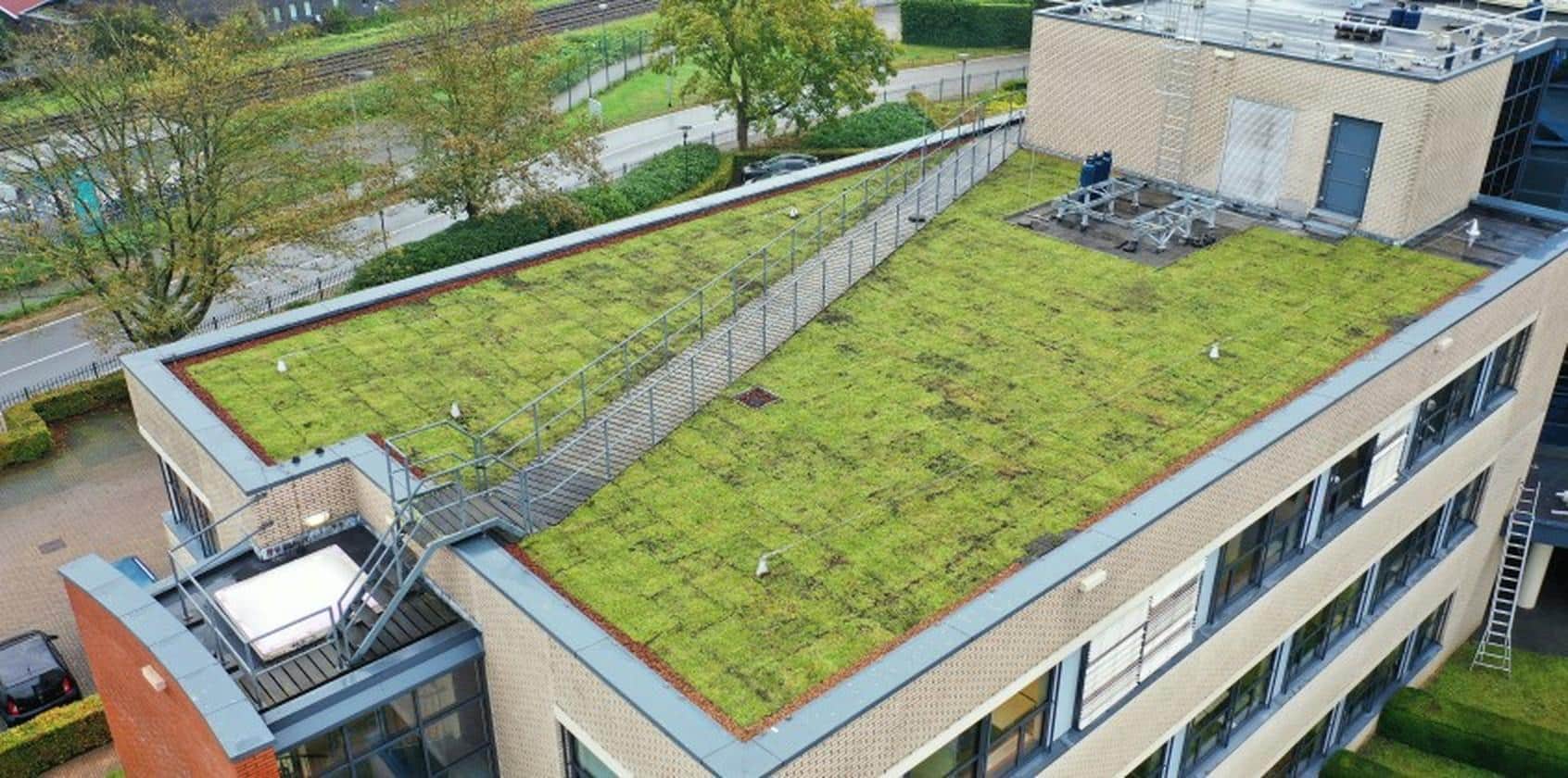
Photo source: https://www.sempergreen.com/en/references/office-vrumona
Cities face enormous challenges: drought and flooding, heat stress, and lack of space. Solutions must be multifunctional, and roofs offer the perfect opportunity.
Whether it is a water roof on its own or combined with a green roof or solar panels, the trend is clear. Roofs are being actively used for climate adaptation, energy generation, and urban greening.
With a water retention roof, you give your building an edge in sustainability and comfort. You make a visible contribution to the city of tomorrow and save on energy costs.