- Smart Renovation
- Knowledge
Watch our Solar Green Roof Webinar!
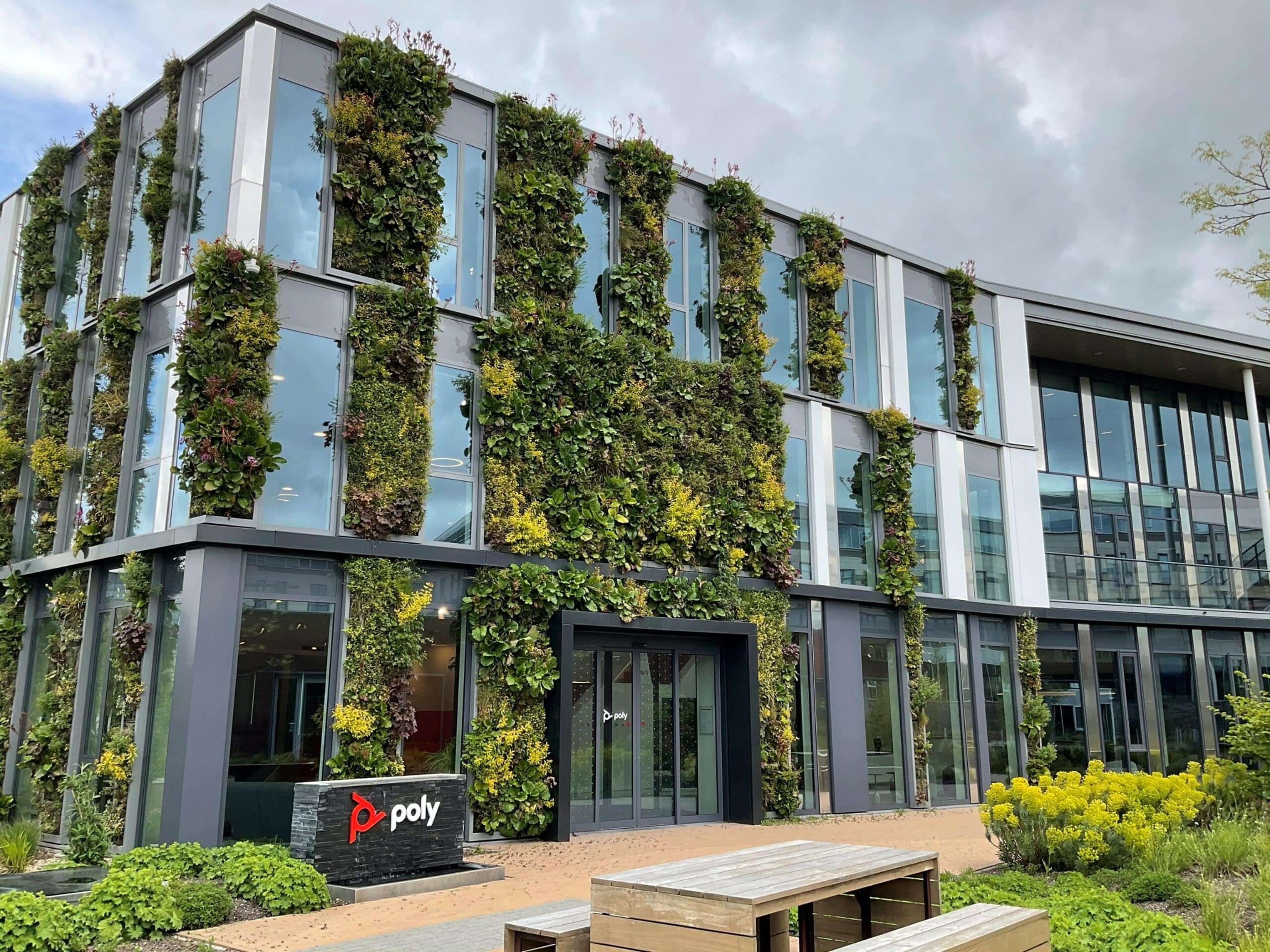
Our rapidly warming climate underscores the urgency of climate change mitigation every day. Extreme heat, deteriorating air quality, and peak rains increasing in number and severity profoundly impact our urban environment. The construction sector plays a pivotal role in addressing these challenges. In doing so, we observe a significant shift in strategy: renovation is increasingly preferred over new construction. By renovating existing buildings and enhancing their sustainability, the construction sector can make a substantial contribution to reducing CO2 emissions. Sustainable renovation not only improves energy efficiency but also strengthens the resilience of buildings against extreme weather conditions. Property owners and managers, government agencies, and policymakers, as well as environmental organizations and sustainability consultants, play a crucial role in championing this transition. Together, we can and must construct a sustainable future that safeguards both our cities and the environment.
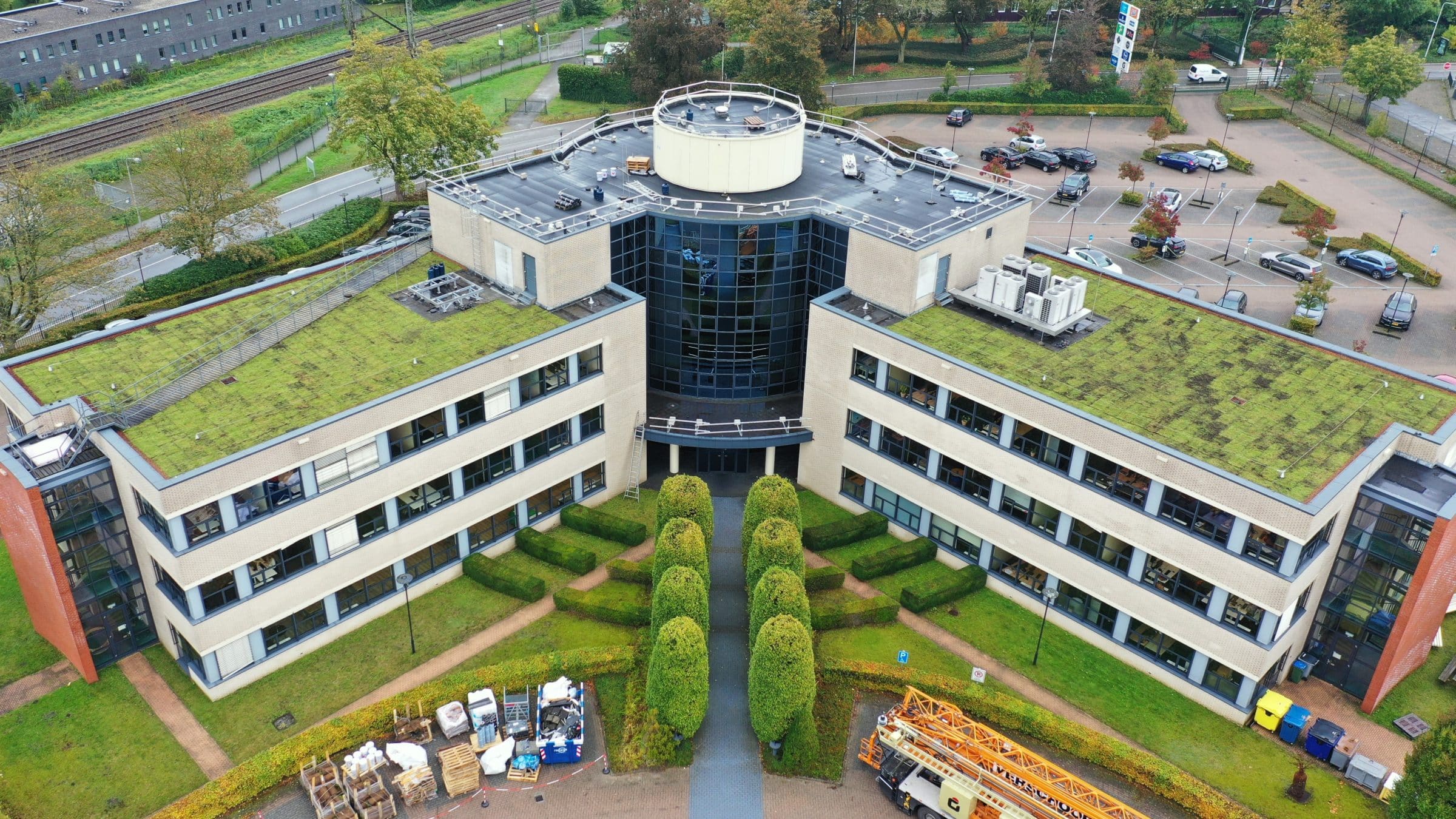
Green renovation is crucial for the city’s climate adaptation. Why? Greenery cools the environment, reduces flooding, and increases infiltration capacity, which can also combat drought. By identifying the various problems caused by climate change, we illustrate the opportunities and possibilities for green renovation.
We are increasingly faced with extreme weather challenges. Intense downpours, powerful storms, and prolonged periods of drought and heat are on the horizon. Moreover, the cost of protecting land from flooding is significant. Extreme weather can also lead to shortages of drinking water and food.
To mitigate flooding caused by extreme rainfall, traditional roofs can be equipped with green roofs. For rainwater management, special green roofs have been developed that can retain excess rainwater for extended periods. Thus, rainwater is collected and temporarily stored at its initial point of contact. The water is then released to the sewer system in a controlled manner, preventing flooding at street level. This type of green roof is often referred to as retention roof, Purple-Roof, or blue-green roof. The Purple-Roof, which can also be installed on existing roofs with slopes, has undergone extensive testing, proving it to be an effective green roof construction for rainwater management. Approximately half of all roofs are flat roofs, and most of these are currently not utilized. Therefore, there are significant opportunities here for collecting rainwater exactly where it falls. A major advantage of a Purple-Roof is its lightweight design, allowing it to be installed on existing buildings and thus suitable for roof renovation. This type of green roof generally complies with the local water board’s or municipality’s water regulations.
With the rise of global warming, heat stress in cities is becoming an increasingly serious issue. In the past 130 years, global temperatures have risen by 1 degree. If greenhouse gas emissions continue at their current rate, the global average temperature will keep rising. This increase in temperature will not only shorten winters but also trigger the growing and flowering season earlier in the year. These changes have profound consequences for both humans and nature. Animal and plant habitats shift due to higher temperatures, which can lead to the extinction or migration of species from their original habitats. At the same time, climate change can actually expand some habitats. Notable examples include the permanent establishment of the Asian tiger mosquito and the Asian hornet outside Asia.
However, there are also risks for people in high urban temperatures. Heat can cause symptoms of fatigue, difficulty concentrating, and shortness of breath. And for individuals with cardiovascular diseases, the risk of heart attack or stroke increases. When the outside temperature becomes too high, the body struggles more to dissipate heat, risking overheating. This is particularly dangerous for the elderly or those with underlying conditions, as research by the American RIVM indicates: 250 people die annually due to heat, 31% of which can be attributed to climate change.
The study ‘The Heat-Proof City’ by the University of Applied Sciences of Amsterdam demonstrates that a 10% increase in greenery leads to a half-degree reduction in city heat. A straightforward method of greening petrified surfaces in the city is by adding a green roof or green facade to existing buildings. Greenery retains a significant amount of moisture and thus cools the surrounding area.
Therefore, the application of greenery to petrified surfaces is of paramount importance for the city. In the image below, captured with a thermal camera on a hot summer day, you can clearly see the temperature difference between a green and a non-greened/petrified surface.
In fact, not only does the presence of a green roof or green facade make the outdoor environment more pleasant, but for the indoor climate, a green roof or living wall also creates a more comfortable setting. The air conditioning system does not have to work as hard, which also leads to energy savings.
An additional advantage of greenery is its positive impact on biodiversity. Green roofs and green walls provide habitats for insects and small birds, promoting biodiversity in urban areas.
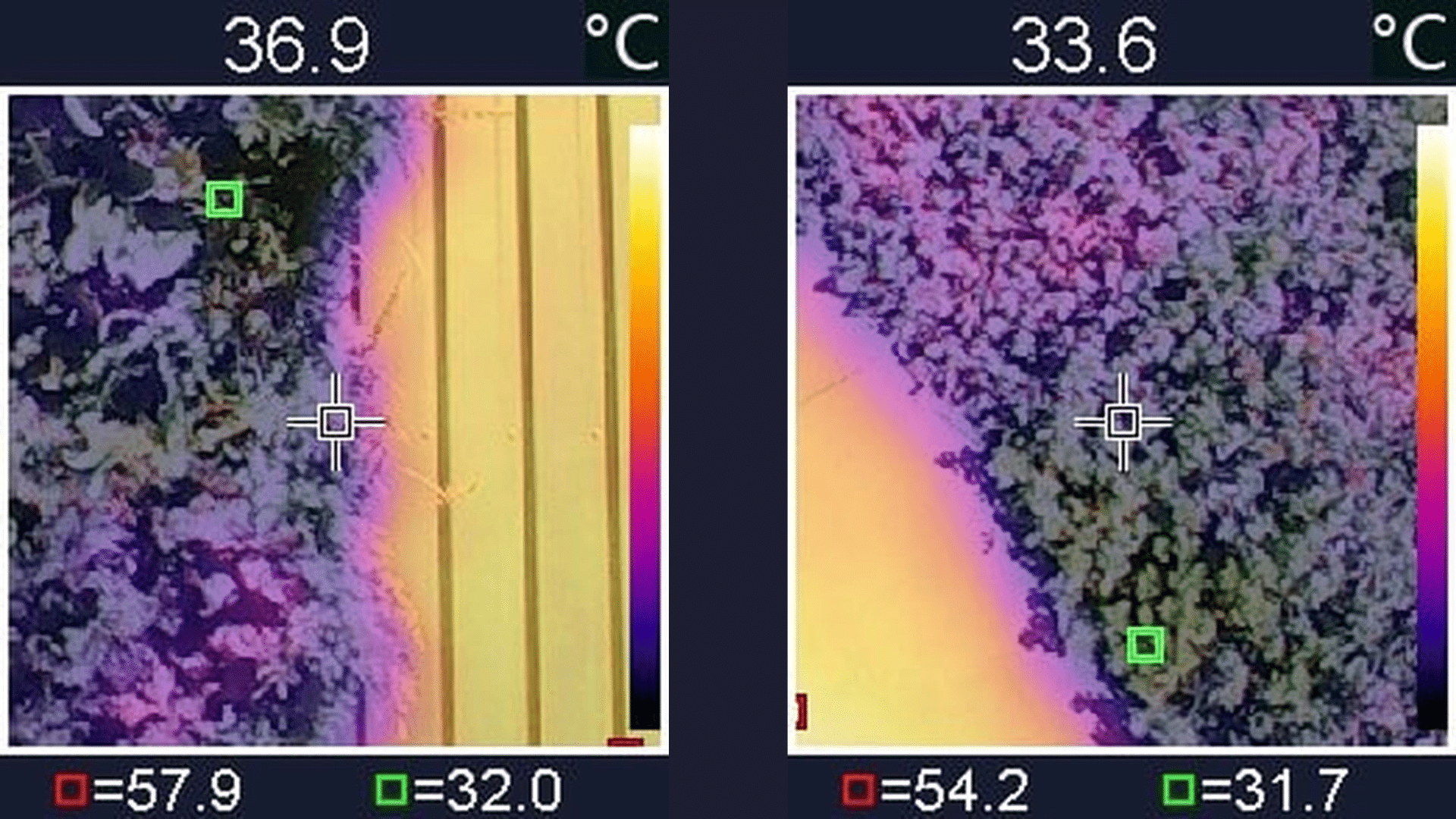
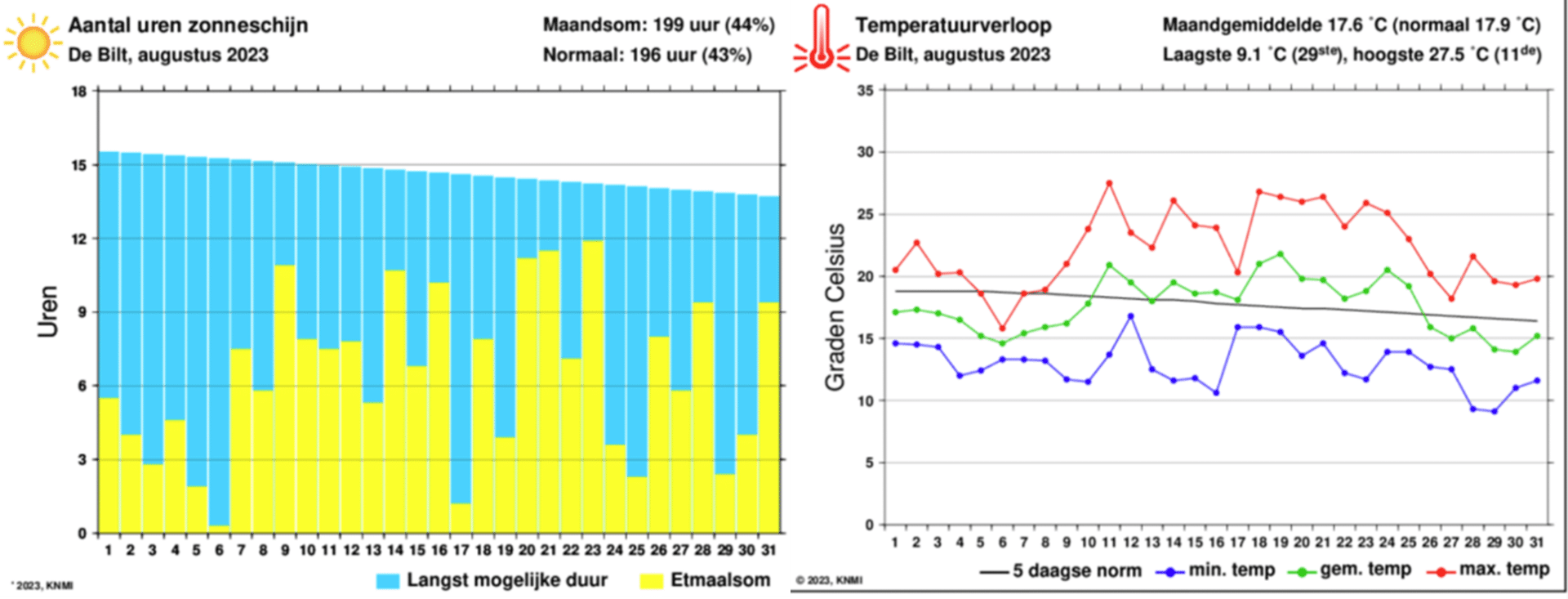
These images were taken on August 14, 2023. Below is a graph of the weather conditions on this day:
Climate change not only warms the air, the quality of the air we breathe also deteriorates significantly on hot days. This is because there is more ozone and more pollutants, pollen, and mold in the air on hot days. Reduced air quality has health implications, think of respiratory problems or allergies. Infectious diseases also get more space in warmer and more humid climates.
Plants are known for their air-purifying properties. Plants extract CO2 from the air and convert it into oxygen. Thus, they naturally create healthier air quality. The more plants, the better the air quality worldwide. Applying a green façade to a building has a great effect on the air quality in its immediate surroundings. Thanks to the high plant density of a SemperGreenwall, 1m2 of green wall removes 2.3 kg of CO2 from the air per year. In addition, this one square meter produces as much as 1.7 kg of oxygen.
So, when undertaking a facade renovation, choose to install a green facade right away. Green walls can serve as a replacement for a building’s outer shell. This is because a SemperGreenwall is completely waterproof and water-resistant.
Similarly, on the roof, Sedum plants, grasses, and herbs absorb pollutants from the air. Think of particulates and CO2. So opting for a green roof is also a good idea during a roof renovation.
Do you wonder what green renovation looks like in practice? Below we show a number of case studies. These are just some of the many projects we have had the pleasure of contributing to over the past decades:
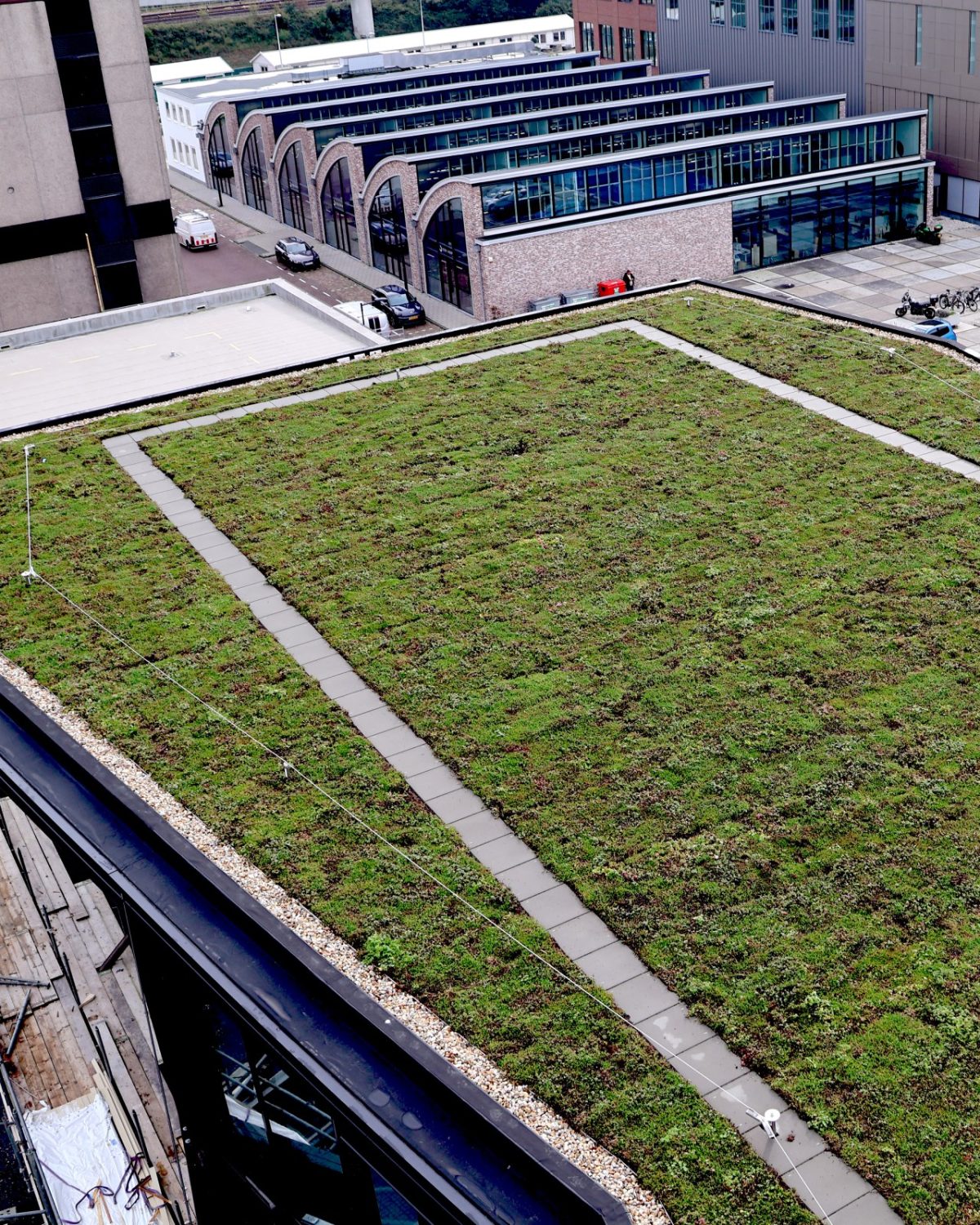
Designed by NEXT Architects, the former production hall of the Gumball Factory in Amsterdam is being transformed into KBF Warehouse, a modern hotspot and workplace for creative entrepreneurs. Part of this transformation is a green roof renovation. One of the multifunctional roofs now features a 400 m2 Retention Roof. This blue-green roof solution captures rainwater, buffers it on the roof, and provides delayed discharge to the sewer system. The Gumball Factory Amsterdam is the first nominee for Roof of the Year 2024.
Photo credits: Daktec
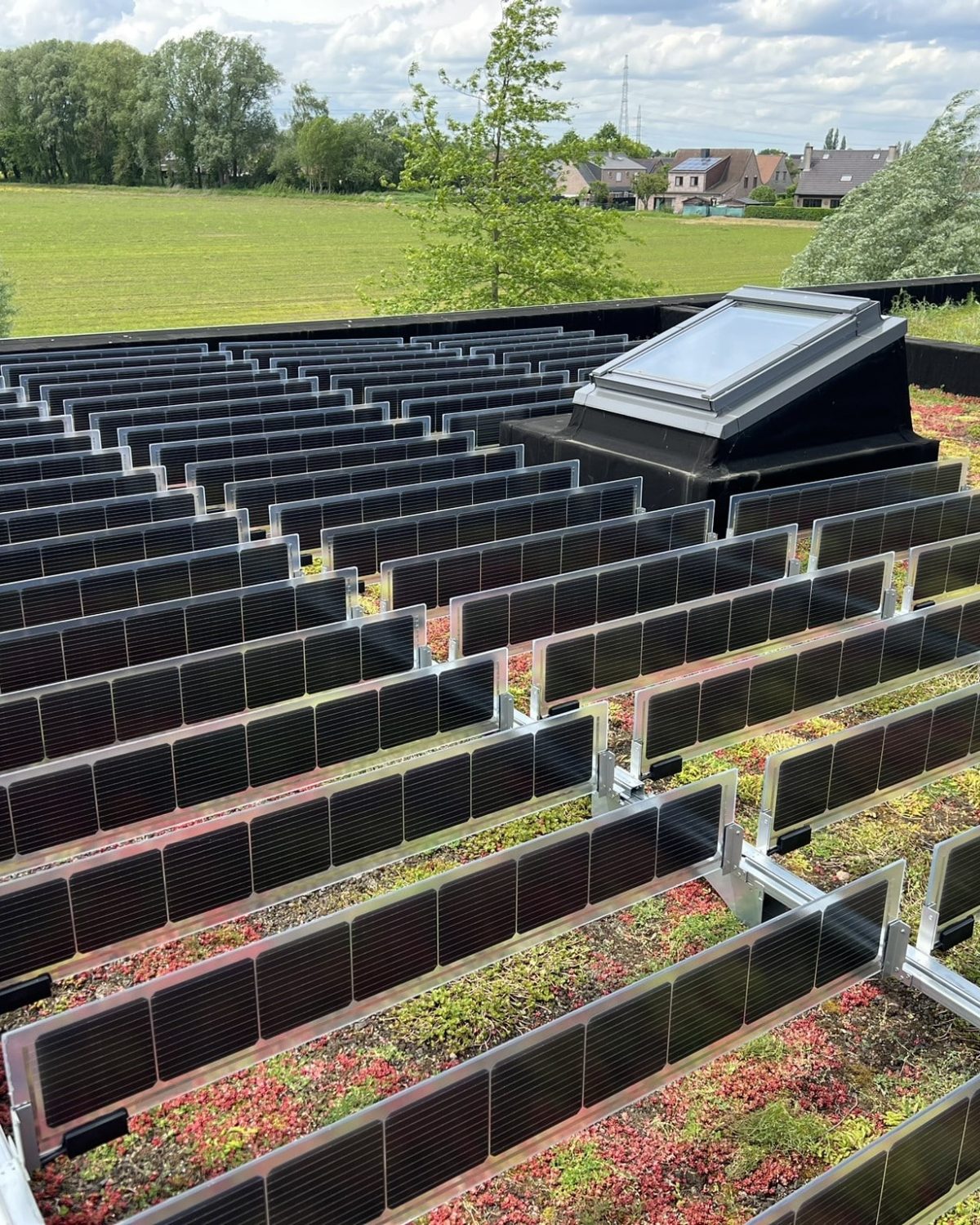
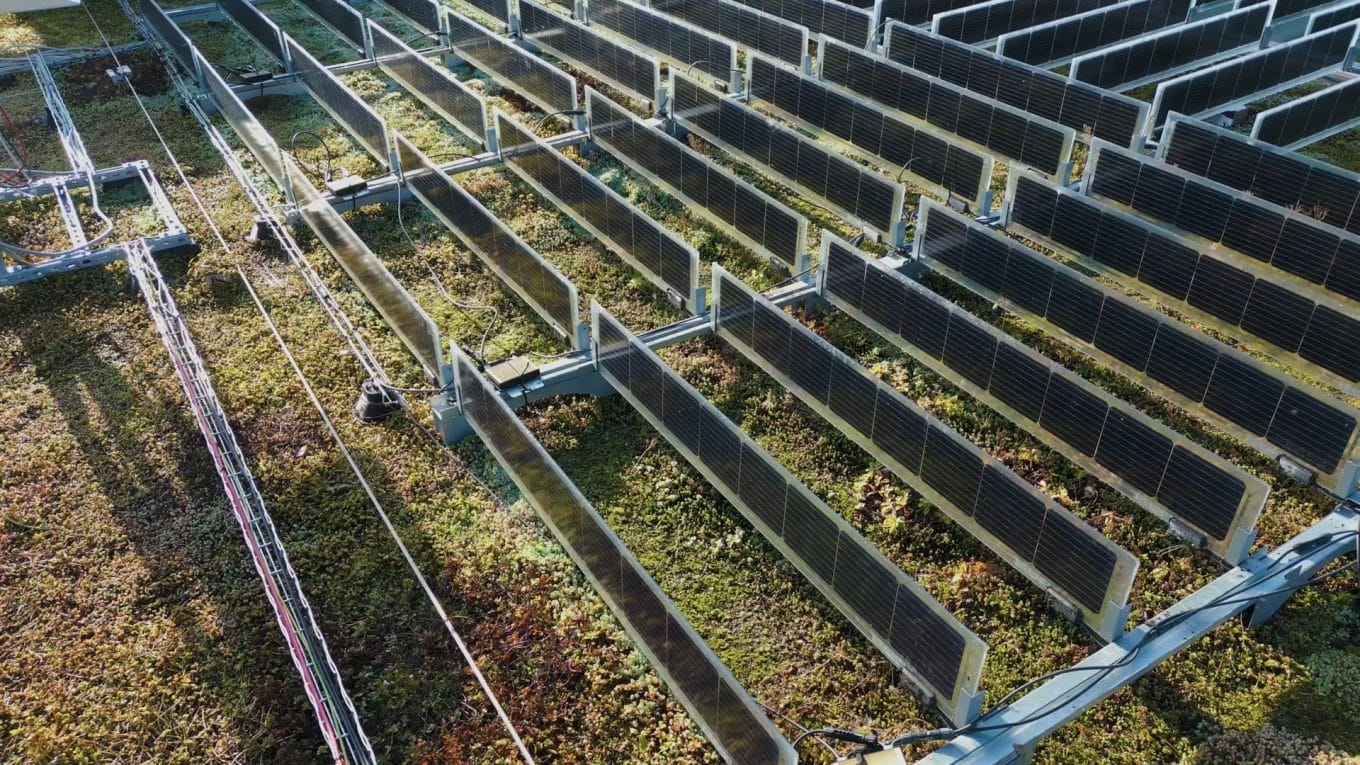
In this project in Dilbeek, Belgium, an existing green roof was developed into a multifunctional roof where plants and solar panels work together. Over Easy vertical solar panels were used for this purpose. This lightweight solar system is easy to apply, as it is installed without mechanical fixation or ballast. Moreover, this system has solar cells on both sides (bifacial), optimizing energy generation. Applying a new system to an existing solution is also known as Retrofitting. Thanks to the vertical arrangement of the solar panels, enough space is left for greenery and any maintenance can be carried out easily.
Photo credits: Solar Batteries
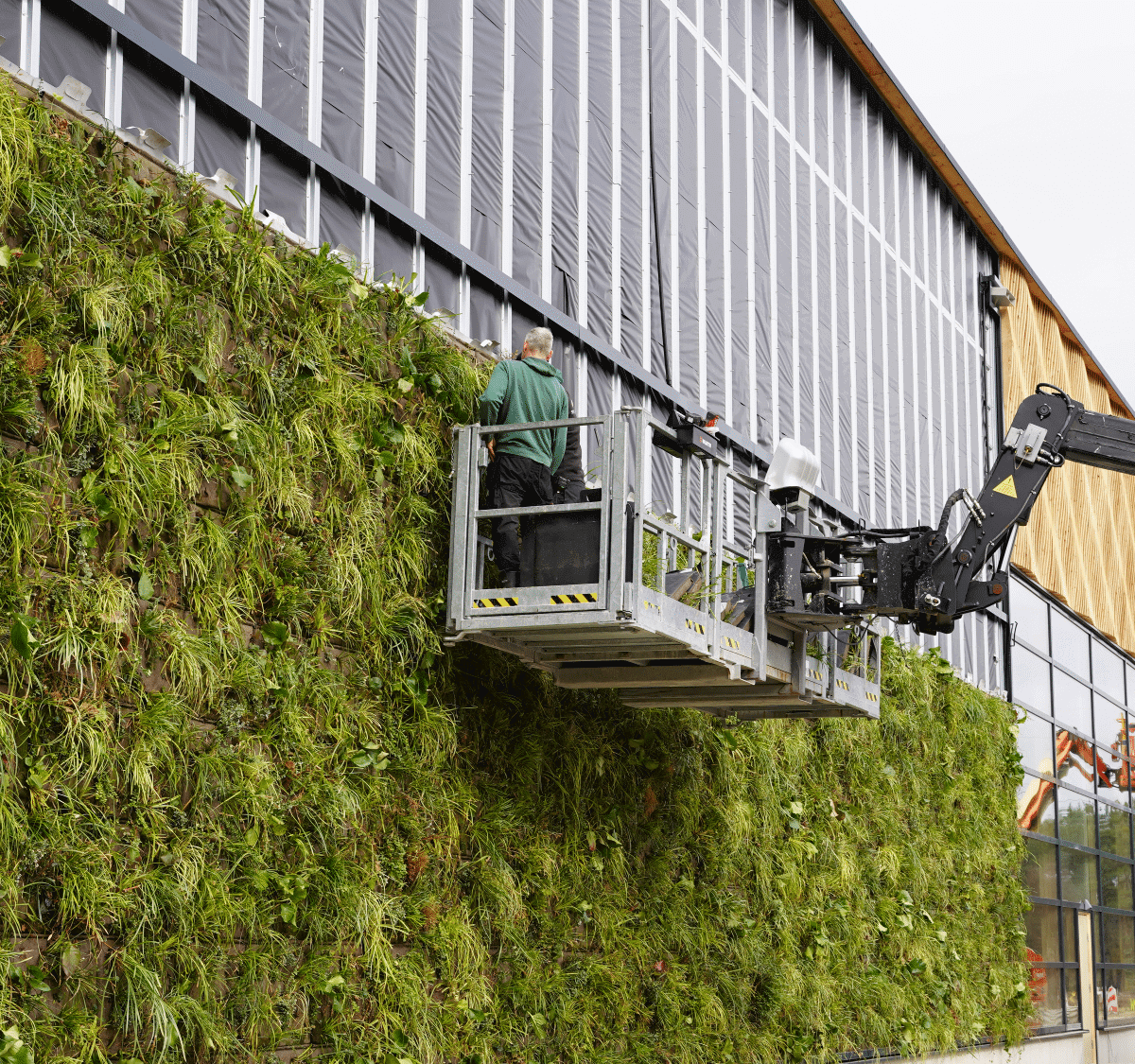
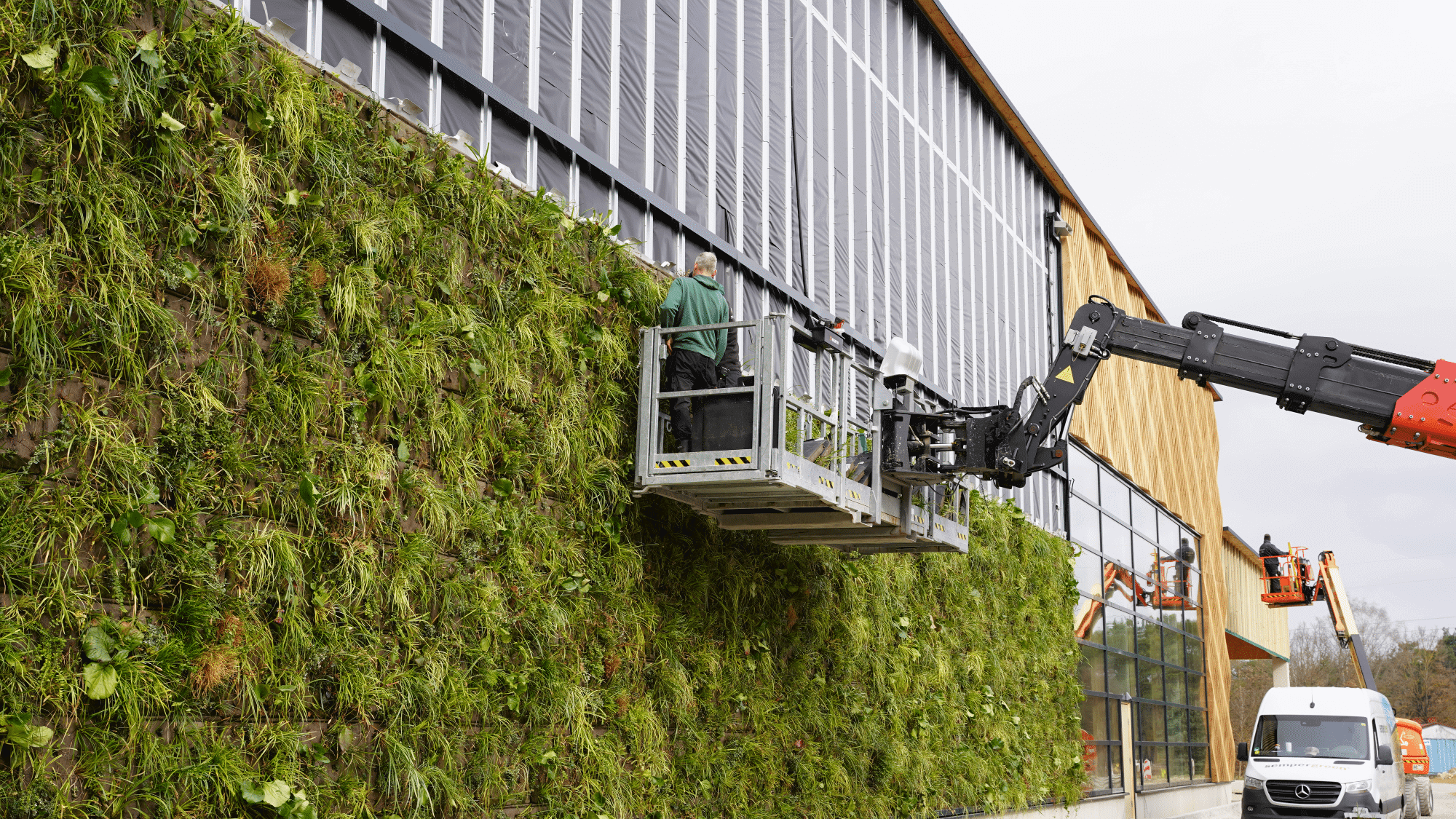
At beer brewery Zum Kuchlbauer, they don’t like half-measures. They aimed to transform their logistics center into a climate-positive and fully self-sufficient building. And they succeeded, among other things, by installing a SemperGreenwall Outdoor and a green roof with solar panels. With its 450m2 surface area, the green wall covers 50% of the entire facade. The other 50% of the facade consists of wood, a renewable resource. Collected rainwater is reused to irrigate the green facade. Moreover, the living wall makes an important contribution to biodiversity in the area and the living and working environment of the employees of this regionally large employer.
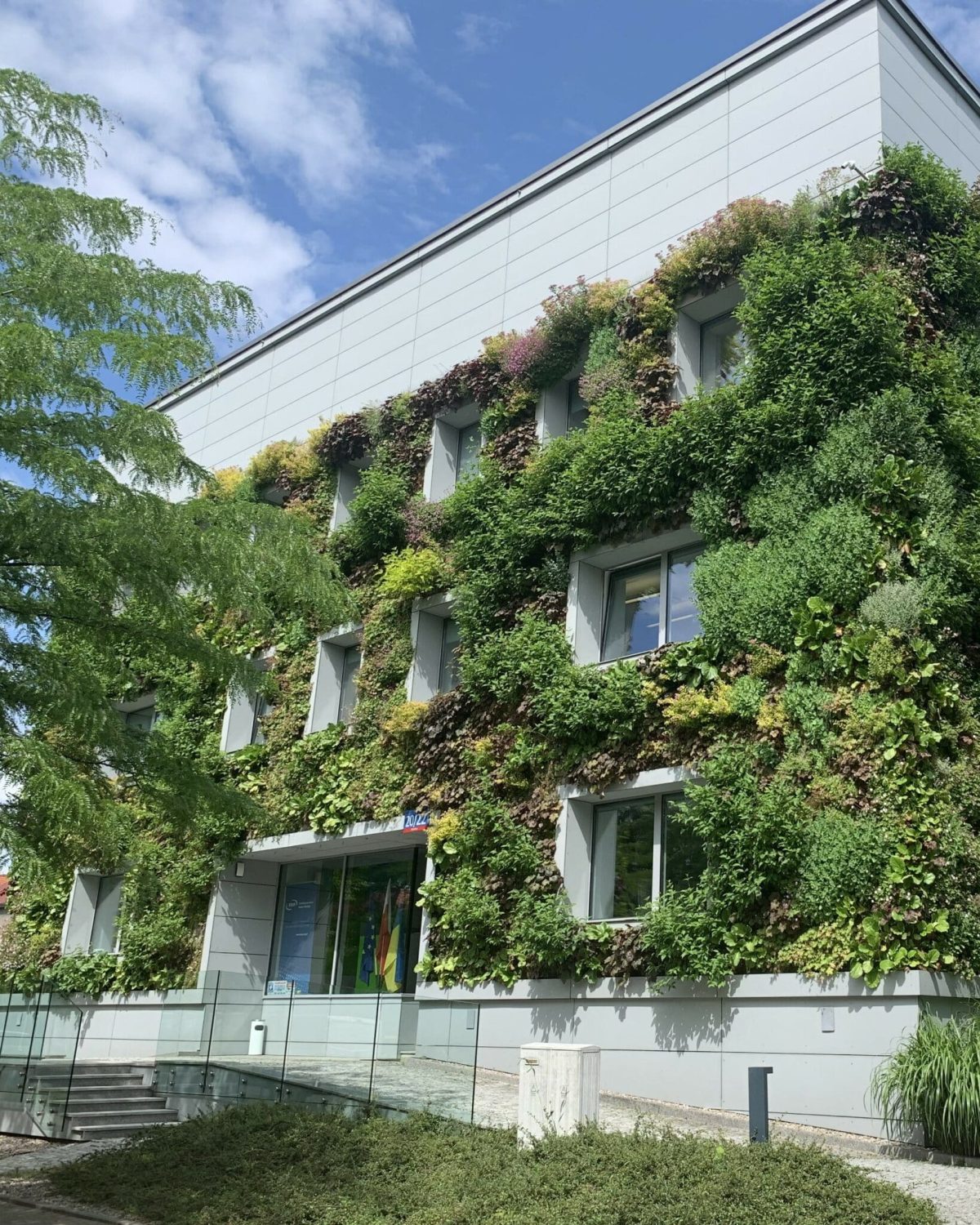
The green facade at the FNP headquarters in Warsaw has well and truly proved its worth. This SemperGreenwall was installed more than 10 years ago and still the green wall grows and flourishes exuberantly. This is not only a beautiful sight for this 1930s apartment complex that has been transformed into a modern office building. Besides all the benefits of greenery, this redevelopment has also led to:
The urgency of climate change calls for direct and concerted action from all stakeholders in the construction sector. Policymakers, businesses, and consumers each have a crucial role to play in reducing the construction sector’s impact on our climate. It is time to work together on solutions that both reduce our carbon footprint and contribute to a healthy, resilient living environment.
At Sempergreen, we are committed to sustainable construction and renovation. As an expert and trusted partner in this sector, we offer innovative green solutions that improve air quality, reduce heat stress, and promote biodiversity. Our green facades and roofs contribute to a healthier urban climate and help your project meet the highest sustainability standards.
Let’s take responsibility for a better future together. Sempergreen is ready to support you with expert advice and high-quality, sustainable products. Through ‘Replanting the Planet’, together we can build a world that flourishes both economically and ecologically.
Ready to make a difference? At Sempergreen, we believe in building a greener future, one step at a time. Our innovative solutions are designed to help you decrease your footprint and contribute to a more sustainable world. Join us in replanting the planet!