Delay runoff up to 24 hours
The Purple-Roof build up can detain stormwater and delay discharge for up to 24 hours, helping you stay within required peak flow rates during design storms.
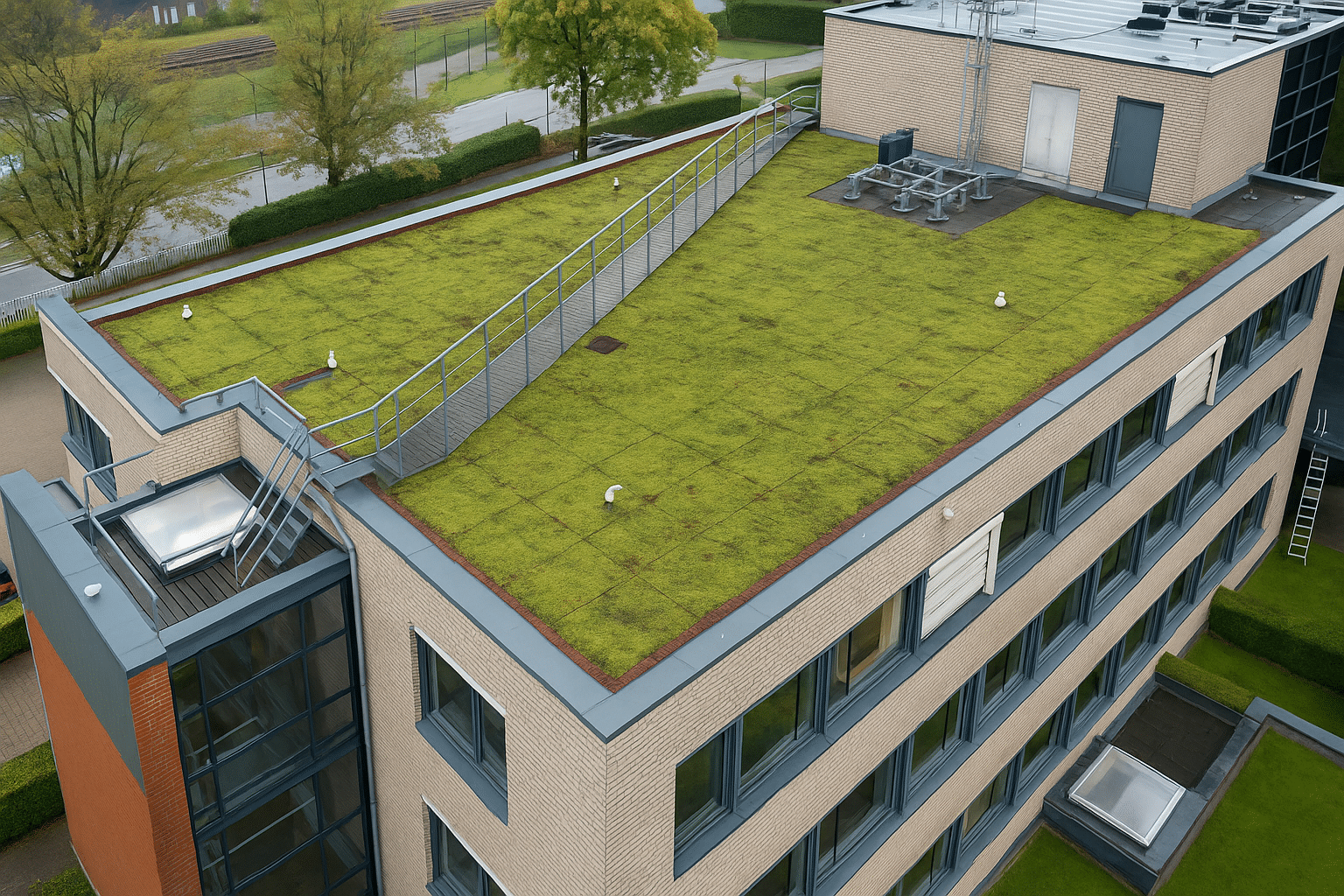
Stormwater management is a key challenge in modern projects, and traditional stormwater tanks take up valuable space. Purple-Roof stores and controls stormwater directly on the roof to meet local requirements and reduce peak flow while freeing up space for parking or usable building area.
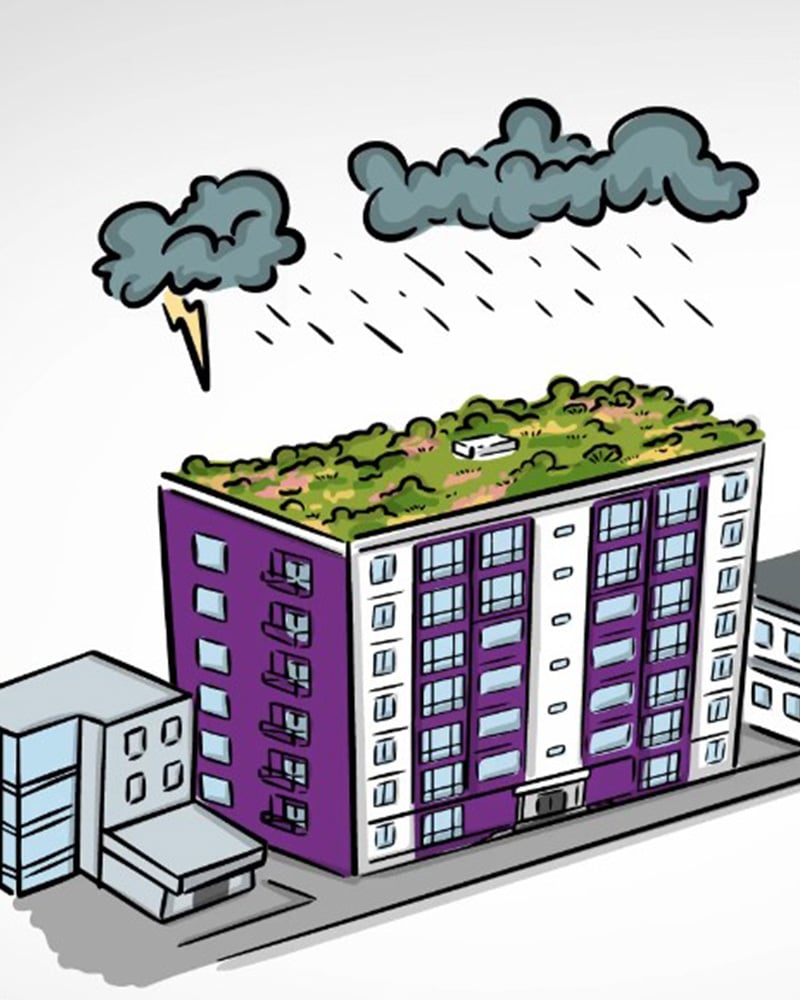
Instead of moving stormwater offsite as quickly as possible, the Purple-Roof manages it directly at the rooftop. Using a scientifically tested detention layer combined with engineered vegetation and soil, these roofs slow and spread peak runoff, even during consecutive or extreme storms.
The result, a flatter stormwater curve before water ever reaches the street, backed by data you can plug straight into your civil design. For project specific performance, use the Purple Roof Stormwater Modeler.
The Purple-Roof build up can detain stormwater and delay discharge for up to 24 hours, helping you stay within required peak flow rates during design storms.
Purple-Roof is designed and tested to meet local US stormwater standards. You get clear data for submittals, permitting and incentive programs.
The engineered build-up combines green roof retention with a dedicated detention layer for reliable performance, even in back-to-back storms.
The Purple-Roof concept was created to distinguish this next-generation system from traditional green roofs. Standard green roofs are built for retention; they soak up water and release it slowly through evapotranspiration. But during large or consecutive storms, they saturate and behave like a regular roof. Purple-Roof adds engineered detention, optimizing stormwater performance even when the system is fully saturated. Purple = the mix of red (civil engineering) + blue (ecology). A roof that satisfies engineers and supports nature. It is also the color of extreme storms on weather maps.
The Purple-Roof concept is far from a simple green roof upgrade. It might be clearer to describe the Purple-Roof concept as a stormwater tool that doubles as a green roof.

Feeling a bit overwhelmed with ideas? Don’t worry! We’ll help you find the right solution for your project. With just a few quick questions we’ll help you find the right approach and system for your project. You’ll receive customized advice to make green work for you.
The Purple-Roof is a high performing, cost saving and predictable stormwater tool. However, it is not the answer for every roof, so a quick check up front helps:
If a green roof or on-site detention is already required, upgrading to Purple-Roof often lowers total project cost, especially in dense urban locations where land is expensive.
On sites with a high roof to site ratio, for example 80 percent roof, 20 percent site, rooftop detention is almost always more efficient than trying to fit tanks on the ground due to lack of ground-level space.
Purple-Roof stores peak rainfall for only a few hours. In most U.S. cities, snow load budgets (40–80 lbs/sqft) can accommodate the detention load requirement of 8–12 lbs/sqft, so structural integration is usually straightforward.
Adding a Purple-Roof detention layer typically increases the green roof cost by about 5–7 USD per sqft. In many projects this replaces tanks and other at grade systems that can easily reach six figures.
If eliminating a tank allows, for example:
– 4 more parking spaces
– 1,200 sqft of additional leasable basement or ground floor space
– over a 50-year building lifespan,
…the financial benefit is significant!

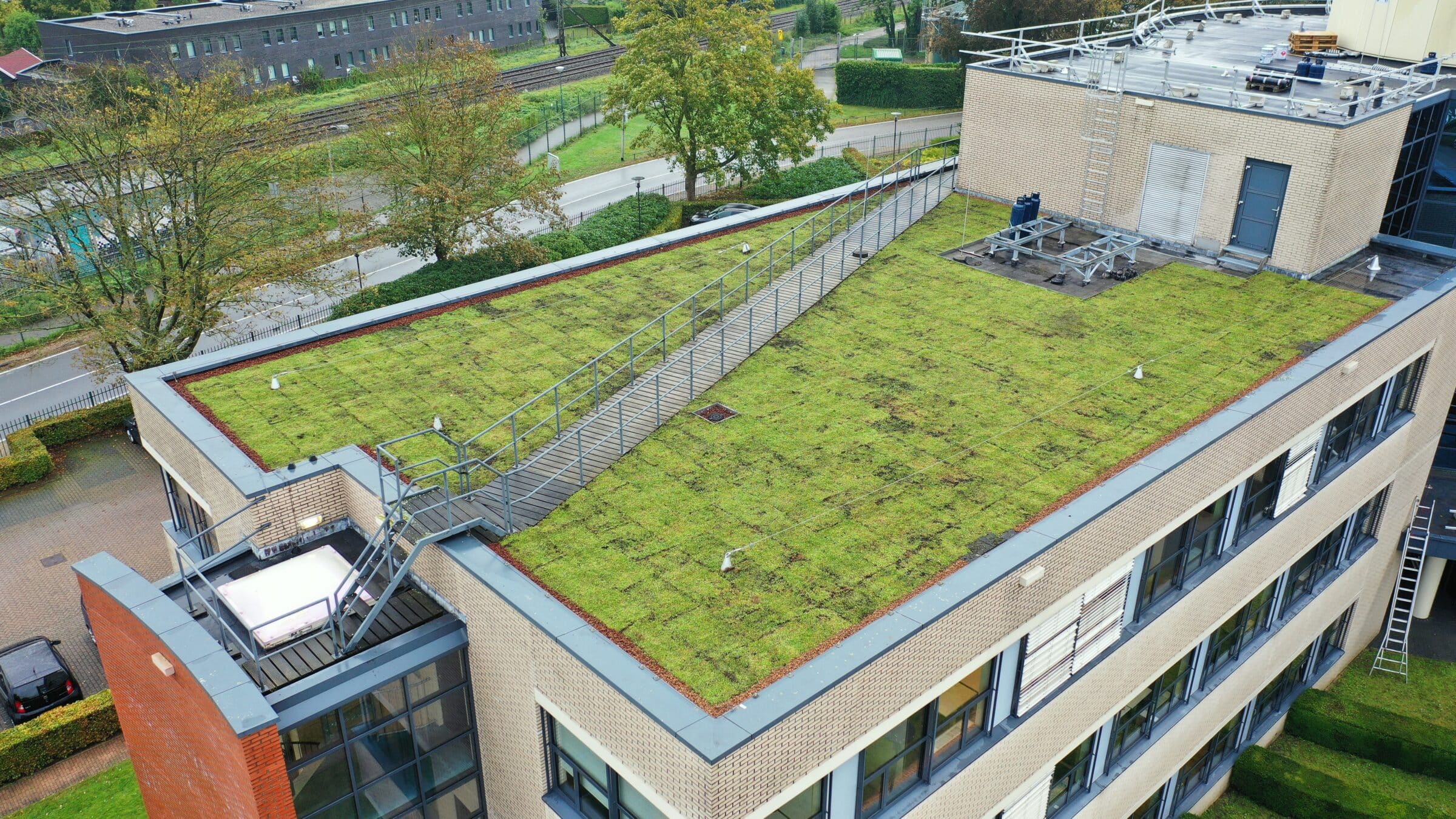

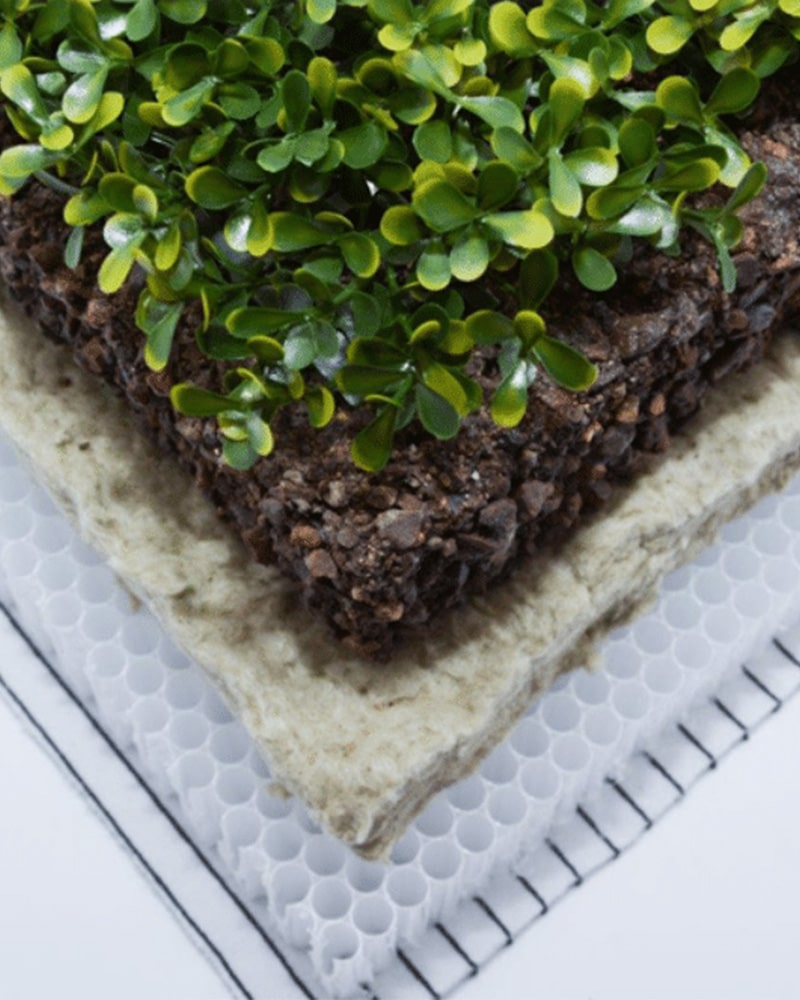
Purple-Roof uses a layered build up to control both the volume and timing of stormwater release, in a way that is easy to document and calculate.
This configuration flattens the stormwater curve and significantly reduces peak runoff compared to a conventional roof.
Purple-Roof is far more than an upgraded green roof. It is fundamentally a stormwater management tool, one that also functions as a high-quality green roof. |
Purple Roof is first and foremost a stormwater management system. It provides both retention, like a traditional green roof, and detention, unlike a traditional green roof, so it can meet the civil engineer’s performance requirements for peak flow and volume.
At the same time, it delivers a durable, planted rooftop garden that protects the waterproofing and gives residents or users a clean, finished surface.
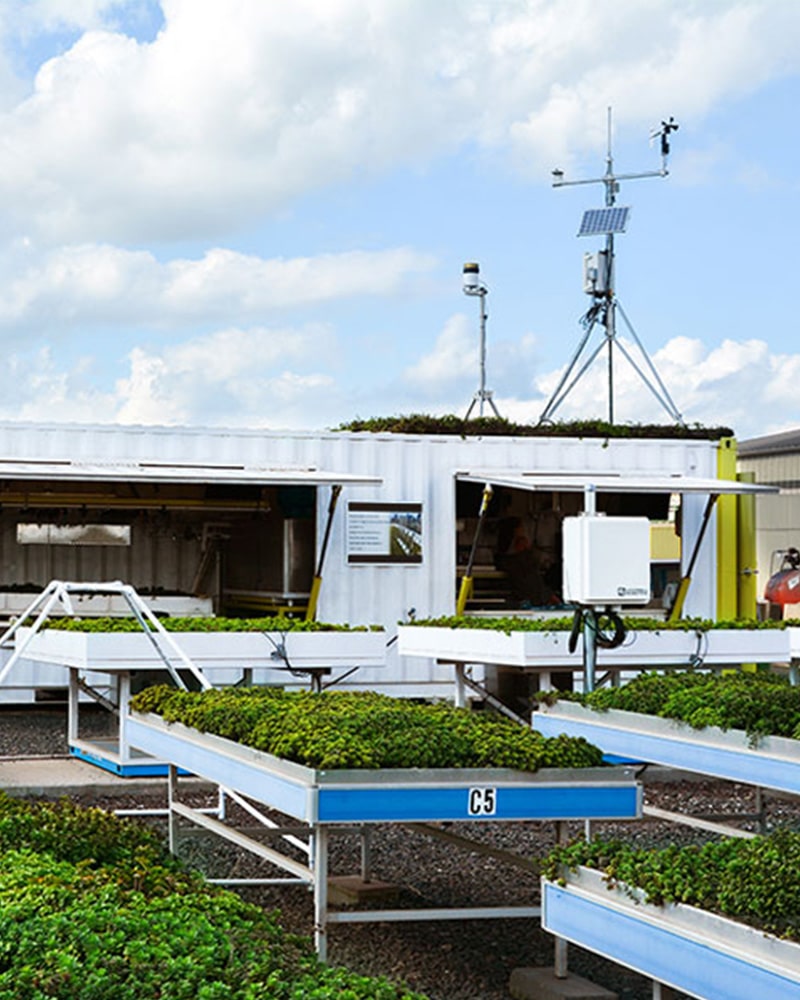
Because Purple Roof manages stormwater on an otherwise unused surface, the roof, it can reduce or eliminate the need for tanks, chambers or oversized pipes at-grade.
This frees up land for:
In dense American cities, where every square foot counts, this often translates into significant savings over the life of the building.
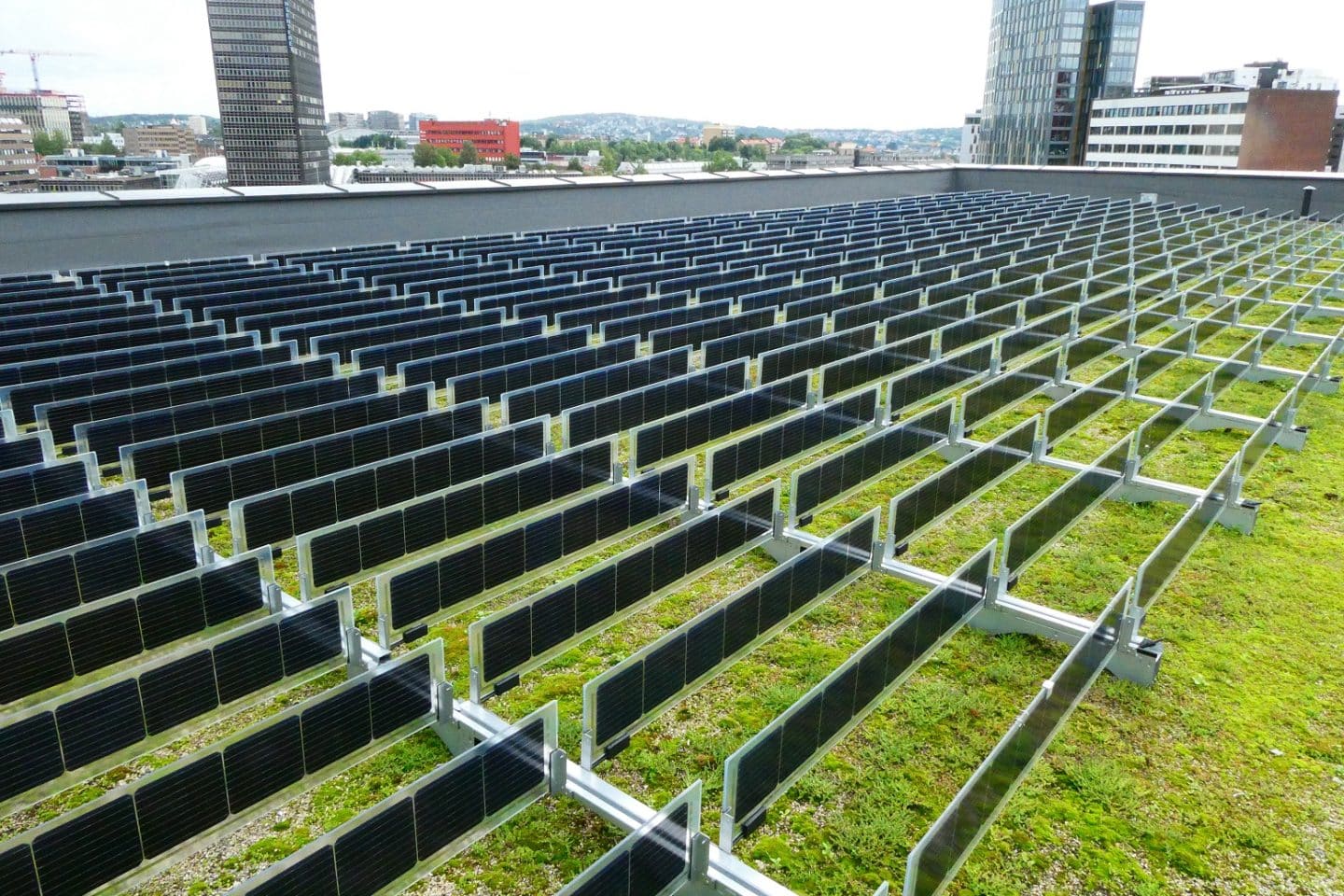
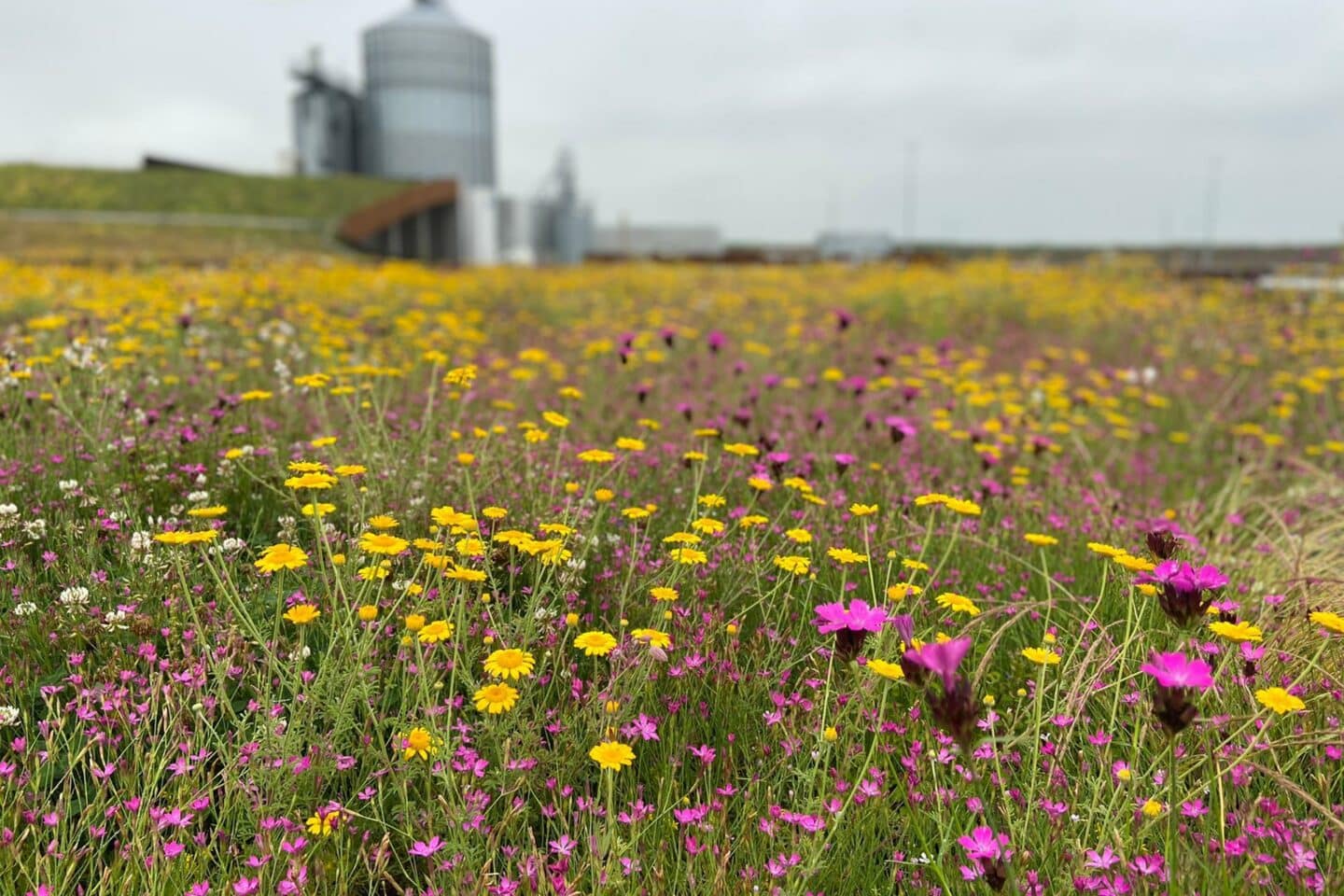
Our green roof systems transform rooftops into climate solutions. They retain rainwater, cool cities, enhance biodiversity, and even boost solar performance. Each system is carefully engineered for durability and designed to make every square foot count for people and the planet.



Curious about our blue-green roofs? Here you’ll find the most frequently asked questions. Want to know more? Contact us directly with one click.
Green roofs contribute to flood prevention and mitigation by absorbing and buffering stormwater. Depending on the amount of water storage needed within your project and the roof construction, you can choose between a regular green roof, a Detention Roof, or a Retention Roof.
Yes, every green roof absorbs and buffers water. The best green roof for your project depends on the amount of water storage required and the roof construction. Sempergreen offers two green-blue roofs for storing or buffering large amounts of rainwater during peak rainfall: the Detention Roof and the Retention Roof.
The exact performance is always calculated specifically for each project, based on roof design, load capacity, and local rainfall patterns. An extensive green roof can typically retain 25 to 45 liters of water per square meter, depending on the build-up and substrate depth.
With advanced systems such as retention or detention roofs, designed for water buffering or delayed drainage, water storage can be significantly higher. In these systems, runoff delay can extend up to 24 hours or longer, reducing peak loads on urban sewer systems and helping prevent flooding.
A conventional roof drains almost all rainwater immediately, with a runoff coefficient of around 0.9 to 1.0 in urban environments. This means nearly all rainfall flows directly into the sewer. In contrast, an extensive green roof has an average runoff coefficient of 0.5 to 0.7. This indicates that 50 to 70 percent of the rainfall is drained, while the rest is temporarily retained in the vegetation, substrate, and drainage layers. By buffering and delaying runoff, a green roof helps reduce peak loads on sewer systems and lowers the risk of flooding during heavy rain events.
Sempergreen’s blue-green roofs are suitable for larger roofs, starting at 538 sq ft. For new construction projects, there is the Retention Roof, and roofs of existing construction and renovation projects can be made water-retaining with a Detention Roof. The installation is similar to that of other Sempergreen green roof systems. If the roof is larger than 538 sq ft, we offer you the option of requesting a water calculation. Based on this calculation, we can determine exactly what the Detention or Retention Roof can do for your project.