FAQ
General Questions
What is urban greening?
Urban greening involves reintroducing nature into the built environment. Consider green roofs, living walls, and green public spaces that render cities healthier and more resilient.
What impact can urban greening have on communities?
Greener streets and buildings create more attractive neighborhoods, increase property value, and foster social interaction while offering natural places to relax.
Do green systems affect well-being?
Yes. Green roofs and walls reduce stress, promote relaxation, and create healthier environments. Studies show fewer complaints such as fatigue, headaches, and irritation in greener spaces.
Why is public greening important for cities?
Green spaces improve livability, safety, and attractiveness of towns and cities. Parks, riverbanks and public areas provide healthier environments for people, while also cooling and cleaning the city.
How can I start an urban greening project?
Sempergreen offers proven systems for roofs, walls, and ground covers. Explore our projects, get inspired, and contact us for advice tailored to your city or building.
What maintenance do public green spaces require?
Sempergreen blankets require minimal care: annual fertilization, watering during extreme droughts, and occasional inspections. No mowing or frequent replanting needed – saving time and resources.
Why is urban greening essential for cities?
It helps combat heat stress, reduces flooding, cleans the air, and boosts biodiversity. Greener cities also improve people’s wellbeing and strengthen resilience to climate change.
Questions About Living Walls
What is a green wall?
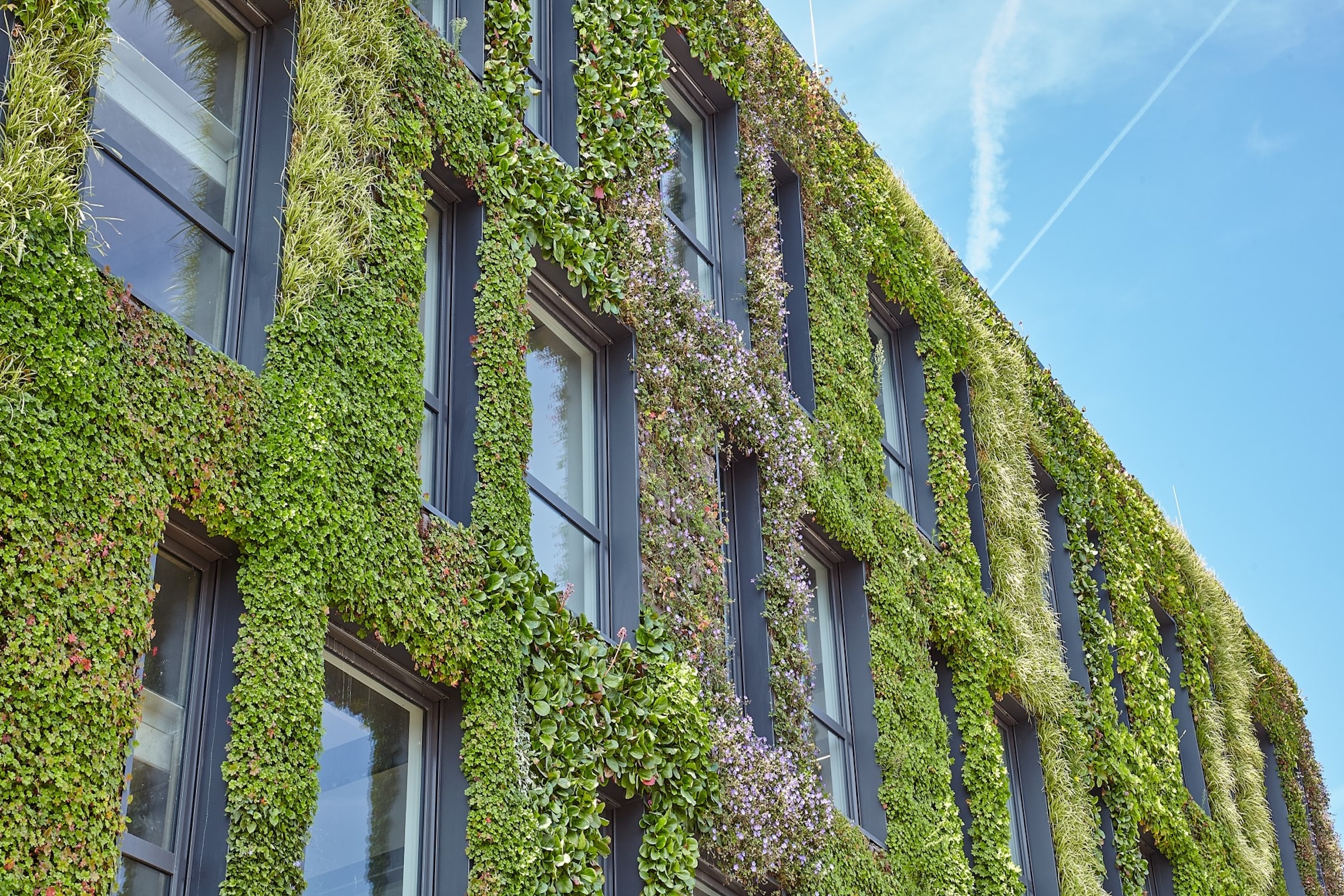
A green wall, also called a living wall or vertical garden, is a facade system covered with plants. It can be installed both indoors and outdoors and turns unused walls into climate-proof, green surfaces. SemperGreenwall systems are pre-cultivated, modular and equipped with a fully automatic irrigation system.
What are the benefits of a green wall?
A vertical garden from Sempergreen contributes to air purification, a lower ambient temperature, heat regulation, and urban biodiversity. Green facades are part of climate-proof and nature-inclusive building. They also have a positive effect on the people in the area by improving the working atmosphere or shopping experience, for example. They reduce noise pollution and lower the ambient temperature.
How do green walls support urban wildlife?
These living walls act as stepping stones for mobile arthropods, helping them migrate through urban environments. They also support the broader food web—arthropods feed birds, and naturally occurring predators maintain ecological balance.
How Biodiverse is a SemperGreenwall?
Extremely. A study by Utrecht University found over 2,000 arthropods from 125 species on SemperGreenwalls in just 10 days—compared to only 500 on ivy-clad walls. That’s a 4x increase and proof that the rich plant diversity turns buildings into vibrant ecosystems.
Can a green wall reduce the temperature around a building?
Yes. A SemperGreenwall reflects about 50% of sunlight and absorbs 30%, reducing heat build-up. This can lower the surrounding temperature by up to 3 °C (5.4 °F) and cut air conditioning use by around 33%.
Do living walls reduce ambient noise indoors?
Yes. A SemperGreenwall Indoor acts as an effective sound barrier. Independent tests show it absorbs up to 85% of ambient noise (αw 0.85). Please note: the exact acoustic value depends on factors such as room size, ceiling height, construction, and furnishing.
Can green roofs and walls reduce energy bills?
Yes. Reduced need for air conditioning in summer and heating in winter results in significant energy savings.
Can a green wall be installed year-round?
Yes, installation is possible almost all year. Only in frost conditions is the installation of outdoor systems postponed.
How often does the MaxGreenwall require watering?
Thanks to the efficient irrigation system, the plants only use the amount of water needed and are distributed evenly over the plant wall. No more manually watering the plants! Moreover, depending on the variant, the reservoir only needs to be refilled once every 2 to 4 weeks.
Which plants are suitable for a green wall?
Sempergreen meticulously selects robust, perennial species tested for each climate zone worldwide. For outdoor walls, resilient plants such as perennials, ferns, and shrubs are utilized. For indoor walls, plant choices depend on daylight levels. Patterns, logos, and custom designs are possible.
May I select my own plant mix?
Yes, select from our extensive variety of plant species, each with its appearance and unique characteristics.
How much water does a SemperGreenwall use per sq ft?
The amount of water used per square foot depends on factors such as plant type, exposure, wind, and season. On average, a SemperGreenwall requires about 0.48 gallons of water per square foot per day. This amount can vary: indoor walls with stable climates usually consume less, while outdoor walls exposed to sun and wind may need more.
How do the plants in a green wall receive water and nutrients?
Every SemperGreenwall is equipped with an integrated irrigation and nutrient system. Water flows through irrigation tunnels in each panel to ensure even distribution. With the optional web-based module, irrigation can be monitored and adjusted online 24/7. Frost protection is available for outdoor walls.
How is a SemperGreenwall Constructed?
Sempergreen or a local service partner takes care of the full installation. The modular Flexipanels are pre-cultivated in our own greenhouse with up to 90% coverage on delivery, ensuring an instant green result. A built-in irrigation system provides water and nutrients.
Questions About Green Roofs
Lorem ipsum
What is a green roof?
A green roof is a flat or pitched roof covered with vegetation, such as Sedum, herbs, or ornamental grasses. A green roof is also known as a vegetated roof, roof garden, or living roof. There are different types, each with its own structure, appearance, functionality, and benefits. Common variants are extensive (lightweight) green roofs and intensive (roof garden) green roofs.
What are the benefits of a green roof?
A green roof offers numerous advantages: it retains water, purifies the air, reduces temperature, saves energy, enhances biodiversity, and extends the lifespan of the roof. Moreover, it improves people’s well-being and boosts the value of buildings.
What is an extensive and an intensive green roof?
An extensive green roof consists of a thin substrate layer (max. 6 inches) with a drainage layer underneath. This makes the system lightweight and relatively affordable.
Extensive green roofs are often planted with Sedum species, sometimes supplemented with herbs and flowers, such as in the Biodiverse green roof. Due to the thin build-up, these are classified as extensive or semi-extensive.
An intensive green roof, also known as a roof garden, has a thicker substrate layer (10 inches or more). This allows for planting shrubs and even trees, but it also makes the system heavier and more expensive.
How much water can a green roof retain?
A standard green roof system like Purple-Roof can retain most of the rainfall during warm periods, reducing immediate drainage needs and alleviating pressure on sewer systems. The Water Retention Boxes offer quantifiable storage capacity, allowing architects and builders to accurately design retention systems suited to local rainfall demands or regulatory requirements.
Can a Green Roof Cause Leaks?
No, a leak is never caused by the green roof itself, but by roof coverings that are not waterproof or not root-resistant. Always check the quality of the roof covering beforehand. If you are unsure about its root resistance, it is recommended to install a root-resistant membrane as extra protection.
Can You Walk on a Green Roof?
Yes, you can walk on a green roof in moderation. For example, performing annual maintenance such as fertilizing is no problem, even when stepping on Sedum plants. However, be cautious during frost. We recommend avoiding walking on the vegetation when the plants are frozen, as this can cause damage.
If you need to access the green roof more frequently or for longer periods, for example for building maintenance, we recommend placing roof garden tiles or stepping stones on the roof.
Does a green roof have an insulating effect?
Yes, a green roof has an insulating and, above all, heat-regulating effect. It keeps buildings cooler in summer and can retain heat in winter, reducing energy costs. A green roof also dampens noise from traffic, aircraft, and rain.
Can I get a subsidy for my green roof?
Yes! More and more states, municipalities, water districts, and other government agencies are providing subsidies to encourage the use of green roofs. Contact your local government’s subsidy desk for more information.
Does a Green Roof Reduce Noise?
Yes, green roofs provide sound insulation. The combination of plants, substrate, and air layers absorbs and reflects sound waves. Research indicates noise levels can be reduced by up to 8 dB, which sounds about 50% quieter to the human ear.
Can a Green Roof Reduce the Urban Heat Island Effect?
Yes, green roofs help lower city temperatures by reflecting sunlight and cooling the air through evaporation. In urban areas, summer temperatures can be 5–7°F higher than in rural areas. Research shows that increasing city greenery by 10% can significantly reduce this effect.
Can a green roof be installed on all types of roofing material?
Yes, if the roofing is waterproof and root-proof, Sempergreen vegetation blankets can be applied to all types of roofing. This applies to flat and pitched roofs.
What are the advantages of integrating solar panels with a green roof?
Higher efficiency: PV panels produce 6–10% more energy thanks to the cooling effect of the green roof.
Longer lifespan: Lower panel temperatures reduce wear and extend durability.
Biodiversity: Sedum and biodiverse roofs create habitat for bees, butterflies, and pollinators.
Sustainable building: Combining solar and green roofs contributes to higher BREEAM and LEED scores.
Improved rainwater management: Green roofs store and delay runoff, relieving urban drainage systems.
What is a Blue-Green Roof?
A blue-green roof combines rainwater retention and storage (blue) with vegetation (green). It temporarily stores rainwater and uses it for irrigation of the plants or releases it gradually into the drainage system. The blue layer is a water retention system that buffers rainfall. This stored water can later evaporate or be used to irrigate the green layer. The green layer, typically consisting of Sedum, herbs, or grasses, provides cooling, improves air quality, and enhances biodiversity. By combining water management with vegetation, a blue-green roof is a multifunctional solution for stormwater management, climate adaptation, and urban livability.
What is a Detention Roof?
A Detention Roof is an advanced green roof system designed to temporarily detain and delay stormwater runoff, even during extreme rainfall, while still supporting vegetation.
Unlike a standard green roof, the Detention Roof can store stormwater in its multiple layers and release it gradually. This prevents peak loads on sewers, reduces the risk of flooding, and ensures plants thrive even under saturated conditions. The system is particularly effective during heavy downpours and second-day storms, when traditional roofs quickly overflow.
What is a Retention Roof?
A Retention Roof is a green roof system that stores rainwater permanently in its structure and makes it available for reuse, irrigation, or evaporation.
The water retained in the system is not immediately drained away but buffered for longer periods. This helps cool the environment through evaporation, supports plant growth, and reduces pressure on sewer systems. Retention roofs are often combined with smart drainage technology to regulate water levels.
How can I increase biodiversity on my roof?
The Sempergreen Biodiversity Package makes it easy to create additional habitat for insects and birds. It includes elements such as insect hotels, stones, gravel and selected plants that offer food and shelter. Because the package adds little weight, it is also suitable for lighter roof constructions.
Questions About Ground Cover
What is a vegetation mat?
A Sempergreen vegetation blanket consists of a coir fiber mat planted with different varieties of Sedum, and if required supplemented with (ornamental) grasses, herbs, wildflowers or host and nectar plants. The plants take root in the coir and a substrate specially developed by Sempergreen. The carefully cultivated vegetation mats boast at least 95% cover on delivery.
Are Sempergreen blankets suitable for all soils and slopes?
Yes. Depending on soil and slope conditions, we recommend specific system structures. Even embankments up to 45° can be vegetated with our reinforced Type T blanket.
How do you repair green ground cover on a slope?
For steeper slopes (10–45°), Sempergreen recommends using securing pins to anchor the Sedummix blankets, ensuring they remain in place on embankments, parks, or roundabouts.
Can green ground cover be installed year-round?
Yes. Sempergreen Sedummix blankets can generally be laid throughout the year, making them suitable for flexible seasonal planning.
What is a suitable base or soil for green ground cover?
For flat or gently sloping ground (0–10°), dense soils like clay require an additional drainage layer beneath the Sedum-mix blankets. Well-drained soils such as sand may only need permeable substrate topped with the blankets.
What maintenance is required for green ground cover?
Maintenance generally involves regular inspections, but the pre-grown blankets require minimal maintenance. Over time, routine care may include occasional trimming, fertilizing, or checking for weeds.
How do pre-grown vegetation mats save costs?
Unlike planting individual ground cover plants, vegetation blankets are delivered 95% covered. This reduces installation time, minimizes weeding, and requires less maintenance, helping municipalities save on long-term budgets.
Does green ground cover need trimming or mowing?
Depending on the design and plant type (e.g., low mats vs. flower-rich blends), occasional trimming or maintenance may enhance appearance. Generally, however, the Sedum-mix blankets maintain themselves with minimal intervention.
What impact can urban greening have on communities?
Greener streets and buildings create more attractive neighborhoods, increase property value, and foster social interaction while offering natural places to relax.
What maintenance do public green spaces require?
Sempergreen blankets require minimal care: annual fertilization, watering during extreme droughts, and occasional inspections. No mowing or frequent replanting needed – saving time and resources.
How is green ground cover delivered?
The plant mats, available in 60 × 200 cm, are delivered on pallets. You may collect from a nearby location or arrange delivery through Sempergreen. It’s recommended to install the mats promptly and protect them from intense sunlight while on the pallet.